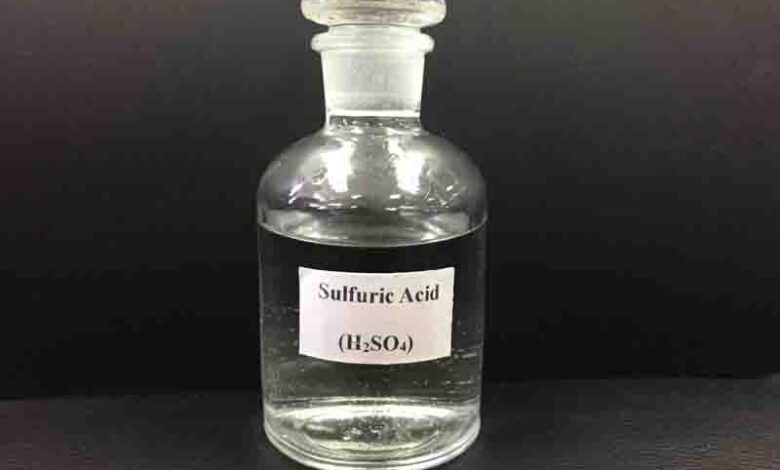
Dil sulphuric acid, commonly written as dilute sulphuric acid or dil H₂SO₄, is a solution made by mixing sulphuric acid with water to reduce its concentration. The chemical formula of sulphuric acid remains H₂SO₄, but adding water changes the strength and behaviour of the solution. Unlike concentrated sulphuric acid, which has powerful dehydrating and oxidising properties, dilute sulphuric acid mainly acts as a strong acid and is widely used where controlled acidity is required.
Dil sulphuric acid is an important chemical in education, laboratories, industries, and energy systems. It is commonly used in school experiments, chemical reactions, lead-acid batteries, metal processing, and manufacturing processes. Although it is less aggressive than concentrated sulphuric acid, it is still corrosive and must be handled carefully. Understanding its composition, properties, reactions, and applications helps explain why this solution remains valuable in both scientific and industrial environments.
Formula and Composition of Dil Sulphuric Acid
The formula of dil sulphuric acid is represented as H₂SO₄ (aq), meaning sulphuric acid dissolved in water. The chemical formula itself does not change after dilution because the compound remains sulphuric acid. The difference is that water molecules are added to separate the acid molecules and reduce the overall concentration. This makes the solution more suitable for reactions where a highly concentrated acid would be unnecessary or unsafe.
When sulphuric acid dissolves in water, it releases hydrogen ions (H⁺) and sulphate ions (SO₄²⁻). These ions are responsible for its acidic behaviour and electrical conductivity. Because dilute sulphuric acid produces freely moving ions in solution, it is considered a strong electrolyte. This property explains why it is useful in electrochemical applications, including lead-acid batteries, where the movement of ions helps produce electrical energy.
Concentration of Dil Sulphuric Acid
The concentration of dilute sulphuric acid is not fixed because it depends on its purpose and preparation method. A solution used in a chemistry laboratory may have a much lower concentration compared with the sulphuric acid solution found inside a lead-acid battery. In laboratories, diluted solutions are often prepared according to the requirements of a specific experiment, while industrial applications use carefully controlled concentrations for consistent performance.
One common example is battery electrolyte, where sulphuric acid is diluted to create a solution that allows efficient ion movement between the battery plates. The concentration affects important factors such as electrical conductivity, chemical reactivity, and safety. A solution with too little acid may not perform effectively, while a stronger solution may increase corrosion risks. Therefore, accurate measurement and preparation are essential when working with dil sulphuric acid.
Physical Properties of Dil Sulphuric Acid
Dil sulphuric acid is generally a clear, colourless liquid with no strong odour. Its physical characteristics depend on the amount of water present in the solution. Compared with concentrated sulphuric acid, it has lower density and viscosity, making it easier to handle in controlled laboratory and industrial conditions. It mixes completely with water and forms a uniform solution because sulphuric acid is highly soluble.
One of the most important physical properties of dilute sulphuric acid is its ability to conduct electricity. The dissolved hydrogen and sulphate ions allow electrical current to pass through the solution. This property makes it useful in electrochemical experiments and battery systems. However, its ability to conduct electricity also means that contact with electrical equipment must be managed carefully during laboratory use to avoid safety risks.
Chemical Properties of Dil Sulphuric Acid
Dil sulphuric acid shows the typical chemical behaviour of a strong acid. It reacts with certain metals, bases, and carbonates to produce different products depending on the substance involved. Unlike concentrated sulphuric acid, it generally does not show strong dehydrating action because the presence of water reduces this effect. This difference makes dilute sulphuric acid suitable for reactions where controlled acid strength is needed.
When it reacts with reactive metals such as zinc or magnesium, dilute sulphuric acid produces metal sulphates and releases hydrogen gas. For example, zinc reacts with dilute sulphuric acid to form zinc sulphate and hydrogen:
Zn + H₂SO₄ → ZnSO₄ + H₂↑
This reaction is commonly demonstrated in chemistry laboratories because it clearly shows the relationship between acids and reactive metals. However, not all metals behave the same way. For example, copper does not react with dilute sulphuric acid under normal conditions because it is less reactive than metals such as zinc and magnesium.
Chemical Reactions of Dil Sulphuric Acid

Dil sulphuric acid participates in several important reactions that demonstrate its acidic nature. One major type of reaction is neutralisation, where an acid reacts with a base to produce salt and water. For example, when sodium hydroxide reacts with sulphuric acid, sodium sulphate and water are formed:
H₂SO₄ + 2NaOH → Na₂SO₄ + 2H₂O
This type of reaction is important in laboratories and industrial processes because it helps control acidity and produce useful chemical compounds.
Dil sulphuric acid also reacts with carbonates and bicarbonates, releasing carbon dioxide gas. For example, when sodium carbonate reacts with sulphuric acid, sodium sulphate, water, and carbon dioxide are produced:
Na₂CO₃ + H₂SO₄ → Na₂SO₄ + H₂O + CO₂↑
These reactions make dilute sulphuric acid useful for chemical analysis, education, and controlled manufacturing processes.
Uses and Applications of Dil Sulphuric Acid
Industrial Uses of Dil Sulphuric Acid
Dil sulphuric acid is widely used in industrial processes because it provides strong acidic properties while allowing better control compared with concentrated sulphuric acid. One of its major applications is in chemical manufacturing, where it helps create different sulphate compounds and supports reactions that require an acidic environment. Industries involved in fertiliser production use sulphuric acid-based processes to manufacture important agricultural chemicals, including ammonium sulphate and phosphate fertilisers, which contribute to improved crop productivity and soil nutrient management.
Another important industrial application is metal treatment and surface preparation. Dil sulphuric acid can be used to remove unwanted oxide layers, rust, and surface impurities from certain metals before further processing. This process, often known as acid cleaning or pickling, helps improve the quality of metal surfaces. It is also involved in water treatment systems, pH adjustment processes, and various manufacturing operations where maintaining the correct chemical balance is necessary for efficient production.
Role of Dil Sulphuric Acid in Lead-Acid Batteries
One of the most familiar applications of dil sulphuric acid is its use as an electrolyte in lead-acid batteries. These batteries are commonly used in vehicles, emergency power systems, and some renewable energy storage setups. Inside the battery, the diluted sulphuric acid solution allows ions to move between the lead-based plates, creating the chemical reactions that produce electrical energy. Without the electrolyte, the battery would not be able to store or deliver power effectively.
The concentration of sulphuric acid in a battery is carefully controlled because it directly affects battery performance, charging efficiency, and lifespan. If the solution becomes too weak, the battery may lose efficiency, while excessive concentration can increase corrosion and damage internal components. This application shows how a carefully prepared dilute acid solution can support everyday technology while still requiring proper maintenance and safety awareness.
Laboratory Uses of Dil Sulphuric Acid
Dil sulphuric acid is an essential chemical in educational and research laboratories because of its predictable reactions and strong acidic behaviour. Students commonly use it to study fundamental chemistry concepts, including acid-base neutralisation, reactions with metals, conductivity, and electrolysis. Because its reactions are easier to control than those of concentrated sulphuric acid, it is often preferred for demonstrations and experiments where understanding chemical principles is the main objective.
In professional laboratories, dil sulphuric acid is used as a reagent for preparing solutions, adjusting acidity levels, and supporting chemical analysis. It may be used in titration experiments to determine the concentration of alkaline substances or to study reaction behaviour under acidic conditions. Its ability to provide a reliable source of hydrogen ions makes it valuable in many scientific procedures where accurate chemical control is required.
Preparation of Dil Sulphuric Acid
Preparing dil sulphuric acid requires careful attention because the mixing process releases a significant amount of heat. The correct safety method is to slowly add concentrated sulphuric acid to water while stirring continuously. This allows the heat produced during dilution to spread through the larger amount of water, reducing the risk of sudden boiling or dangerous splashing. The opposite method, adding water to concentrated acid, can be hazardous because the small amount of water may heat rapidly and cause the acid to spray.
In laboratories, the required concentration is prepared by measuring specific amounts of concentrated sulphuric acid and water based on the final solution needed. Chemists use appropriate glassware and safety equipment to ensure accurate preparation. After mixing, the solution should be allowed to cool before use because the temperature increase during dilution can affect measurements and experimental results. Proper preparation ensures that the solution performs effectively while reducing unnecessary risks.
Safety Precautions When Handling Dil Sulphuric Acid
Although dilute sulphuric acid contains more water than concentrated sulphuric acid, it should still be considered a corrosive chemical. Direct contact can cause skin irritation, chemical burns, or serious eye damage depending on the concentration and exposure time. Anyone working with this solution should use suitable protective equipment, including chemical-resistant gloves, safety goggles, and protective clothing. Good laboratory practices are necessary to prevent accidental exposure.
Proper storage and handling are also important for maintaining safety. Dil sulphuric acid should be stored in compatible containers that can resist corrosion and should be clearly labelled to prevent confusion with other liquids. It should be kept away from substances that may react dangerously, such as strong bases, reactive metals, and certain organic materials. In case of accidental contact, the affected area should be immediately rinsed with plenty of clean water, and medical assistance should be sought if required.
Environmental Considerations of Dil Sulphuric Acid
Dil sulphuric acid can be useful in many industries, but improper disposal or accidental release can negatively affect the environment. Because it can change the acidity of water and soil, uncontrolled discharge may harm aquatic organisms and disturb natural ecosystems. Industries that use sulphuric acid solutions must follow appropriate waste management procedures to reduce environmental impact and ensure safe treatment before disposal.
Many facilities use neutralisation methods to reduce acidity before releasing chemical waste. This process involves carefully controlling the pH level so that the remaining solution becomes safer for handling and disposal. Responsible chemical management, proper storage, and trained handling procedures help ensure that the benefits of dilute sulphuric acid can be achieved while reducing environmental risks.
Dilute Sulphuric Acid vs Concentrated Sulphuric Acid
Dilute sulphuric acid and concentrated sulphuric acid have the same chemical formula, H₂SO₄, but their properties and applications are different because of the amount of water present. Concentrated sulphuric acid contains very little water and has powerful dehydrating and oxidising properties. It is commonly used in industrial chemical production, organic synthesis, and processes that require a highly reactive acid. Due to its strength, it requires strict safety controls.
Dilute sulphuric acid contains a higher proportion of water, which reduces its intensity and changes its chemical behaviour. It mainly acts as a strong acid and is preferred for applications such as laboratory experiments, batteries, and controlled industrial processes. Although it is less aggressive than concentrated acid, it can still cause burns and must be handled responsibly.
| Feature | Dil Sulphuric Acid | Concentrated Sulphuric Acid |
| Composition | Sulphuric acid mixed with more water | High percentage of sulphuric acid with very little water |
| Main behaviour | Strong acid and electrolyte | Strong acid with dehydrating and oxidising abilities |
| Common applications | Batteries, laboratories, metal treatment | Industrial manufacturing and chemical synthesis |
| Safety requirement | Requires protective handling | Requires advanced safety precautions |
Importance of Understanding Dil Sulphuric Acid
Understanding dil sulphuric acid is important because it connects basic chemistry concepts with real-world applications. From classroom experiments to automobile batteries and industrial production, this chemical solution plays a practical role in many areas of modern life. Learning how it behaves, how it reacts, and how it should be handled allows students, professionals, and workers to use it more effectively and safely.
Its importance comes from its balance between chemical activity and controllability. While concentrated sulphuric acid may be required for highly reactive processes, dilute sulphuric acid provides a safer option for situations where controlled acidity, ion availability, and predictable reactions are needed. This makes it one of the most widely recognised acids in scientific and industrial environments.
Conclusion
Dil sulphuric acid is a highly useful chemical solution that connects basic chemistry concepts with practical applications in the real world. Although it is simply sulphuric acid mixed with water, this change in concentration gives it different characteristics that make it suitable for laboratories, batteries, manufacturing, and chemical processing. Its ability to provide controlled acidity and electrical conductivity explains why it remains one of the most widely used acids in science and industry.
Understanding dil sulphuric acid involves more than knowing its formula. Learning about its properties, reactions, preparation method, uses, and safety requirements helps people handle it responsibly and understand its importance. While it is less aggressive than concentrated sulphuric acid, it should never be considered completely safe. Proper knowledge, careful handling, and correct procedures allow this valuable chemical to be used effectively while reducing potential risks.
Frequently Asked Questions
What Is the Formula of Dil Sulphuric Acid?
The formula of dil sulphuric acid is written as H₂SO₄ (aq), which represents sulphuric acid dissolved in water. The chemical formula of sulphuric acid does not change when it is diluted because the compound itself remains the same. The difference is only the amount of water mixed with the acid, which reduces its concentration and changes its strength compared with concentrated sulphuric acid.
Dil sulphuric acid is therefore considered a solution rather than a new chemical compound. The presence of water allows the sulphuric acid molecules to separate and release hydrogen ions, which give the solution its acidic properties. This ion formation is responsible for its ability to react with metals, bases, and carbonates.
Is Dil Sulphuric Acid a Strong Acid?
Yes, dil sulphuric acid is classified as a strong acid because it ionises significantly in water and releases hydrogen ions. The first ionisation step occurs almost completely, producing hydrogen ions and hydrogen sulphate ions. This high availability of hydrogen ions gives the solution its strong acidic behaviour and allows it to react effectively with many substances.
However, dilute sulphuric acid is less reactive than concentrated sulphuric acid because the additional water reduces its dehydrating and oxidising abilities. The strength of an acid and its concentration are related but are not exactly the same concept. A diluted solution can still contain a strong acid while having a lower overall concentration.
How Is Dil Sulphuric Acid Prepared Safely?
Dil sulphuric acid is prepared by carefully adding concentrated sulphuric acid into water while stirring continuously. This method is recommended because the dilution process releases heat. Adding acid slowly allows the heat to spread throughout the larger volume of water, reducing the possibility of sudden boiling, splashing, or accidents.
The rule often remembered in chemistry laboratories is “add acid to water, not water to acid.” This safety principle helps prevent dangerous reactions caused by rapid heat release. Proper protective equipment, including gloves, goggles, and suitable laboratory clothing, should always be used during preparation.
Why Is Dil Sulphuric Acid Used in Batteries?
Dil sulphuric acid is used in lead-acid batteries because it works as an electrolyte that allows ions to move between the battery plates. This movement supports the chemical reactions responsible for converting stored chemical energy into electrical energy. The electrolyte concentration is carefully designed to provide efficient battery operation while reducing unnecessary damage to internal components.
The performance of a lead-acid battery depends greatly on maintaining the correct acid concentration. If the electrolyte becomes too diluted, the battery may not produce enough power efficiently. If it becomes too concentrated, corrosion and internal damage may occur. Therefore, battery systems require carefully controlled sulphuric acid solutions.
What Happens When Dil Sulphuric Acid Reacts With Metals?
Dil sulphuric acid reacts with some reactive metals to produce metal sulphates and hydrogen gas. Metals such as zinc, magnesium, and iron can react with the acid because they are more reactive than hydrogen. For example, zinc reacts with dilute sulphuric acid to form zinc sulphate and release hydrogen gas:
Zn + H₂SO₄ → ZnSO₄ + H₂↑
However, not every metal reacts in the same way. Metals lower in the reactivity series, such as copper, generally do not react with dilute sulphuric acid under normal conditions. This difference is important in chemistry because it shows how the reactivity of a metal determines whether a reaction will occur.
Is Dil Sulphuric Acid Dangerous?
Although dil sulphuric acid is weaker than concentrated sulphuric acid, it is still a corrosive substance and can cause harm if handled incorrectly. Contact with skin may cause irritation or chemical burns, while exposure to the eyes can result in serious injury. The level of danger depends on the concentration, amount of exposure, and length of contact.
Safe handling practices are essential whenever working with this chemical. Protective equipment, proper storage, careful preparation, and immediate response to spills or exposure help reduce risks. Dilute does not mean harmless, so it should always be treated as a chemical requiring responsible use.
Is Dil Sulphuric Acid a Mixture or a Compound?
Dil sulphuric acid is considered a mixture because it contains sulphuric acid combined with water. Sulphuric acid itself is a compound made from hydrogen, sulphur, and oxygen atoms chemically bonded together. However, when sulphuric acid is diluted, water is physically mixed with it to create a solution rather than forming a new compound.
This distinction is important in chemistry education. The properties of the solution depend on both the amount of sulphuric acid present and the amount of water used for dilution. Because the ratio of acid to water can vary, different dilute sulphuric acid solutions can have different concentrations.
Can Dil Sulphuric Acid Conduct Electricity?
Yes, dil sulphuric acid can conduct electricity because it contains mobile ions that carry electrical charge through the solution. When sulphuric acid dissolves in water, it produces hydrogen ions and sulphate ions. These charged particles move through the liquid and allow electrical current to pass.
This electrical conductivity is the reason dilute sulphuric acid is useful in electrochemical applications, including lead-acid batteries. The ability to conduct electricity also makes it useful in laboratory demonstrations that show how ionic solutions behave.
Why Is Dil Sulphuric Acid Used in Laboratories?
Dil sulphuric acid is commonly used in laboratories because it provides predictable acidic reactions without the extreme strength of concentrated sulphuric acid. Students and researchers use it for experiments involving neutralisation, titration, electrolysis, and chemical reactions with different substances.
Its controlled behaviour makes it suitable for educational purposes because learners can observe chemical principles more safely. At the same time, it remains effective enough to demonstrate important reactions and properties of strong acids.
You May Also Read: Mod West Freugh