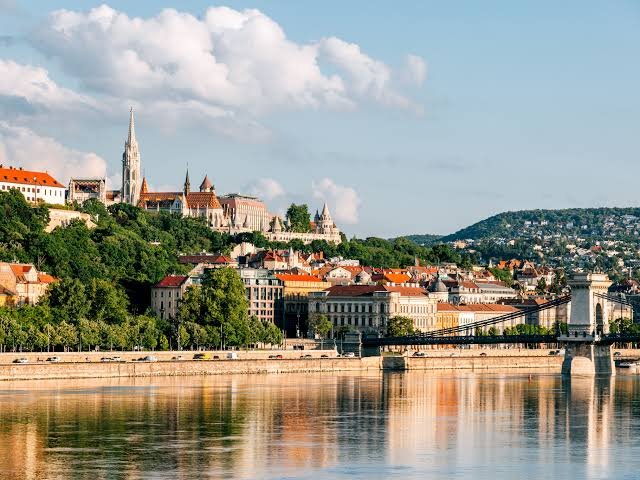
A yellow tram passes along the river while the Parliament’s spires rise behind it. Across the water, streets climb toward a castle district that seems to belong to another century. Budapest makes an immediate impression, but its most interesting stories emerge after that first photograph: in a neighborhood bakery, beneath a bathhouse dome, or along a quiet street where grand buildings stand beside ordinary apartment entrances.
Hungary’s capital rewards travelers who leave room for those encounters. Its architecture deserves attention, yet so do its transport network, food traditions, and complicated history. Planning a satisfying visit means balancing famous sights with everyday experiences—and checking information that older travel guides may have missed. A major bathhouse closure, for example, can change an itinerary more than another list of supposedly unmissable attractions.
Understanding the City Through Its Two Riverbanks
The geography of Budapest provides the simplest starting point. Buda occupies the hillier western bank of the Danube, while Pest spreads across flatter ground to the east. The modern capital emerged through the unification of Buda, Pest, and Óbuda in 1873. Their different characters remain visible: elevated viewpoints and winding streets on one side, broad avenues and dense urban neighborhoods on the other. UNESCO’s account of the city explains how these contrasting areas developed into a single metropolitan landscape. UNESCO’s heritage description
That distinction also makes practical sense when planning your days. Group hilltop walks together instead of repeatedly crossing the river between appointments. Reserve flatter neighborhoods for longer wandering, café stops, and evenings out. Choose accommodation according to the experience you want: proximity to transport and restaurants, quieter surroundings, or immediate access to historic streets. A central address helps, but the slope outside your door and the noise beneath your window can matter just as much.
Seeing the Landmarks Without Turning Your Trip Into a Race
The defining sights of Budapest deserve time rather than hurried collection. Start with the Hungarian Parliament Building from the opposite riverbank, where its overall shape becomes easier to appreciate. Continue toward the Chain Bridge, then explore the Buda Castle district and Fisherman’s Bastion. These places work together visually: river, hills, bridges, and monumental buildings form a connected landscape. Walking between selected viewpoints often reveals more than moving rapidly from one ticketed entrance to another.
Choose interiors according to your interests instead of assuming every famous building requires a visit. Architecture enthusiasts might prioritize a guided tour, while art lovers could give that time to a gallery. Check official admission arrangements before fixing your schedule, particularly for Parliament. Leave space between reservations for security checks, transport, and meals. Two substantial visits in one day usually allow more attention than five rushed stops, especially when hills, queues, or summer heat slow your pace.
Why the Architecture Tells a Bigger Story
The architectural importance of Budapest extends beyond individual monuments. UNESCO inscribed its riverbanks and castle quarter in 1987, adding Andrássy Avenue in 2002. The heritage area covers 476 hectares, reflecting the significance of an entire urban setting. Along the avenue, grand buildings and the historic underground railway illustrate the ambitions of a rapidly developing nineteenth-century capital. The railway opened in 1896, becoming the first underground railway in continental Europe. UNESCO’s listing and historical assessment
Look beyond façades when exploring this history. Notice how avenues meet squares, how courtyards separate public streets from private homes, and how buildings accommodate modern businesses. The city contains layers of reconstruction as well as surviving heritage, so an old-looking surface does not always tell a straightforward story. A knowledgeable walking guide or museum visit can provide context that a photograph cannot. Ask what changed, who commissioned a building, and how its purpose evolved.
Thermal Baths: Plan Around the Experience You Want
Thermal bathing remains one of the most distinctive experiences in Budapest, but choosing a bath requires more thought than selecting the most photographed pool. Consider whether you want an architectural visit, outdoor soaking, swimming, or additional spa services. Széchenyi offers pools, saunas, and bookable treatments, with opening times that differ between some services. Review the operator’s current information before buying, particularly if a specific facility is the main reason for your visit. Széchenyi’s official visitor information
One significant update affects anyone following older itineraries: Gellért Bath closed on October 1, 2025, and its official website gives a planned reopening in 2028. That date remains a plan, not a guarantee. For another bath, check age restrictions, required swimwear, and what your ticket includes. Pack a towel and suitable footwear where permitted, and allow enough time to change without rushing. Treat bathing as a substantial activity rather than squeezing it between distant reservations. Gellért’s official closure notice
Eating Well Beyond the Most Photographed Cafés
Food gives Budapest a more intimate scale. Hungarian gulyás traditionally takes the form of a substantial soup, while pörkölt is closer to the thick stew some international visitors expect from the word “goulash.” Lángos offers a different experience: fried dough commonly served with toppings such as sour cream and cheese. Try these dishes across separate meals rather than ordering every specialty at once. Appetite, weather, and the kitchen’s strengths should guide the choice.
The Great Market Hall provides an introduction to food shopping, but compare stalls and prices before buying. Elsewhere, a bakery breakfast or modest lunch can balance a more elaborate restaurant dinner. Read menus carefully for portion sizes and service charges, and ask about ingredients when dietary requirements matter. A famous café may justify a visit for its interior, but decide whether you are paying primarily for the setting, the food, or both before joining a lengthy queue.
Choosing a Neighborhood That Matches Your Travel Style
Where you stay in Budapest shapes the hours between sightseeing. The inner districts of Pest suit travelers who want restaurants and public transport nearby, while the castle area appeals to those drawn to historic surroundings. However, district names alone reveal little about an individual room. A courtyard-facing apartment and a street-facing room above a late-night venue can offer completely different experiences within the same block. Read recent reviews specifically for noise, access, and maintenance.
The Jewish Quarter deserves attention beyond its nightlife reputation. Plan time for its religious and cultural history instead of visiting only after dark. Ruin bars can be part of an evening, but surrounding buildings also contain residents’ homes. Elsewhere, a residential street, neighborhood café, or small shop can provide a welcome change of pace. Respect private courtyards and entrances: an attractive doorway is not automatically an invitation to enter or photograph the people who live there.
Getting Around With Less Confusion
Public transport makes Budapest manageable without a rental car for most central sightseeing. BKK’s official resources combine route information, ticket guidance, and service updates. Its journey-planning app can help you compare connections before leaving your accommodation. For airport arrivals, the operator identifies the 100E Airport Express as a direct airport-to-city connection and offers onboard bank-card purchase and validation. Check the applicable fare and coverage before traveling instead of relying on an old price quoted elsewhere. BKK’s official transport information
Ticket choice matters as much as route choice. Compare individual journeys with a travelcard based on how often you expect to ride, and read the validation instructions for the product you purchase. Do not assume every airport or special service falls within an ordinary pass. Travelers with mobility requirements should also check station and vehicle accessibility before committing to a route. BKK publishes separate guidance on ticket types, purchasing, and validation. Official tickets and passes
Building a Realistic Budget
A Budapest budget works best when built around actual choices rather than the city’s reputation for affordability. Accommodation dates, room location, restaurant preferences, and paid attractions can produce very different totals. Price your largest commitments first: lodging, airport transfers, and the experiences you would be disappointed to miss. Then add meals and a daily allowance for smaller purchases. Comparing complete costs is more useful than judging a trip by the price of one coffee.
Hungary uses the forint, abbreviated HUF, so keep your working budget in that currency rather than repeatedly estimating every purchase in euros. Compare the final amount payable when booking accommodation, including any listed taxes or additional charges. A sightseeing pass also deserves arithmetic: add the admission costs of places you actually intend to visit, then compare that sum with the pass price. Unused benefits do not create savings simply because the advertised package includes them.
Picking the Right Season and Daily Rhythm
The best time to visit Budapest depends on the kind of trip you want. Spring and early autumn are sensible starting points for travelers who expect to spend long days walking, although comfortable weather is never guaranteed. Summer offers long daylight hours but can make exposed squares and uphill routes tiring. Winter favors shorter outdoor excursions combined with museums, cafés, and indoor activities. Choose the season around your priorities rather than expecting every experience to work equally well year-round.
Within any season, timing can improve a day more than adding another attraction. Put demanding walks earlier in your schedule, leave flexibility around the weather forecast, and avoid making every meal dependent on a reservation across town. Check sunset times if photography matters, but remember that decorative lighting schedules can change. Keep an indoor alternative near each major outdoor area. That approach makes rain or unexpected heat a manageable adjustment instead of a reason to abandon the day.
A Three-Day Itinerary With Room to Explore
Three full days in Budapest offer a useful introduction, provided you resist trying to cover everything. Spend the first day understanding the river: walk part of the Pest waterfront, view Parliament, and cross toward the castle district. Choose one main interior visit, then leave the remaining time for streets and viewpoints. On the second day, explore Andrássy Avenue and City Park, pairing the area with a bath visit if that suits your interests and available tickets.
Use the third day for neighborhood exploration, food, and whichever subject has caught your attention. That might mean a deeper historical visit, another museum, or a slower walk followed by a long lunch. Keep your departure logistics visible when planning the final afternoon. With a fourth day, consider adding more time locally before committing to an excursion. Staying longer in one neighborhood can be more rewarding than spending several hours traveling simply to add another destination.
What Is Changing—and What Travelers Should Watch

The visitor experience in Budapest continues to change through practical improvements as well as major restoration projects. In September 2026, BKK announced the introduction of digital timetable boards and promoted walking and cycling activities during European Mobility Week. Those announcements point toward greater attention to passenger information and alternatives to car travel. They do not mean every route or street has already changed, so travelers should distinguish a published proposal from a completed improvement. BKK’s September 2026 announcements
Looking ahead, maintaining historic attractions while modernizing their operation will remain an important challenge. Gellért’s closure shows how restoration can temporarily remove a major attraction from a visitor’s plans. A reasonable expectation is that digital information will play a larger role in navigating such changes, although individual projects may face delays. For travelers, the useful habit is simple: revisit official opening notices shortly before departure, even when flights and accommodation were booked months earlier.
Key Takeaways
The strongest Budapest itinerary combines a few deliberate bookings with generous walking time. Choose your accommodation for its exact location and conditions, organize sightseeing geographically, and give thermal bathing its own space in the schedule. Budget from current prices for your dates rather than broad claims about cheap travel. Above all, check any attraction that is essential to your trip before paying for arrangements built around it.
Give everyday experiences the same attention as famous landmarks. A neighborhood lunch, an unhurried river crossing, or an hour studying one museum collection can become the most memorable part of a visit. Keep your schedule flexible enough to follow an interest when it appears. That flexibility also helps you cope with weather, maintenance closures, and transport changes without losing the pleasure of exploring a place at your own pace.
Conclusion
Budapest offers more than a dramatic skyline. Its appeal lies in the relationship between monumental architecture and ordinary city life: people commuting beneath historic buildings, shopping near celebrated attractions, and sharing neighborhoods with visitors. Understanding that relationship makes a trip richer. You begin to see the city as a place with its own routines and priorities, rather than a collection of backgrounds for photographs.
Start by choosing three experiences that matter most to you, then build your route around them. Verify their current arrangements, reserve what needs reserving, and leave the rest of the day open enough for discovery. Follow your curiosity into the food, architecture, or history that holds your attention. The next step is to explore those interests in greater depth—and turn a promising city break into a journey you will remember.
FAQs
How many days do you need in Budapest?
Three full days provide a good introduction. Four or five allow more museums, neighborhood walks, and a slower pace.
Is the city expensive to visit?
Costs depend on your dates and choices. Check accommodation and attraction prices before setting a budget.
Should first-time visitors stay in Buda or Pest?
Pest suits convenient transport and dining; Buda appeals to travelers seeking hillside surroundings. Check the exact street and property.
Is Gellért Bath currently open?
No. It closed on October 1, 2025, with reopening planned for 2028, according to its official website.
Do you need a car for sightseeing?
Usually not. Walking and public transport cover most central itineraries; check accessibility and connections for your specific needs.
You May Also Read: Edinburgh