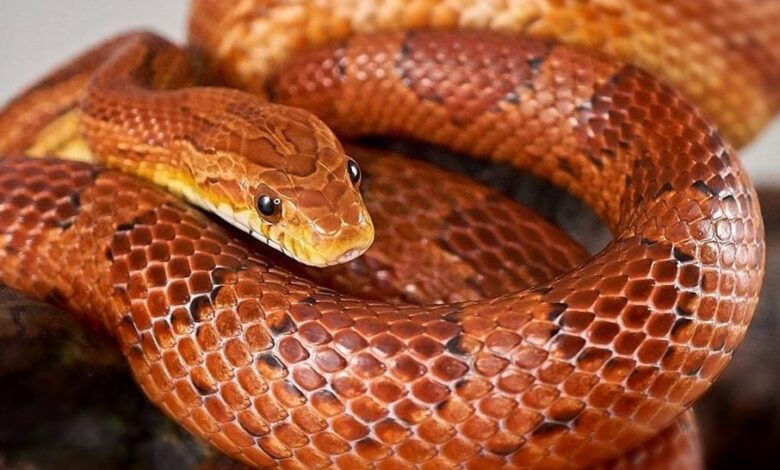
The corn snake (Pantherophis guttatus) is one of the most popular pet snakes in the world, especially among beginners, due to its calm temperament, manageable size, and relatively simple care requirements. Native to North America, particularly the southeastern United States, corn snakes are commonly found in forests, grasslands, farmlands, and even abandoned buildings where rodents are present. Their name is believed to come from their frequent presence near grain storage areas, where they hunt mice and other pests. Over time, they have become widely domesticated and are now one of the most commonly bred reptile species in captivity.
Corn snake are non-venomous constrictors, meaning they subdue their prey by wrapping around it rather than using venom. This makes them completely harmless to humans, and their gentle nature has made them a top choice for reptile enthusiasts. Unlike many wild snakes that are defensive or aggressive, corn snakes are typically calm and tolerate handling well when properly cared for. This behavior is one of the key reasons they are recommended for first-time snake owners.
Understanding corn snakes is essential before bringing one into captivity. Although they are considered low-maintenance compared to other reptiles, they still require proper enclosure setup, correct feeding schedules, and consistent environmental conditions. Learning about their natural behavior helps owners create a stress-free environment that supports long-term health and well-being.
Physical Characteristics and Morphs
Corn snakes are slender, medium-sized reptiles that typically grow between 3 to 5 feet in length when fully mature. Their bodies are covered in smooth scales that create a glossy appearance, often displaying vibrant patterns of orange, red, brown, and black. These markings form saddle-like shapes along the back, which help them blend into leaf litter and natural surroundings in the wild. Their belly is usually marked with a distinctive checkerboard pattern, which is another identifying feature.
One of the most fascinating aspects of corn snakes is the wide variety of “morphs” available through selective breeding. A morph refers to a genetic variation that alters the snake’s color and pattern. Some of the most popular morphs include albino (lacking dark pigmentation), amelanistic (bright orange and red tones), snow (white with faint pink markings), and ghost morphs with faded, pastel-like appearances. These variations have made corn snakes especially popular in the pet trade, as they offer unique visual appeal while maintaining the same calm temperament.
In terms of lifespan, corn snakes can live between 15 to 20 years in captivity when properly cared for, significantly longer than many other reptile species. Juveniles are usually smaller and more vibrant in coloration, gradually developing deeper tones as they mature. Identifying a healthy corn snake involves checking for clear eyes, smooth shedding, active movement, and a well-rounded body condition without visible injuries or signs of parasites.
Natural Habitat and Enclosure Setup
In the wild, corn snakes inhabit a variety of environments including forests, rocky hillsides, grasslands, and agricultural fields. They are highly adaptable and often found near human settlements where rodents are abundant. This adaptability has contributed to their success as a species and their suitability for captivity. However, replicating their natural environment in a controlled enclosure is essential for their health and comfort.
A proper corn snake enclosure should include a secure tank, ideally starting at 20 gallons for juveniles and increasing to 40–75 gallons for adults. The enclosure must have a temperature gradient, with a warm side ranging between 27–30°C (80–86°F) and a cooler side around 24–26°C (75–79°F). This allows the snake to regulate its body temperature naturally. Humidity levels should be kept moderate, typically between 40% and 60%, with occasional increases during shedding periods.
Substrate selection is also important for comfort and hygiene. Common options include aspen shavings, coconut fiber, or reptile-safe paper products. The enclosure should include multiple hiding spots, one on the warm side and one on the cool side, to reduce stress. Branches, rocks, and artificial plants can be added for enrichment and climbing opportunities. A secure lid is essential, as corn snakes are known escape artists and can squeeze through surprisingly small gaps.
Diet and Feeding Requirements
Corn snakes are carnivorous and primarily feed on small rodents in both wild and captive environments. In nature, they hunt mice, small rats, and occasionally birds or amphibians. Their hunting method involves constriction, where they wrap their body around the prey to immobilize it before swallowing it whole. This feeding behavior is highly efficient and allows them to survive in a wide range of environments.
In captivity, corn snakes are typically fed frozen-thawed mice or rats, which are safer and more convenient than live prey. Frozen feeding reduces the risk of injury to the snake and is considered the most ethical option. The feeding schedule depends on the age and size of the snake. Juveniles are usually fed once every 5–7 days, while adults are fed every 7–14 days depending on their metabolism and activity levels.
It is important to choose appropriately sized prey, generally no larger than the widest part of the snake’s body. Overfeeding can lead to obesity, while underfeeding may affect growth and health. Feeding should be done in a calm environment to avoid stress, and handling should be minimized immediately after meals to prevent regurgitation.
Behavior and Temperament
Corn snakes are known for their calm and docile temperament, making them ideal pets for beginners. They are generally non-aggressive and rarely bite unless they feel threatened or stressed. When properly handled, they often become comfortable with human interaction and can even appear curious about their surroundings. This gentle nature has contributed significantly to their popularity in the reptile hobby.
These snakes are primarily crepuscular, meaning they are most active during dawn and dusk. During the day, they often hide in secure spaces to rest and conserve energy. In captivity, regular but gentle handling helps them become accustomed to human presence. However, excessive handling, especially after feeding or during shedding, should be avoided to prevent stress.
When threatened, corn snakes may exhibit defensive behaviors such as freezing, attempting to escape, or releasing a musky odor. These behaviors are natural survival mechanisms and should not be interpreted as aggression. With consistent care and a stable environment, corn snakes quickly adapt and become one of the most manageable reptile pets available.
Health, Care, and Maintenance

Maintaining good health in corn snakes requires regular monitoring and proper enclosure hygiene. One common issue is incomplete shedding, known as dysecdysis, which can occur due to low humidity or poor nutrition. Providing a moist hide during shedding periods helps prevent this problem. Respiratory infections may occur if temperatures are too low or humidity is too high, making environmental balance crucial.
Parasites can also affect corn snakes, especially if they are wild-caught or exposed to unclean conditions. Regular cleaning of the enclosure, removal of waste, and proper substrate replacement help reduce these risks. A healthy corn snake should have clear eyes, smooth skin, regular feeding behavior, and active movement.
Routine veterinary care is recommended, especially if any abnormal behavior is observed. Early detection of health issues significantly improves treatment outcomes. Preventative care, combined with proper husbandry, ensures a long and healthy life for the snake.
Conclusion
Corn snakes are an excellent choice for reptile enthusiasts due to their gentle temperament, attractive appearance, and manageable care requirements. They offer a rewarding experience for beginners while also being appreciated by experienced keepers for their beauty and variety of morphs. With proper habitat setup, consistent feeding routines, and regular handling, corn snakes can thrive for decades in captivity.
Understanding their natural behavior and environmental needs is key to responsible ownership. By replicating their wild conditions and providing attentive care, owners can enjoy a long-lasting bond with one of the most fascinating and beginner-friendly snake species in the reptile world.
FAQs
What do corn snakes eat?
Corn snakes mainly eat rodents such as mice and small rats in captivity.
Are corn snakes good for beginners?
Yes, they are one of the best beginner-friendly pet snakes due to their calm nature.
How big do corn snakes get?
They usually grow between 3 to 5 feet in length.
How long do corn snakes live?
With proper care, they can live 15 to 20 years.
Do corn snakes bite?
They rarely bite and are generally very docile when handled properly.
What is a corn snake morph?
A morph is a genetic variation that changes the snake’s color and pattern without affecting its behavior.
You May Also Read: Grass Snake