Edward Godwin was a British architect and designer whose work played an important role in shaping the transition from Victorian decorative styles to early modern design thinking. Active during the 19th century, he worked across architecture, furniture design, and interior planning, making him one of the most versatile creative figures of his time. His significance lies not only in the buildings he designed but also in the way he redefined how interiors and furniture could be both functional and aesthetically refined.
Godwin is often associated with the Gothic Revival movement and later with the Aesthetic Movement, both of which influenced his approach to form, structure, and decoration. Over time, his work moved away from heavy ornamentation toward simplicity, proportion, and clarity. This evolution places him in a key position in design history, as his ideas helped bridge traditional Victorian aesthetics and the emerging principles that would later define modernist design in the 20th century.
Early Life and Formation of His Design Philosophy
Edward Godwin was born in Bristol in 1833 during a period of rapid industrial expansion in Britain. The environment of his upbringing exposed him to a contrast between historic architecture and the rapidly changing urban landscape shaped by industrial growth. While detailed records of his early education are limited, his later work suggests a strong early interest in structure, visual composition, and architectural detail.
As he developed intellectually and professionally, Godwin became influenced by key Victorian thinkers who emphasized the moral and artistic value of design. Writers such as John Ruskin and Augustus Pugin encouraged the idea that architecture should reflect honesty in materials and a deeper cultural meaning. These ideas had a lasting effect on Godwin’s design philosophy, shaping his belief that buildings and objects should not only serve practical needs but also contribute to artistic and cultural expression.
Architectural Career and Work in the Gothic Revival Style
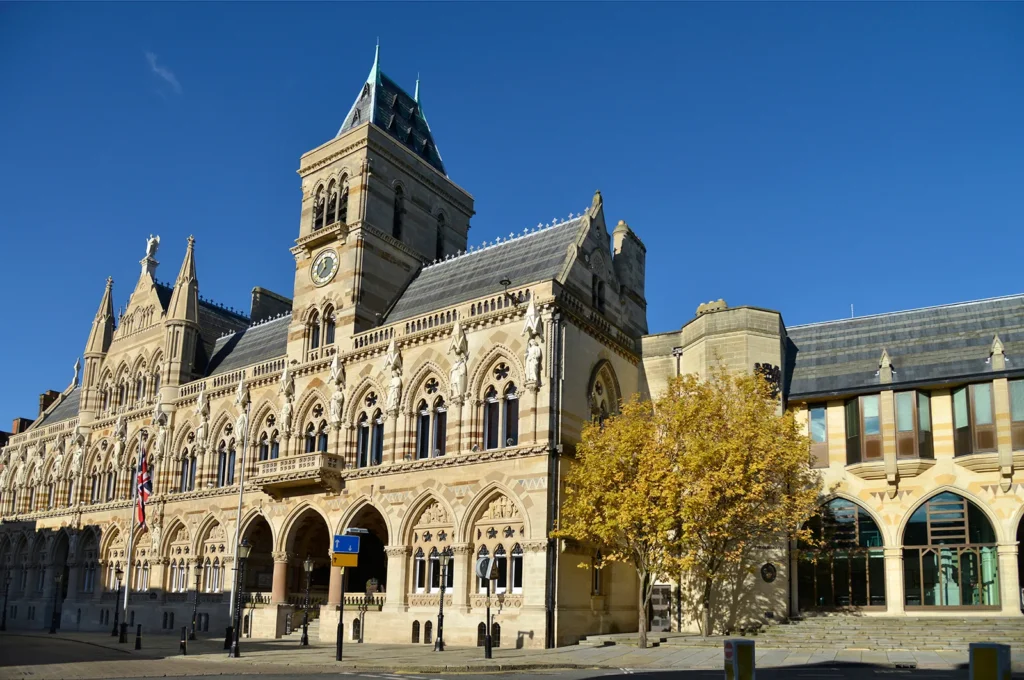
Edward Godwin began his professional career during the height of the Gothic Revival movement, which sought to revive medieval architectural forms in response to industrialization. His early architectural work reflected this style through pointed arches, detailed stonework, and structured symmetry. One of his most recognized early achievements includes civic architecture that demonstrated both decorative skill and practical design thinking.
However, Godwin did not remain confined to strict Gothic imitation. Over time, he began to simplify architectural forms, reducing unnecessary ornamentation and focusing more on proportion and spatial clarity. This shift marked an important turning point in his career, as he moved from historical revivalism toward a more individual and progressive design approach. His later architectural ideas show an early departure from Victorian excess, suggesting a growing interest in modern simplicity and functional expression.
Edward Godwin and the Aesthetic Movement in Design
The Aesthetic Movement of the late 19th century emphasized beauty, harmony, and artistic freedom in everyday life. Edward Godwin became closely associated with this movement, contributing significantly to its visual and conceptual development. Instead of focusing on elaborate decoration or symbolic meaning, the movement promoted the idea that design should exist for its own aesthetic value.
Godwin’s interiors reflected this philosophy through balanced layouts, controlled use of color, and careful attention to spatial harmony. His work avoided overcrowding and unnecessary detail, favoring clean arrangements that allowed each design element to contribute to a unified composition. This approach helped redefine Victorian interior design by shifting attention toward simplicity and visual coherence rather than ornamental complexity.
Furniture Design and Contribution to Early Modern Aesthetics
One of Edward Godwin’s most influential contributions was his furniture design, which marked a significant departure from traditional Victorian styles. During a period when furniture was often heavily decorated and visually dense, Godwin introduced designs that emphasized simplicity, structure, and practicality. His pieces often featured straight lines, geometric balance, and minimal surface decoration, creating a distinctive visual identity.
A major influence on his furniture design was Japanese aesthetics, which he admired for their clarity, restraint, and focus on functional beauty. This influence can be seen in his use of clean proportions and thoughtful material selection. His furniture designs, including cabinets, chairs, and tables, were not only functional objects but also early expressions of modern design principles. Today, his work is often recognized as an important step toward modernist furniture design, where usability and simplicity became central values.
Personal Life and Artistic Environment
Edward Godwin’s personal life was closely connected to the artistic and cultural circles of Victorian Britain. He formed a significant relationship with actress Ellen Terry, which influenced both his personal experiences and his creative output. Their shared environment allowed Godwin to experiment with interior design in a more personal context, creating living spaces that reflected his evolving aesthetic ideas.
Beyond this relationship, Godwin was part of a broader artistic network that included painters, writers, and designers of the period. These connections helped him stay engaged with contemporary cultural developments and reinforced his role within the Aesthetic Movement. While aspects of his personal life attracted attention during his time, his professional contributions remain the primary focus of his historical significance.
Legacy and Influence on Modern Design Principles
Edward Godwin died in 1886, but his influence continues to be recognized in the study of architectural and design history. His work represents an important transition between the decorative traditions of the Victorian era and the emerging principles of modern design. By reducing ornamentation and emphasizing proportion and function, he helped introduce ideas that would later become central to modernist thinking.
His furniture and interior design work, in particular, is seen as a precursor to 20th-century minimalism. Designers and historians often highlight his ability to combine aesthetic refinement with practical usability, a balance that remains essential in contemporary design practice. His legacy is preserved in museums and design archives, where his work continues to be studied as part of the evolution of modern architecture and decorative arts.
Conclusion
Edward Godwin was a significant figure in 19th-century design whose work bridged the gap between Victorian architectural traditions and modern design principles. Through his contributions to Gothic Revival architecture, the Aesthetic Movement, and furniture design, he introduced a new way of thinking about form, function, and beauty. His shift toward simplicity and structural clarity helped reshape design thinking during a period of cultural transformation in Britain.
Today, Edward Godwin is remembered not only as an architect and designer but also as an innovator whose ideas influenced the direction of modern interior and furniture design. His legacy demonstrates how thoughtful design can evolve beyond its time and continue to inspire future generations.
FAQs About Edward Godwin
Who was Edward Godwin?
Edward Godwin was a 19th-century British architect and designer known for his contributions to Gothic Revival architecture and the Aesthetic Movement. He worked across architecture, furniture, and interior design, making him a versatile figure in Victorian design history.
What is Edward Godwin best known for?
He is best known for his transition from Gothic Revival architecture to more simplified and modern design approaches, especially his minimalist furniture influenced by Japanese aesthetics.
What design movement was Edward Godwin associated with?
Edward Godwin was associated with both the Gothic Revival movement and the Aesthetic Movement, which emphasized beauty, harmony, and artistic expression in design.
How did Edward Godwin influence modern design?
He influenced modern design by introducing simplicity, geometric structure, and functional beauty into furniture and interiors, ideas that later became central to modernist design.
Why is Edward Godwin important in design history?
He is important because he represents a transitional figure who helped move Victorian design toward modern principles focused on simplicity, proportion, and usability.
Where can Edward Godwin’s work be seen today?
His designs are preserved in museums and design collections, where they are studied as important examples of late Victorian and early modern design evolution.
You May Also Read: How Deep Is Lough Neagh