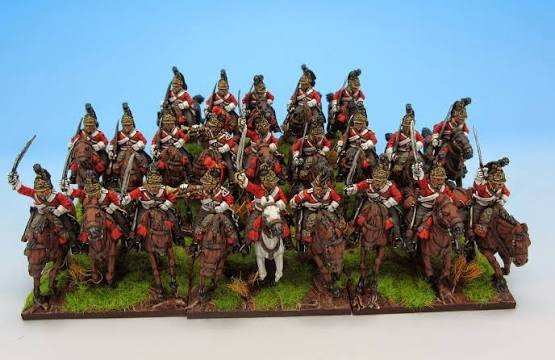
The 6th Dragoons, officially known as the 6th (Inniskilling) Dragoons, were a historic British cavalry regiment raised in 1689 and active until 1922. Originally formed in Ireland during the political and military conflicts surrounding the Williamite War, the regiment became one of the most recognised cavalry units in the British Army. Their unique role as dragoons allowed them to fight both mounted and on foot, giving commanders a flexible force that could adapt to different battlefield situations.
Over more than two centuries of service, the 6th Dragoons experienced the transformation of warfare from traditional horse cavalry battles to modern mechanised military operations. They fought in major campaigns including the Battle of the Boyne, Waterloo, the Crimean War, the South African War, and the First World War. Their history represents not only military courage but also the ability of a regiment to adapt when weapons, tactics, and battlefield conditions changed.
The Origins and Formation of the 6th (Inniskilling) Dragoons in 1689
The story of the 6th Dragoons began in 1689 when cavalry units were raised by the people of Enniskillen in Ireland to support William of Orange during the conflict with supporters of King James II. These local forces were later organised into a formal cavalry regiment known as Sir Albert Cunningham’s Regiment of Dragoons. The unit quickly became connected with the town of Enniskillen, which gave rise to the famous name “Inniskilling Dragoons.”
Unlike ordinary cavalry units that focused mainly on mounted combat, dragoons were designed for flexibility. They could travel quickly on horseback but dismount when necessary to fight as infantry. This combination made them valuable during the late 17th and early 18th centuries, when armies needed soldiers who could respond to different battlefield challenges. The early success of the regiment helped establish the traditions of discipline and adaptability that would define the 6th Dragoons for generations.
Early Campaigns and the Development of the Inniskilling Identity
The first years of the 6th Dragoons were closely linked with Ireland’s political conflicts. The regiment participated in campaigns supporting William III’s forces, including the famous Battle of the Boyne in 1690 and later actions during the Williamite War. These early experiences created the foundation of the regiment’s reputation and strengthened its connection with the people and history of Enniskillen.
During the 18th century, the regiment continued serving in European conflicts and gained experience across different theatres of war. It participated in campaigns such as the War of the Austrian Succession and the Seven Years’ War, where cavalry mobility and battlefield discipline remained essential. In 1751, British Army reforms introduced official numerical designations, and the regiment became known as the 6th Regiment of Dragoons, later officially carrying the title 6th (Inniskilling) Dragoons.
The name Inniskilling became more than a geographical reference; it became a symbol of the regiment’s identity. Soldiers carried forward traditions connected with courage, loyalty, and service, creating a strong regimental culture that remained important throughout its history.
The 6th Dragoons During the Napoleonic Wars and the Battle of Waterloo
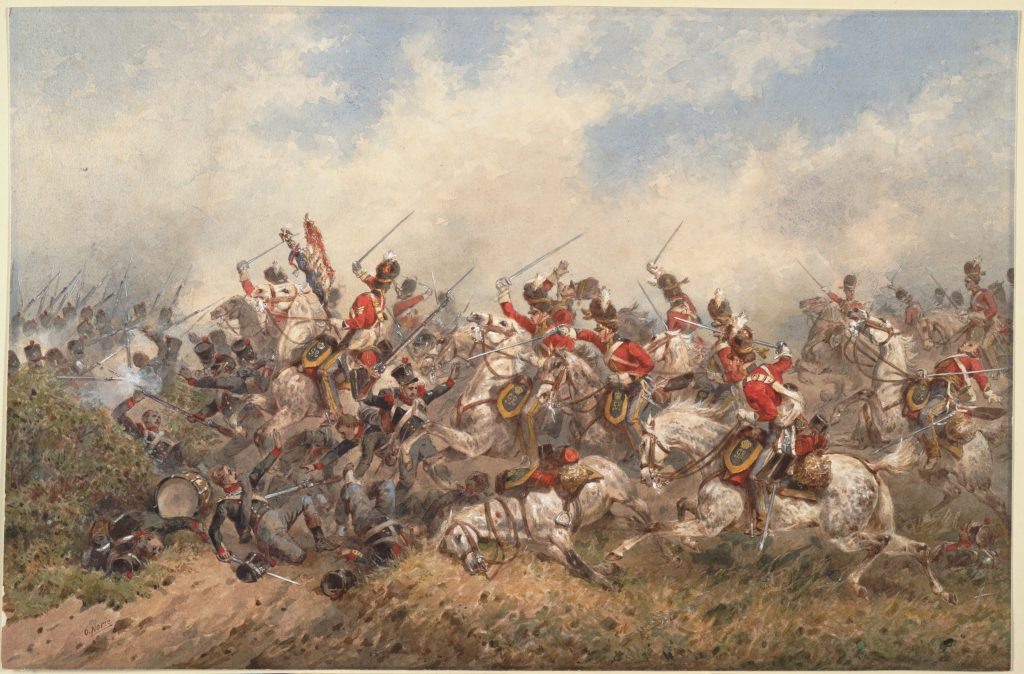
The Napoleonic period became one of the most significant chapters in the history of the 6th Dragoons. During this era, cavalry units played a major role in reconnaissance, battlefield disruption, and powerful attacks against enemy formations. The regiment’s mobility and discipline made it an important part of Britain’s cavalry forces during a period when Europe was shaped by almost continuous warfare.
The most famous moment of the 6th Dragoons during the Napoleonic Wars came at the Battle of Waterloo in 1815. The regiment formed part of the Union Brigade, alongside the Royal Dragoons and Scots Greys. During the battle, the brigade launched a famous heavy cavalry charge against French infantry positions. The action became one of the most remembered cavalry attacks in British military history, although the advance also resulted in significant casualties because the cavalry moved beyond its safest position.
Waterloo became a defining part of the regiment’s heritage. The courage displayed by the soldiers strengthened the reputation of the Inniskilling Dragoons and remained a central part of their identity long after the battle ended. For later generations, Waterloo represented the discipline, bravery, and sacrifice associated with the regiment.
The Crimean War and the Famous Heavy Brigade at Balaclava
The Crimean War provided another important test for the 6th Dragoons. In 1854, Britain and its allies fought against Russia in a conflict that demonstrated both the strengths and weaknesses of traditional cavalry warfare. The regiment served as part of the British cavalry forces during the campaign and became involved in one of the most famous cavalry actions of the war.
At the Battle of Balaclava, the 6th Dragoons fought as part of the Heavy Brigade during its successful charge against Russian cavalry forces. Unlike the later Charge of the Light Brigade, which ended in disaster, the Heavy Brigade’s attack demonstrated the power of disciplined cavalry action when properly supported. The engagement became an important example of the effectiveness of trained cavalry troops during the mid-19th century.
However, the Crimean War also showed the changing nature of warfare. Improvements in firearms, artillery, and battlefield organisation were beginning to challenge the traditional dominance of mounted soldiers. The 6th Dragoons continued adapting, but the future of cavalry was becoming increasingly uncertain.
Life, Uniforms and Traditions of the 6th Dragoons
Life in the 6th Dragoons was built around strict military discipline, specialist cavalry training, and a strong sense of regimental belonging. Soldiers were trained in horsemanship, weapons handling, battlefield movement, and the coordination required to operate effectively as mounted troops. The relationship between cavalrymen and their horses was essential because mobility and control could determine success during combat.
The regiment’s uniforms and symbols reflected its long history and connection with the Inniskilling name. Like many British cavalry units, the appearance of the regiment changed over time as military requirements developed. Earlier uniforms focused heavily on traditional cavalry appearance, while later designs became more practical for modern warfare. Despite these changes, badges, colours, and ceremonial traditions helped maintain the regiment’s identity.
Regimental traditions were also an important part of military life. Stories of past battles, especially Waterloo and Balaclava, helped create a shared memory among soldiers. These traditions connected new recruits with previous generations and ensured that the history of the 6th Dragoons continued even during periods of major change.
The First World War and the Transformation From Cavalry to Armoured Warfare
The First World War marked the beginning of the end for traditional cavalry warfare. The 6th Dragoons entered the conflict after serving in India and arrived on the Western Front in 1914. They fought throughout the war, taking part in major battles including the Somme, Cambrai, and Amiens. During this period, the regiment experienced the reality of modern warfare, where machine guns, artillery, and trench systems reduced the effectiveness of traditional cavalry charges.
As warfare changed, the British Army began moving away from horse-mounted cavalry toward mechanised forces. Tanks and armoured vehicles increasingly replaced the battlefield roles once performed by cavalry horses. The 6th Dragoons adapted to this new military environment, continuing the same tradition of mobility and flexibility that had defined them since their creation.
This transition was not simply the end of an old style of warfare; it represented the continuation of the regiment’s ability to evolve. The same qualities that made the 6th Dragoons successful as horse soldiers helped their traditions survive in the age of modern armoured warfare.
The End of the Regiment and the Legacy of the 6th Dragoons
In 1922, the 6th (Inniskilling) Dragoons were amalgamated with the 5th Dragoon Guards to form the 5th/6th Dragoons. This change reflected wider British Army reforms after the First World War, when many historic cavalry regiments were reorganised due to changing military needs.
Although the original regiment no longer exists in its historic form, its traditions continue through later British armoured cavalry units. Museums, archives, and regimental organisations preserve the memory of the Inniskilling Dragoons, ensuring that their campaigns, uniforms, and personal stories remain available to future generations.
The importance of the 6th Dragoons lies in their ability to represent the entire evolution of cavalry warfare. They began as mounted soldiers carrying swords and firearms, fought in famous European battles, served during global conflicts, and eventually became part of the mechanised military world.
Key Takeaways About the 6th Dragoons
The 6th Dragoons were one of Britain’s longest-serving cavalry regiments, formed in 1689 and known officially as the 6th (Inniskilling) Dragoons. Their history includes major events such as the Battle of the Boyne, Waterloo, Balaclava, the South African War, and the First World War.
Their greatest achievement was adaptation. The regiment successfully moved from traditional cavalry warfare into the modern military era, proving that strong traditions could survive even when technology and battlefield strategies changed.
Conclusion
The story of the 6th Dragoons is a story of transformation, resilience, and military tradition. From their origins in Ireland during the late 17th century to their role in some of Britain’s most famous campaigns, the Inniskilling Dragoons demonstrated the importance of adaptability in warfare.
Their legacy continues because they represent more than a cavalry regiment. They represent the changing face of military history itself — from horses to armoured vehicles, from traditional charges to modern combat systems. The 6th Dragoons remain an important example of how a military unit can preserve its identity while adapting to an entirely new world.
FAQs
Who were the 6th Dragoons?
The 6th Dragoons, officially called the 6th (Inniskilling) Dragoons, were a British Army cavalry regiment formed in 1689. They served until 1922 and became known for their participation in major military campaigns.
Why were they called the Inniskilling Dragoons?
The regiment received the Inniskilling name because of its connection with Enniskillen in Ireland, where the original cavalry force was raised during the conflicts of 1689.
What battles did the 6th Dragoons fight in?
The regiment fought in many important campaigns, including the Battle of the Boyne, Waterloo during the Napoleonic Wars, the Crimean War, the South African War, and the First World War.
Were the 6th Dragoons involved in the Battle of Waterloo?
Yes. The 6th (Inniskilling) Dragoons were part of the Union Brigade during the Battle of Waterloo in 1815 and took part in the famous heavy cavalry charge.
What happened to the 6th Dragoons after 1922?
In 1922, the regiment merged with the 5th Dragoon Guards to create the 5th/6th Dragoons. Its traditions continued through later British armoured cavalry units.
Are the 6th Dragoons still active today?
The original 6th Dragoons no longer exists as a separate regiment, but its history and traditions are preserved through military museums and successor armoured units.
You May Also Read: Lydd Airport Romney Marsh