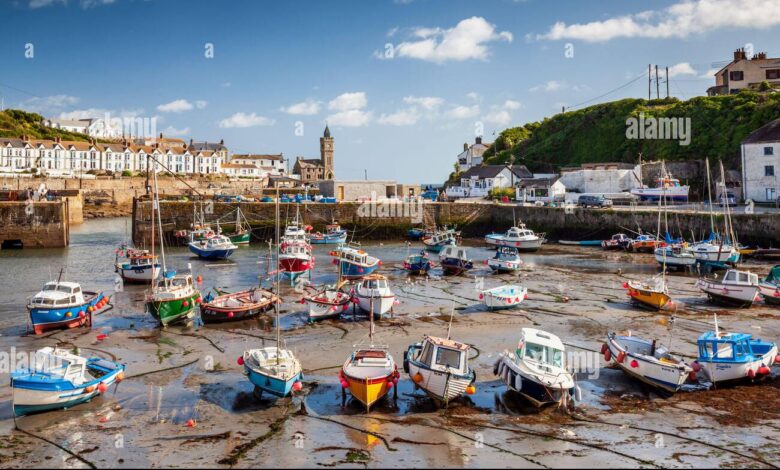
Porthleven tides are an important part of planning any visit to this historic harbour town on the south coast of Cornwall. The changing sea level affects beach access, harbour conditions, fishing, surfing, photography, and coastal walks. Anyone heading towards the water should therefore check the latest high and low tide predictions before leaving. A tide table provides predicted times and heights, but it should always be considered alongside the weather, swell, wind, and local safety information because actual sea conditions can be more challenging than a tide prediction alone suggests.
Porthleven’s exposed coastal setting makes this particularly important. The beach extends east from the historic harbour towards Loe Bar when conditions and water levels allow, while the area is also known for powerful surf and dramatic seas. Visit Cornwall describes Porthleven Beach as a steeply shelving sand-and-shingle beach where swimming is not recommended because of potentially dangerous conditions. For visitors, the practical rule is simple: check Porthleven tide times before approaching the shoreline and reassess the conditions when you arrive.
Porthleven Tides Today and What to Check
People searching for Porthleven tides today usually want four pieces of information: the next high tide, the next low tide, their predicted heights, and whether the tide is currently rising or falling. These details are more useful than simply knowing that a high tide will occur during the day. Tide predictions change from one date to another, so visitors should use an updated daily forecast rather than relying on times remembered from a previous trip. Predictions should also be checked again shortly before any activity where changing water levels could affect access or safety.
It is equally important to understand that predicted tide height is not the same as the height of waves reaching the shore. Wind direction, atmospheric conditions, swell, and local coastal features can influence what visitors actually experience. This distinction matters greatly at Porthleven because large waves can affect the harbour and exposed coastline even when someone has correctly checked the tide table. For a day at the coast, use tide times as one part of the decision-making process rather than treating them as a complete description of sea conditions.
Understanding High and Low Tide at Porthleven
Porthleven normally follows a semi-diurnal tidal pattern, producing approximately two high waters and two low waters during a lunar day. High tide is the stage when the predicted sea level reaches a local maximum, while low tide represents a local minimum. Between these points, the water either rises on the flood tide or falls on the ebb tide. Because the tidal cycle does not fit neatly into a 24-hour clock, high and low water occur at different times on successive days. This is why yesterday’s Porthleven tide times should never be used to plan today’s activities.
The size of the tidal range also changes through the lunar cycle. Spring tides occur around new and full moons and generally produce a larger difference between high and low water. Neap tides occur around the first and third quarter moons and normally produce a smaller range. These terms have nothing to do with the season of spring. For visitors to Porthleven, tidal range matters because it influences how much shoreline may be exposed and how significantly the appearance of the harbour and beach can change during a single visit.
Porthleven Tide Times for the Next Seven Days
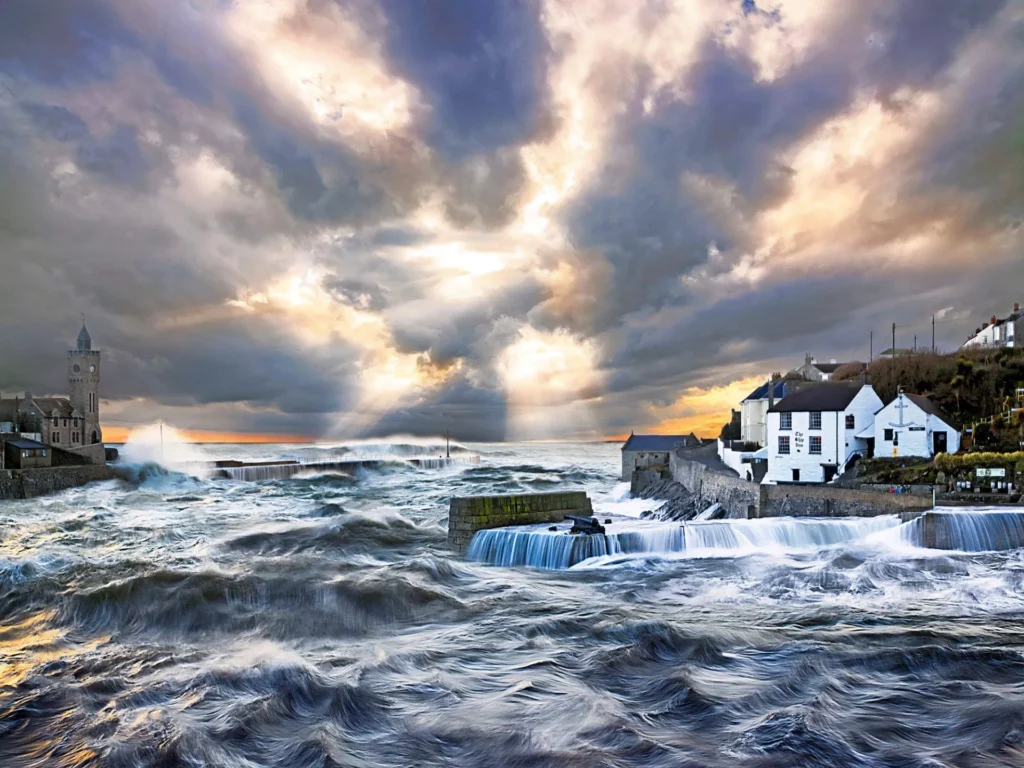
A seven-day Porthleven tide forecast can be particularly useful for holidays, weekend trips, fishing plans, photography, and coastal walking. Instead of choosing an activity first and checking the sea afterwards, visitors can compare the predicted high and low waters across several days. A low-water period may suit someone hoping to see more of the exposed shoreline, while a photographer interested in the harbour may deliberately choose a different tidal state. The important point is to select the date first and then confirm that day’s individual predictions rather than assuming similar times throughout the week.
Weekly predictions also help visitors understand how the tidal range is developing. High and low water times generally move later from one day to the next, while their predicted heights vary throughout the spring-neap cycle. Searchers looking for “Porthleven tides tomorrow” should therefore check tomorrow’s dedicated forecast instead of adding a fixed number of minutes to today’s times. For longer stays, bookmark a reliable UK tidal prediction service and check it each morning, especially before walking below cliffs, exploring the beach, fishing from exposed locations, or entering the water.
How to Read Porthleven Tide Times and Heights
A Porthleven tide table normally presents a date followed by alternating high and low waters, with a time and predicted height for each event. For example, a listing marked “High” identifies high water, while “Low” identifies low water. Heights are commonly displayed in metres in UK forecasts. The difference between a particular high-water height and the following low-water height gives an indication of the tidal range. A larger difference generally means more substantial movement of water between the two stages, although it does not independently tell you whether conditions will be safe.
Users should also check which time zone the forecast uses, especially around the UK’s seasonal clock changes. British Summer Time and Greenwich Mean Time can create confusion when predictions are copied between websites, screenshots, or calendars. Another useful habit is checking exactly which tidal station or location a forecast represents. A prediction for Porthleven is preferable when planning activities there because times from another Cornish location should not automatically be treated as interchangeable. For navigation or other safety-critical marine activities, use an authoritative tidal source appropriate to that purpose.
How Porthleven Tides Affect Beach Access and Coastal Walks
The changing tide can transform Porthleven Beach considerably. Visit Cornwall says the beach runs for around three miles east from the harbour and notes that, when the tide is out, it is possible to walk along the shoreline towards Loe Bar. That makes lower water attractive to walkers, but exposed sand at one moment does not guarantee a safe return later. Anyone walking along a tidal section should know when the water will begin returning and identify a safe exit rather than depending on being able to retrace the same route.
Being cut off by incoming water is a recognised coastal hazard throughout Cornwall. Official local safety advice warns that tides can move quickly and may leave people unable to return the way they came, particularly where cliffs, rocks, and currents restrict escape options. Walkers should therefore allow a generous safety margin instead of attempting to stay on an exposed section until the predicted high tide. Tide tables are planning tools, not countdown timers, and local signs or temporary warnings should always take priority over an itinerary.
Porthleven Tides for Surfing and Water Sports
Porthleven is well known in Cornwall’s surfing community, but its reputation should not be mistaken for beginner-friendly conditions. The RNLI describes Porthleven Beach as popular with surfers while specifically stating that its reef break should only be used by experienced surfers. Tide level is only one factor influencing a surf session. Swell size and direction, wind, currents, wave period, reef exposure, and a surfer’s ability can all matter as much as the predicted high or low water.
There is therefore no universal “best Porthleven tide” that guarantees suitable surfing. Conditions that experienced local surfers consider manageable may be inappropriate for someone unfamiliar with the break. Paddleboarders and other water users should be equally cautious because changing wind and currents can quickly increase risk. The RNLI has recently warned South Cornwall visitors that strong winds and swell can create difficult conditions even during warm summer weather. Checking both the Porthleven tide forecast and current beach conditions provides a much better picture than relying on tide height alone.
Porthleven Tides for Fishing and Photography
Anglers frequently use Porthleven tide times as one part of their planning because changing water levels influence depth, current, accessibility, and fish movement. However, claims that one tidal stage is always the “best” for fishing are too simplistic. Productive conditions can depend on the target species, location, season, water clarity, weather, and fishing method. A more useful approach is to record catches alongside tidal stage and conditions over repeated sessions. That allows anglers to develop location-specific knowledge instead of assuming every high or low tide will produce the same results.
Photographers can use tidal information differently. Lower water can reveal additional shoreline textures and foreground features, while higher water can produce a completely different harbour composition. Porthleven is especially famous for dramatic seas around its harbour during rough weather, but those conditions should be photographed from a secure location well away from breaking waves. Visit Cornwall notes how severe winter seas can crash over the harbour wall and around the clock tower. A dramatic image is never worth moving onto an exposed harbour wall, rock platform, or wave-washed surface.
Porthleven Beach Safety and Lifeguard Information
Safety deserves particular attention because Porthleven is not simply a sheltered family swimming beach. Visit Cornwall warns that the beach shelves steeply and has strong undercurrents, and it does not recommend swimming there. The RNLI lists Porthleven Beach as lifeguarded daily from 18 July to 6 September in 2026, with patrols scheduled from 10am until 6pm, while also warning visitors that the absence of flags means there are no lifeguards on duty.
Where lifeguards are operating, follow their flags and instructions rather than making a decision solely from a tide app. The RNLI recommends swimming or bodyboarding between red-and-yellow flags and advises people never to swim alone. If somebody gets into difficulty and no lifeguard is available, the guidance is to call 999 or 112 and ask for the Coastguard rather than entering dangerous water to attempt a rescue. Visitors should also check weather and tide conditions before setting out because rapidly changing coastal conditions can make an otherwise ordinary visit significantly more hazardous.
Spring Tides, Neap Tides and Weather Conditions
Spring and neap tides help explain why Porthleven tide heights vary throughout the month. During spring tides, the combined gravitational influence associated with the alignment of the sun, Earth, and moon produces a greater tidal range. Around neap tides, the range is reduced. Neither automatically means that the sea will be rough or calm because waves and weather involve additional processes. A spring tide on a relatively settled day and a neap tide during severe weather can create very different experiences, illustrating why tide height should never be used as a substitute for a marine or weather forecast.
Weather can also change observed sea levels and coastal conditions relative to astronomical predictions. Wind can drive water towards or away from the coast, atmospheric pressure can influence sea level, and swell can create hazardous breaking waves independently of the predicted tidal height. This distinction is particularly relevant around exposed Cornish coastline. Before visiting Porthleven Beach or the harbour during unsettled weather, check tide times, weather forecasts, warnings, wind, and visible conditions together. If local signs, lifeguards, or emergency services advise people to stay away from a particular area, that guidance should override sightseeing or photography plans.
Conclusion
Porthleven tides influence almost every activity taking place close to the shoreline, from beach walks and fishing to surfing and photography. The most useful approach is to check the current day’s high and low water times and heights, understand whether the tide will be rising or falling during your visit, and then compare that information with the weather and sea conditions. For multi-day trips, a seven-day Porthleven tide forecast can help identify suitable windows, but the information should still be checked again on the day because your plans may need to change.
Most importantly, knowing the tide time does not by itself make a coastal activity safe. Porthleven has an exposed shoreline, powerful surf, strong currents, and a steeply shelving beach, so conditions deserve respect at every stage of the tide. Official coastal guidance recommends planning around tides and weather and paying attention to local safety information. Whether you are visiting for the harbour, beach, fishing, walking, or waves, combining accurate Porthleven tide times with sensible coastal awareness will help you plan a safer and more enjoyable visit.
FAQs
What time is high tide in Porthleven today?
High tide times change daily. Check an updated Porthleven tide forecast before visiting.
How many tides does Porthleven have each day?
Porthleven usually experiences two high tides and two low tides each day.
Is Porthleven safe for swimming?
Swimming can be hazardous because of strong currents and changing sea conditions. Always follow local safety advice.
Is low tide good for walking at Porthleven?
Low tide can expose more shoreline, but always check the incoming tide and keep a safe return route.
What is the best tide for surfing in Porthleven?
Conditions depend on tide, swell, wind, and experience. Porthleven’s reef break is generally suited to experienced surfers.
You May Also Read: Canal Street Chester