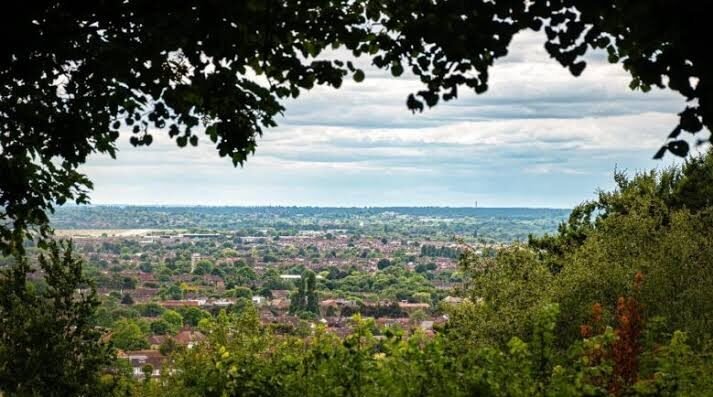
Harrow on the Hill gives visitors something increasingly difficult to find in London: an elevated view combined with a historic neighbourhood that is interesting enough to explore in its own right. The best-known scenery is around St Mary’s Church and the streets near Harrow School, where the hill’s height opens views across northwest London and towards the wider capital. Wembley Stadium is one of the most recognizable distant landmarks, while clearer conditions can reveal more of London’s skyline. The experience is less like visiting a formal observation deck and more like discovering different views while walking through an old hilltop community.
For first-time visitors, it is useful to know that there is no single attraction officially called the “Harrow on the Hill View” with an entrance gate or viewing platform. Instead, the term generally describes views available from elevated parts of historic Harrow on the Hill. There is also a separately named Harrow Viewpoint at Old Redding, in Harrow Weald, which can cause confusion in map and search results. Visitors interested specifically in the historic hill should focus on St Mary’s Church, Church Hill, the High Street and public routes around the Harrow School area.
Where to See the View at Harrow on the Hill
St Mary’s Church is the most useful landmark for visitors looking for elevated scenery. Standing on Church Hill above the surrounding town, the church and its churchyard occupy a prominent position in the historic landscape. The surrounding area provides opportunities to look outward across London while also taking in mature trees, old gravestones and historic architecture. The view varies depending on where you stand, the season and tree cover, so it is better to explore the public areas around the church than to expect one marked spot designed specifically for sightseeing.
The streets around Harrow School provide another perspective on the landscape. Walking around Church Hill, the High Street and nearby public routes reveals views between buildings and across lower-lying parts of Harrow. This is also where the character of the destination becomes clearer: old school buildings and traditional streets sit in the foreground while modern London extends beyond them. Visitors should remain on public routes and observe any access signs associated with school property. The purpose of visiting this area is not simply to find the widest possible panorama, but to experience how the historic hill sits above the modern borough.
What You May See From the Hill
Wembley Stadium is among the easiest distant landmarks to identify from elevated parts of Harrow because its large arch stands apart from much of the surrounding development. On a clear day, longer views can extend towards central London, although the visibility of individual buildings changes considerably with atmospheric conditions. Haze is common across a large city, and leaves can obstruct particular sightlines during parts of the year. Anyone hoping to identify distant towers will benefit from choosing a clear day and using binoculars or a camera with optical zoom.
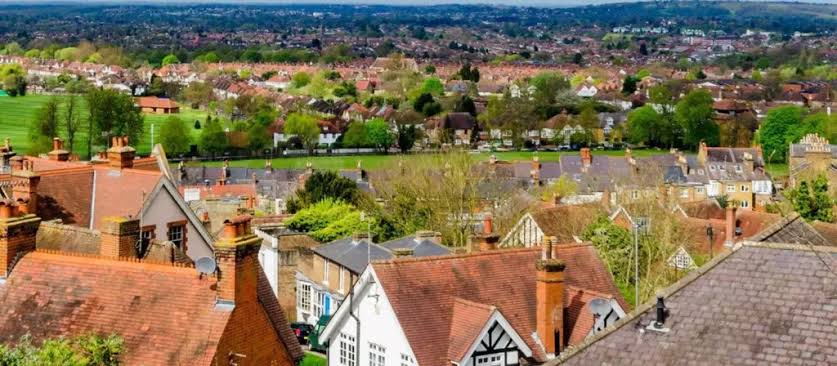
The local landscape is equally important. Looking downhill helps visitors understand why Harrow on the Hill has remained such a recognizable feature of the borough. Rooftops, trees and streets descend towards more densely developed parts of Harrow, while the wider London landscape occupies the distance. This creates photographs with a sense of depth that a close-up skyline photograph may lack. Rather than promising that every famous London building will always be visible, it is more realistic to visit for the overall panorama and treat recognizable distant landmarks as an added benefit when conditions are favourable.
Visiting St Mary’s Church and Churchyard
St Mary’s is a working Church of England parish church as well as an important part of Harrow’s historic identity. Visitors can combine the outward views with time inside the church when it is open. Current church information states that its doors are normally open for quiet prayer and visits from 9am to 5pm Monday to Saturday, with longer opening hours on Sunday around services. Because it remains an active place of worship, visitors should behave respectfully and be prepared for services or church activities to take priority over sightseeing.
The churchyard deserves time rather than a quick stop for photographs. Its historic graves, trees and elevated setting create a quieter experience than the streets below. It also has a notable literary association with Lord Byron, who attended Harrow School and spent time in the churchyard during his school years. That connection gives the location additional historical interest without needing to turn the visit into a long history lesson. People interested in Byron, church architecture or old burial grounds may therefore find the churchyard just as worthwhile as visitors primarily interested in the London view.
How to Walk Up From Harrow-on-the-Hill Station
Harrow-on-the-Hill station is the most convenient starting point for many visitors arriving by public transport. The station is served by the Metropolitan line and Chiltern Railways. From there, Harrow School’s current visitor directions describe the walk uphill as taking roughly ten minutes. The route uses the station exit leading towards the hill, followed by Grove Hill towards the school area. Because the climb is steep enough to be noticeable, visitors who prefer a slower pace should allow additional time rather than treating the official estimate as a fixed walking time.
Once at the top, the area is compact enough to explore without creating an elaborate itinerary. A useful approach is to continue through the historic streets towards St Mary’s Church, spend time around the churchyard and then wander back through the High Street and surrounding public roads. The H17 and 258 buses also serve the Harrow School area, providing an alternative for people who would rather avoid walking uphill. Visitors with mobility concerns should plan carefully because the hill itself, rather than the total distance, is likely to be the main challenge.
Harrow Viewpoint at Old Redding: Know the Difference
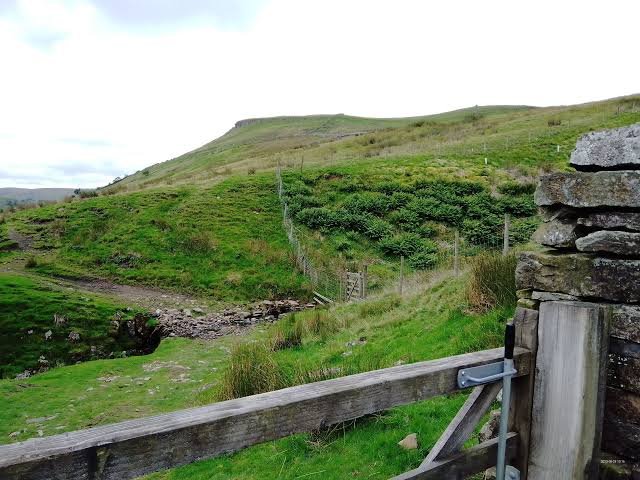
A search for Harrow viewpoints may also produce directions to The Viewpoint at Old Redding. This is a genuine scenic location, but it is not the same place as Harrow on the Hill. Harrow Council identifies The Viewpoint as an open space beside Old Redding in Harrow Weald, next to The Case is Altered public house. The council describes it as having broad views across north London on clear days. It can be reached from Old Redding, while Hatch End is listed as the nearest rail station at roughly a 25-minute walk.
The distinction matters because the two destinations offer different views. Council planning documents describe Old Redding as a long-distance viewing location from which Harrow on the Hill and St Mary’s Church themselves form recognizable features in the landscape. In simple terms, Old Redding is one place from which you can look towards Harrow on the Hill, whereas visiting Harrow on the Hill places you among the historic church, school and hilltop streets. Checking the destination before following map directions can therefore prevent an unnecessary journey to the wrong viewpoint.
Practical Tips for Planning Your Visit
Weather should influence when you visit if distant views are important to you. A dry, clear day with relatively low haze provides a better chance of identifying landmarks across London. For photography, morning or later-afternoon light can create more detail in buildings and the surrounding landscape than harsh midday sunshine. A phone camera is sufficient for general views, but optical zoom is useful for distant landmarks. Visitors should also wear comfortable footwear because exploring the area involves gradients, older streets and more walking than simply arriving at a conventional observation platform.
Public transport is generally convenient, while drivers should check current parking arrangements before travelling. St Mary’s notes that parking immediately outside the church is limited, with additional parking available on surrounding roads subject to local restrictions. Harrow School also publishes specific visitor and parking information for people attending its facilities or events. Checking official information shortly before travelling is worthwhile because transport services, access arrangements and parking restrictions can change. A visit does not need to occupy an entire day; the hill works particularly well as part of a wider walk or local history outing.
Why the Harrow on the Hill View Is Worth Seeing
The main reason to visit is the combination of setting and scenery. London has higher and more dramatic viewpoints, but Harrow on the Hill offers something different. Here, the landscape is experienced alongside a medieval church, historic school buildings, old streets and a neighbourhood that retains a strong sense of place. The view therefore helps explain the geography of Harrow rather than functioning simply as a background for photographs. Seeing modern development spread beneath an old hilltop settlement gives visitors a useful perspective on how different layers of London have developed around one another.
Harrow on the Hill is especially suitable for visitors who enjoy combining walking, architecture, local history and photography. There is no need to arrive expecting a perfectly unobstructed panorama or a formal tourist attraction. The better approach is to explore the hill slowly, notice the changing sightlines and spend some time around St Mary’s Church and the historic streets. That makes the visit worthwhile even if cloud or haze limits the distant skyline. For anyone seeking a quieter perspective on northwest London, the hill remains an interesting place to explore.
FAQs
Where is the best Harrow on the Hill viewpoint?
St Mary’s Churchyard and the surrounding historic streets offer some of the best views.
Can you see Wembley Stadium from Harrow on the Hill?
Yes, Wembley Stadium is one of the most recognizable landmarks visible on clear days.
Is Harrow on the Hill free to visit?
Yes, the public streets and accessible viewpoints can be explored without an entry fee.
How do you reach Harrow on the Hill?
Harrow-on-the-Hill station is the easiest transport option, followed by a short uphill walk.
Is Harrow Viewpoint the same as Harrow on the Hill?
No, Harrow Viewpoint at Old Redding is a separate location in Harrow Weald.
You May Also Read: Best Reins for Toddlers