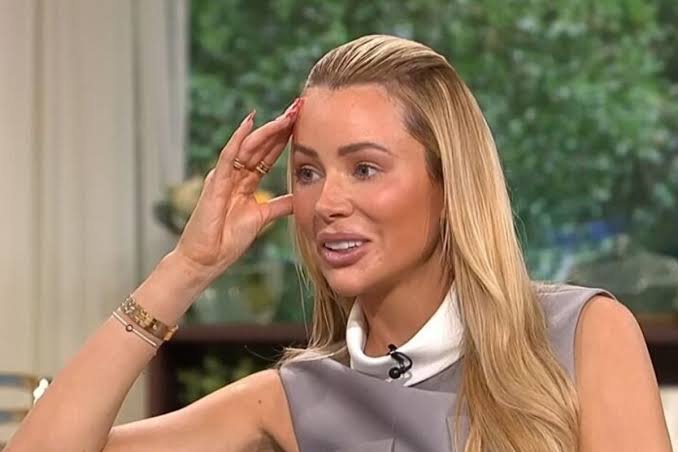
The familiar story of reality television is that a breakout contestant gets a few months of headlines and then disappears when the next series arrives. Olivia Attwood has taken a different route. She entered the public eye through Love Island in 2017, but nearly a decade later she is still building an expanding career across reality television, factual entertainment, podcasting and live TV. In 2026, that momentum is visible in a packed screen slate, including The Heat and the latest Getting Filthy Rich instalment, while the second run of Bad Boyfriends continues to extend the format’s reach.
Her story is less about a single viral moment than about turning recognisability into a durable media career. The evidence is now visible in television commissions, streaming figures, industry awards, brand partnerships and a weekly podcast that gives her a direct relationship with listeners. That combination helps explain why her career remains relevant in a media environment where audiences increasingly move between ITVX, social platforms, podcasts and traditional television.
How Olivia Attwood first became a household name
Olivia Attwood first became widely known as a contestant on the third series of Love Island in 2017. The show gave her the kind of instant visibility that can be difficult to convert into a sustainable career: a large audience, constant social-media scrutiny and a public persona strongly associated with romance and villa drama. She later appeared in other unscripted formats, including The Only Way Is Essex and Celebs Go Dating, extending her visibility beyond one programme. The Guardian’s 2025 profile of her career described a transition from a memorable reality contestant into a documentary presenter whose work now tackles subjects far removed from the dating-show format.
That transition mattered because celebrity television rewards people who can do more than repeat the role that made them famous. Olivia Attwood gradually moved toward formats where she was not simply a participant but the person asking questions, guiding contributors and carrying a programme’s point of view. ITV’s commissioning record shows that shift clearly: from Getting Filthy Rich to The Price of Perfection and then Bad Boyfriends, the broadcaster has repeatedly developed formats around her presence. That is a meaningful distinction in an industry where many reality stars remain dependent on ensemble casts or one-off appearances.
The move from reality star to documentary presenter
The most important change in Olivia Attwood’s career has been her move into factual entertainment. Getting Filthy Rich gave her a format built around investigation rather than confession. The series examines how money is made across parts of the adult entertainment industry, including online content, creator platforms and newer forms of digital sexual commerce. ITV’s description of the 2026 run says the six-part series goes deeper into emerging services and trends, with filming that includes Las Vegas. The programme is deliberately positioned between celebrity access, consumer curiosity and documentary storytelling rather than as a conventional studio talk show.
There is also an important credibility marker in the programme’s history. Getting Filthy Rich won Best Popular Factual Programme at the 2023 Broadcast Awards, with judges praising its appeal to a younger audience and singling out Olivia Attwood as a strong talent with moments of revelation. That does not erase the programme’s entertainment-first style, but it demonstrates that her work has received recognition within the television industry itself. In practical terms, the award helped establish that the format could be treated as more than a celebrity spin-off: it had enough editorial ambition to compete in a factual category.
Why The Price of Perfection changed the conversation
The Price of Perfection took the same accessible presenting style into a very different subject: cosmetic procedures, appearance culture and the science and commercial forces surrounding the pursuit of a certain look. ITV describes the series as an investigation into how science and social media are redefining beauty, with episodes covering weight loss, smiles, skin, mummy makeovers, men and consumers spending large sums on appearance. Olivia Attwood embeds herself with patients and practitioners, allowing viewers to see both the procedure itself and the motivations, risks and financial pressures behind it.
The commercial response was striking. When the second series launched in June 2025, ITV reported a peak overnight audience of 349,000 and an average of 228,000 on ITV2. ITVX had already recorded 323,000 streams after the full series was released, while both series had reached 7.9 million streams collectively. More broadly, programmes fronted by Olivia Attwood had reached almost 40 million ITVX streams at that point. Those numbers matter because they show how her career is being measured in the streaming era: not only by overnight television ratings, but by the longer tail created when viewers can discover a full series on demand.
Bad Boyfriends turned her into a format leader
Bad Boyfriends is arguably the clearest example of Olivia Attwood becoming the engine of a format rather than simply the face of a programme. The premise is deliberately high-pressure: eight men arrive on a Greek island believing they are filming a holiday-style show, only to discover that their partners are involved and that the real goal is to challenge their behaviour within relationships. ITV says the first series passed 11 million ITVX streams, while later 2025 programme material put the figure at more than 12 million. The second series returned with another group, new tests and a stronger emphasis on how couples respond when the pressure turns toward both partners.
The format also illustrates a broader trend in modern reality television: the host increasingly functions as the editorial referee. Instead of merely introducing contestants, she sets the tasks, controls revelations, interprets the evidence and moves the story forward. ITV’s second-series descriptions include phone handovers, relationship challenges, eliminations and a final test, while the ITVX episode guide confirms a ten-episode run. This structure gives the presenter continuity from one episode to the next and makes the personality of the host part of the show’s repeatable formula.
What The Heat says about her next phase
The Heat pushes Olivia Attwood into yet another unscripted environment: a professional kitchen. The 10-part ITV2 and ITVX series follows ten ambitious young chefs in Barcelona, working under Jean-Christophe Novelli while living and competing together. ITV deliberately combines workplace pressure with the social dynamics of reality TV, so service in the kitchen is only one part of the story. After shifts end, the contestants still share the same environment, creating space for friendships, rivalries and romance.
That mix is revealing because it connects the two sides of her career. The show needs the immediacy of a reality host, but it also needs someone who can translate professional stakes for viewers who may know little about restaurant kitchens. ITVX’s episode guide shows the format escalating through service failures, new arrivals, head-to-head challenges and a final decision over the winning chef. In other words, The Heat is less a departure from her established approach than an expansion of it: take a recognisable world, add a competitive structure, then let personality and interpersonal conflict pull audiences through the story.
Podcasting gives Olivia Attwood a different kind of audience
Television remains central to the presenter’s work, but podcasting gives her something broadcast formats cannot: a longer, more intimate conversation with listeners. Olivia’s House with Olivia Attwood is updated weekly, and its September 24, 2026 episode focused on changing routines, dating, single life and the final months of the year. The show’s own positioning blends humour, personal conversation and interviews, allowing her to move from presenter into a more direct host role. Apple Podcasts lists the series as a Society & Culture programme and shows recent episodes appearing on a weekly schedule.
This matters for the wider media business because podcasts can deepen a public figure’s relationship with an audience without depending on a fixed television slot. A viewer might encounter the presenter on ITV2, then continue with a podcast episode, short social clips or an interview. That creates a connected content ecosystem rather than a single programme. It also gives her room to discuss the less structured parts of fame, relationships, work and culture. Her podcast therefore complements rather than competes with her television identity, helping explain why her career now feels broader than the Love Island association that first defined it.
The business of building a recognisable media brand

The rise of Olivia Attwood also sits inside a bigger shift in celebrity economics. Traditional television exposure still matters, but broadcasters increasingly want personalities who can travel across formats and help audiences move between linear TV, streaming platforms and social media. ITV’s own figures show how her programmes collectively generated tens of millions of ITVX streams, while her projects span factual entertainment, reality formats and entertainment television. That cross-format range is valuable because each programme introduces the presenter to a slightly different audience without requiring her to abandon the recognisable tone that connects the brand.
Her fashion and commercial profile reinforces that same model. A River Island feature about her AW25 collaboration shows how her public image extends into style, tailoring and consumer-facing partnerships. The brand interview also reveals an approach to clothing based on pieces that can be worn in multiple ways, which fits the broader evolution of her public profile: recognisable enough for celebrity marketing, but increasingly tied to a presenter identity rather than solely to a reality-show image. These commercial extensions are best understood as part of the modern creator economy, where audiences often follow a personality across television, audio, fashion and social platforms.
What the latest 2026 projects reveal about her career
By September 2026, the picture is unusually busy. The Heat is part of the ITVX catalogue, the latest Getting Filthy Rich series has been released, and the second series of Bad Boyfriends has added to a format whose first run crossed the 12 million-stream mark. Meanwhile, Olivia’s House continues to publish weekly episodes. This combination is important: she is no longer waiting for a single flagship series to define the year. Instead, her name is attached to several recurring and complementary formats across video and audio.
There is also a visible change in the kind of media moments surrounding Olivia Attwood. She can appear in documentary settings, front a reality competition, host a podcast and participate in major television events. Getty Images coverage from the 2026 National Television Awards shows her on the red carpet and later presenting a Daytime Award at the ceremony, another sign that her role has expanded beyond being a contestant or supporting celebrity. The significance is not any single appearance; it is the breadth of roles now available to her within the same television ecosystem.
The practical lessons for aspiring presenters and creators
For viewers interested in the media business, Olivia Attwood’s career offers a useful blueprint, even without copying her route. The first lesson is to develop a clear point of difference after the initial breakthrough. Her early fame came from reality television, but her later programmes gave her repeatable functions: investigate, challenge, interview, mediate and entertain. The second lesson is to build intellectual range. Her projects cover relationships, cosmetic culture, online commerce, cooking and celebrity conversation, which allows the presenter persona to evolve without losing its recognisability.
The third lesson is to think in formats rather than appearances. A one-off guest slot can create visibility, but a repeatable show or podcast creates an asset that viewers can return to. Her Bad Boyfriends, Getting Filthy Rich and The Price of Perfection projects each place her at the centre of a distinct proposition, while Olivia’s House extends the same personal brand into audio. For creators, the actionable takeaway is simple: identify the audience problem or curiosity your personality can serve, then build a format that can generate multiple episodes, clips and conversations around it.
Key Takeaways
Olivia Attwood’s career is best understood as an evolution from contestant-led fame to presenter-led media ownership. Love Island supplied the initial audience, but ITV repeatedly expanded her role into documentary investigation, structured reality and entertainment. Getting Filthy Rich‘s Broadcast Award recognition and the large ITVX streaming figures attached to her projects show that the career has acquired institutional validation as well as public visibility.
The 2026 outlook is defined by diversification. The Heat places her in a new professional reality setting, Bad Boyfriends demonstrates the repeatability of a format built around her, and Olivia’s House gives her a direct weekly relationship with listeners. The most interesting part of the next phase is therefore not simply whether one show becomes a hit; it is whether this multi-platform approach continues to make her a reliable lead across different kinds of unscripted content. Current commissioning and streaming evidence suggests that ITV sees value in keeping that range in play.
Conclusion
Olivia Attwood’s most interesting achievement is not that she stayed famous after Love Island; it is that she kept changing what her fame was useful for. She moved from villa drama to documentary questions, from participant to host, from television to podcasting, and from individual appearances to repeatable formats. Along the way, the evidence has become increasingly measurable: award recognition, strong ITVX streaming figures and a growing slate of programmes across genres. Her career now reflects the reality of modern entertainment, where the most durable personalities can move with audiences rather than remain tied to a single screen.
As 2026 continues, the key story is the expansion of that portfolio. The Heat tests a new environment, Bad Boyfriends proves the value of returning formats, Getting Filthy Rich continues her factual work, and Olivia’s House keeps the conversation going between television releases. For readers tracking the future of UK reality TV, streaming entertainment and creator-led media, her trajectory is worth following closely. Explore the programmes, compare how each format uses her strengths, and watch how the next stage of her career develops across ITVX, ITV2 and podcast platforms.
FAQ
Who is the British presenter and podcaster behind these shows?
Olivia Attwood is a British television presenter and podcaster who first became widely known after appearing on Love Island in 2017. She later built a career across reality television and factual entertainment, fronting programmes including Getting Filthy Rich, The Price of Perfection, Bad Boyfriends and The Heat.
What shows is Olivia Attwood presenting in 2026?
In 2026, her ITV work includes The Heat and the latest instalment of Getting Filthy Rich. The second series of Bad Boyfriends arrived in 2025 and remains part of her established reality-TV portfolio. She also presents the weekly Olivia’s House podcast.
What is The Heat about?
The Heat is a 10-part reality series set in Barcelona, where ten young chefs work and compete in a restaurant led by Jean-Christophe Novelli. The format combines kitchen performance with life together outside service, including social dynamics and relationships.
How successful has Bad Boyfriends been on ITVX?
ITV reported that the first series had passed 11 million streams when the second series was announced in December 2024. By 2025, ITV programme materials referred to more than 12 million streams for the first series.
What is Getting Filthy Rich about?
Getting Filthy Rich explores money-making in the adult entertainment industry and the changes brought by online platforms and new forms of digital content. ITV says the 2026 run examines emerging services, creators and trends, including activity filmed in Las Vegas.
Where can I listen to the podcast?
Olivia’s House with Olivia is listed on Apple Podcasts as a weekly Society & Culture show. Recent episodes in September 2026 cover relationships, dating, fame and everyday life in a more conversational format than her television work.
You May Also Read: Assassin’s Creed Shadows