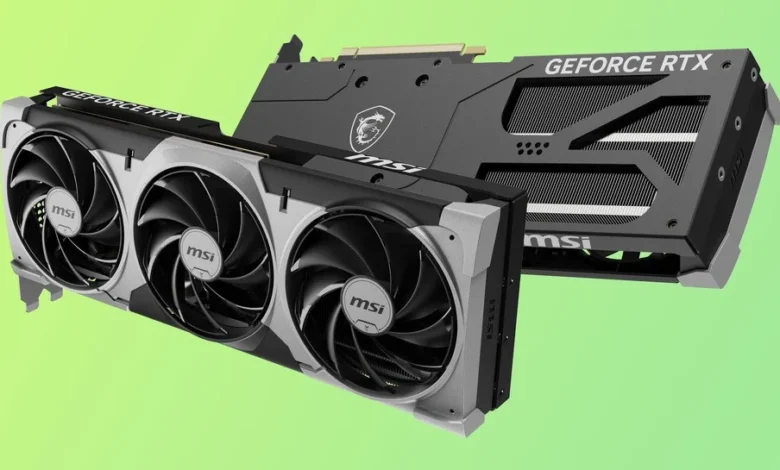
The NVIDIA RTX 5070 has emerged as one of the most anticipated graphics cards in the latest RTX 50 series lineup. Positioned as a mid-to-high-end GPU, it promises significant performance improvements over the RTX 4070 while maintaining a more accessible price point than the top-tier RTX 4080 and 4090 models. Gamers, content creators, and tech enthusiasts alike have been eagerly awaiting its release, and for good reason. With advanced architecture, AI-powered enhancements, and next-generation ray tracing, the RTX 5070 is set to redefine the gaming and creative experience.
This graphics card is designed for both performance and versatility. Gamers can enjoy high frame rates at 1440p or even 4K resolution, while content creators benefit from accelerated rendering, AI-driven workflows, and improved multitasking capabilities. The RTX 5070’s appeal also lies in its energy efficiency and thermal performance, making it suitable for compact builds or systems with moderate power supply units (PSUs). With NVIDIA continuing to push boundaries in GPU technology, the RTX 5070 serves as a compelling option for those looking to upgrade from previous-generation cards like the RTX 4070 or 3060 Ti.
In addition to raw performance, the RTX 5070 supports NVIDIA’s suite of features, including DLSS (Deep Learning Super Sampling), enhanced ray tracing, and improved AI processing with Tensor Cores. These features not only boost gaming visuals but also enhance rendering times and workflow efficiency for professional applications. This article will explore the specifications, gaming performance, content creation capabilities, pricing, and comparisons to competitors, offering a comprehensive guide for anyone considering an RTX 5070 for their PC build.
RTX 5070 Specifications and Technical Details
GPU Architecture and Core Features
The RTX 5070 is built on NVIDIA’s latest architecture, featuring an improved balance of efficiency and performance. It includes a significant increase in CUDA cores, which enhances parallel processing capabilities for gaming, rendering, and AI tasks. With boosted clock speeds, the card delivers smoother performance even in demanding AAA titles or GPU-intensive professional software. The architecture also incorporates advanced ray tracing cores, allowing for realistic lighting, shadows, and reflections in games that support this technology.
One of the standout features of the RTX 5070 is its AI-enhanced processing. DLSS technology leverages Tensor Cores to upscale lower-resolution images in real time, resulting in higher frame rates without compromising visual fidelity. This makes it possible to enjoy 4K gaming experiences even on systems that might struggle with raw processing power. Additionally, improved memory bandwidth and VRAM capacity ensure that large textures, high-resolution assets, and intensive workloads can be handled seamlessly.
For creative professionals, the RTX 5070 supports accelerated rendering in applications like Blender, Adobe Premiere Pro, and DaVinci Resolve. The combination of CUDA cores, Tensor Cores, and ray tracing acceleration ensures that tasks such as video editing, 3D rendering, and AI-driven simulations are significantly faster compared to previous generations. Overall, this GPU is designed to cater to both gamers and creators, offering a versatile solution for high-performance computing needs.
Performance Benchmarks
Early benchmarks of the RTX 5070 suggest it outperforms the RTX 4070 by a significant margin, particularly in ray tracing and 1440p gaming scenarios. Frame rates in AAA games like Cyberpunk 2077, Elden Ring, and Horizon Forbidden West show improvements ranging from 20% to 30% over the previous generation. At 4K resolution, the RTX 5070 maintains stable performance, especially when paired with DLSS 3.0 or 3.1, which boosts FPS while preserving image quality.
Compared to AMD’s next-generation GPUs, the RTX 5070 holds a strong position in terms of ray tracing performance, AI features, and software ecosystem. NVIDIA’s robust driver support and compatibility with creative applications make it particularly appealing for users who need both gaming and professional capabilities. Benchmarks also highlight improvements in energy efficiency and thermal management, allowing the card to maintain high performance without excessive heat generation or power consumption.
Cooling and Power Requirements
The RTX 5070 has been designed with efficiency in mind. Reference models feature dual or triple-fan cooling solutions to manage heat during intense gaming or rendering sessions. Custom aftermarket variants often include advanced cooling technologies, such as vapor chambers or larger heatsinks, to further reduce temperatures and noise levels. For power requirements, NVIDIA recommends a PSU of at least 650W for standard builds, with higher wattage suggested for overclocked setups or systems with multiple high-performance components.
Proper airflow and case ventilation are essential to maximize performance. Users can expect moderate thermal output, and the improved architecture ensures lower power draw compared to previous-generation high-end GPUs. This makes the RTX 5070 suitable for a wide range of system builds, from compact ATX cases to full tower setups, providing both gamers and creators with flexibility when designing their rigs.
RTX 5070 for Gamers
Gaming Performance
Gamers will appreciate the RTX 5070 for its exceptional performance in modern titles. At 1440p resolution, most AAA games run at ultra settings with frame rates exceeding 100 FPS. Even with ray tracing enabled, DLSS ensures smooth gameplay without sacrificing graphical quality. At 4K, the RTX 5070 remains capable, providing enjoyable gaming experiences when paired with high-refresh-rate monitors. VR gamers also benefit from the card’s powerful processing, offering immersive experiences with minimal latency or stuttering.
The combination of ray tracing cores, AI processing, and high VRAM allows the RTX 5070 to handle advanced visual effects, realistic lighting, and dynamic shadows. Gamers can enjoy rich, lifelike graphics that rival higher-end GPUs, making it an excellent choice for enthusiasts who demand both performance and visual fidelity. Competitive gamers also benefit from consistent frame rates, reducing input lag and enhancing responsiveness in fast-paced titles.
Overclocking and Optimization
For users looking to push the RTX 5070 to its limits, overclocking offers additional performance gains. With proper cooling and monitoring, enthusiasts can increase clock speeds and memory performance to achieve higher FPS. NVIDIA’s software tools, such as GeForce Experience and MSI Afterburner, make it simple to adjust settings, monitor temperatures, and optimize performance without risking hardware damage.
Overclocking should be approached cautiously, however, as excessive heat or unstable power delivery can impact longevity. Following recommended guidelines, using custom cooling solutions, and monitoring system stability ensures safe performance enhancement. Gamers who optimize settings carefully can gain a competitive edge without compromising system reliability.
Gaming Builds and Compatibility
The RTX 5070 pairs best with high-performance CPUs such as the Intel i7 or AMD Ryzen 7 series, avoiding bottlenecks that could limit GPU performance. For 1440p and 4K gaming, high-refresh-rate monitors and fast memory modules complement the card’s capabilities. The GPU’s compatibility with a wide range of motherboards and systems ensures flexibility for custom builds, pre-built PCs, or upgrades from older GPUs.
RTX 5070 for Content Creators
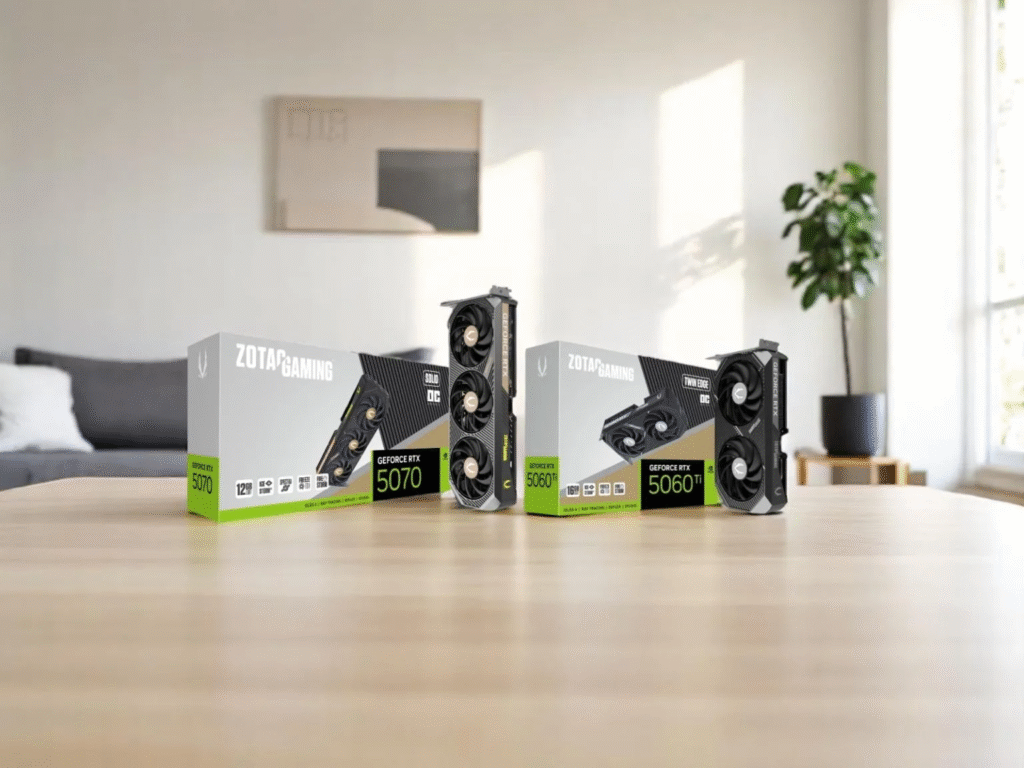
Content creators benefit from the RTX 5070’s accelerated rendering capabilities. Applications like Adobe Premiere Pro, After Effects, Blender, and DaVinci Resolve leverage the GPU’s CUDA cores and Tensor Cores to reduce rendering times and enable real-time previews. AI-powered features like automated upscaling, noise reduction, and intelligent encoding further enhance workflow efficiency.
Streamers can simultaneously game and broadcast without performance degradation, thanks to the card’s efficient multitasking capabilities. The RTX 5070 also excels in 3D modeling, animation, and CAD applications, making it a versatile choice for professionals who need both gaming and creative performance in a single GPU.
Pricing, Availability, and Value
The RTX 5070 launched at a competitive price point relative to its performance tier. While high-demand cards often see price fluctuations, the RTX 5070 remains more affordable than the 4080 or 4090 while offering substantial improvements over the 4070. Retailers and online marketplaces provide a variety of models, including reference cards and aftermarket variants with enhanced cooling and factory overclocking. Considering performance, features, and efficiency, the RTX 5070 offers excellent value for both gamers and creators.
RTX 5070 vs Competitors
Compared to the RTX 4070, the 5070 delivers higher frame rates, improved ray tracing, and better AI processing. Against AMD’s next-generation GPUs, it generally excels in ray tracing performance and software ecosystem support. While some AMD cards may offer similar raw performance at certain price points, NVIDIA’s features like DLSS, NVENC streaming encoder, and broad creative software compatibility provide added value for users.
Tips for Buyers
When choosing an RTX 5070, consider your use case, system compatibility, and budget. Decide between reference and aftermarket models depending on cooling preferences, factory overclocking, and noise levels. Check PSU requirements, ensure proper airflow, and review warranty and customer support options. Pre-ordering from reliable retailers can help secure the card at MSRP and avoid inflated secondary market prices.
Conclusion
The RTX 5070 is a versatile and powerful GPU that caters to gamers, content creators, and tech enthusiasts. Its combination of high-performance gaming, accelerated creative workflows, energy efficiency, and advanced features like ray tracing and DLSS make it a top choice for mid-to-high-end PC builds. For those upgrading from previous generations, the RTX 5070 provides noticeable improvements in both performance and functionality. Its balance of price, power, and efficiency ensures it remains a compelling option for a wide range of users seeking next-gen GPU capabilities.
Frequently Asked Questions (FAQs)
What is the release date of RTX 5070?
The RTX 5070 was released in early 2026, as part of NVIDIA’s RTX 50 series.
How does RTX 5070 compare to RTX 4070 and 4080?
It offers higher performance than the 4070 in gaming and creative tasks, while being more affordable than the 4080.
What games run best on RTX 5070?
AAA titles like Cyberpunk 2077, Elden Ring, and Horizon Forbidden West perform exceptionally well, even at 1440p and 4K.
How much VRAM does RTX 5070 have?
It typically comes with 12GB of GDDR6X memory, sufficient for modern gaming and creative workloads.
What PSU is recommended for RTX 5070?
A 650W PSU is recommended for standard builds, with higher wattage for overclocked or multi-GPU setups.
Can RTX 5070 handle 4K gaming and VR?
Yes, especially when using DLSS to enhance frame rates while maintaining visual quality.
Is RTX 5070 good for content creation and streaming?
Absolutely. Its CUDA and Tensor Cores accelerate rendering, editing, and multitasking.
What cooling solutions are available for RTX 5070?
Dual or triple-fan reference models, aftermarket designs with advanced heatsinks, and vapor chamber cooling options.
How much does RTX 5070 cost and where can I buy it?
Prices start around $599-$649 for reference models, available through NVIDIA, major retailers, and online marketplaces.
Is RTX 5070 worth upgrading from the previous generation?
Yes, it provides significant improvements in ray tracing, AI processing, and gaming performance over the RTX 4070 and older GPUs.
You May Also Read: Kids Camera