Cinder toffee is one of those sweets that instantly sparks nostalgia for many people in the UK and beyond. Known for its light, airy crunch and rich caramel flavour, this golden confection has been enjoyed for generations at fairs, sweet shops, and family kitchens. Despite its simple appearance, cinder toffee is a fascinating treat that combines basic ingredients with a dramatic chemical reaction, creating a sweet that crackles, bubbles, and hardens into a distinctive honeycomb-like structure.
In recent years, cinder toffee has seen a resurgence in popularity thanks to home baking trends, social media recipes, and its versatility in desserts. From being dipped in chocolate to crushed over ice cream, it has evolved from a traditional sweet into a modern culinary favourite. This article explores everything you need to know about cinder toffee, including its origins, ingredients, how it’s made, common mistakes, and creative ways to use it. Whether you’re a curious foodie or planning to make it yourself, this guide covers the topic in depth.
What Is Cinder Toffee?
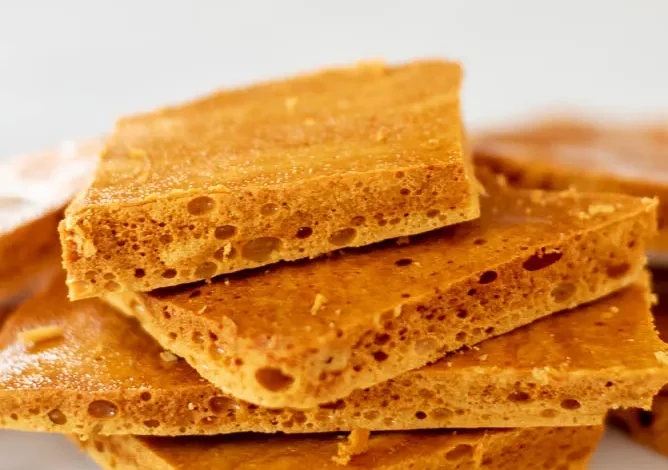
Cinder toffee is a hard, brittle sugar-based sweet with a light, porous texture that resembles a sponge or honeycomb. It is traditionally made by heating sugar and syrup until caramelised and then adding bicarbonate of soda, which causes the mixture to foam rapidly. Once cooled, the result is a crunchy, aerated sweet that shatters easily and melts in the mouth. Its flavour is a balance of sweetness and slight bitterness from the caramelised sugar.
The name “cinder’toffee” comes from its appearance, which resembles the cinders or ash left behind in a fire. However, it is also widely known as honeycomb toffee or sponge toffee, depending on the region. Despite the different names, the core recipe and texture remain largely the same. What makes cinder toffee so appealing is not just its taste, but also the dramatic transformation during cooking, which turns a smooth liquid into a bubbling mass within seconds.
History and Origins of Cinder Toffee
Cinder toffee has deep roots in British confectionery history, dating back to the 19th century when sugar became more widely available. It was often made at home or sold at local fairs and markets, where its theatrical bubbling process attracted attention. The sweet became particularly popular because it required very few ingredients and no specialised equipment, making it accessible to households of all backgrounds.
Over time, cinder toffee spread beyond the UK to countries such as Australia and New Zealand, where it is commonly known as honeycomb or sponge candy. Each region adapted the recipe slightly, but the essential technique remained unchanged. Today, cinder’toffee is enjoyed both as a standalone treat and as an ingredient in chocolate bars, desserts, and festive weets, proving its lasting appeal acr’oss cultures and generations.
Ingredients Used in Cinder Toffee
The beauty of cinder toffee lies in its simplicity. The traditional recipe uses just three core ingredients: sugar, golden syrup (or corn syrup), and bicarbonate of soda. Sugar provides the structure and sweetness, while the syrup helps prevent crystallisation and adds a deeper caramel flavour. Bicarbonate of soda is the key ingredient responsible for the airy texture, as it releases carbon dioxide when heated.
Optional ingredients may include butter for richness, salt to balance sweetness, or flavourings such as vanilla. The quality of ingredients plays a significant role in the final result, especially the sugar and syrup, which determine the flavour and colour of the toffee. Precise measurements and timing are essential, as even small variations can affect the texture, bitterness, or rise of the finished product.
How Cinder Toffee Is Made
Making cinder toffee involves heating sugar and syrup together until they reach a high temperature and turn a deep amber colour. This stage is crucial, as undercooking results in a sticky texture, while overcooking can cause bitterness. Once the caramel reaches the right stage, the pan is removed from the heat before bicarbonate of soda is quickly stirred in.
The addition of bicarbonate of soda triggers a rapid chemical reaction, releasing gas that causes the mixture to expand dramatically. The foaming mass is then poured into a lined tray and left to cool without disturbance. As it sets, it hardens into a brittle structure full of air pockets. Because the mixture is extremely hot, safety is vital throughout the process, especially when stirring and pouring.
Cinder Toffee vs Honeycomb vs Sponge Toffee
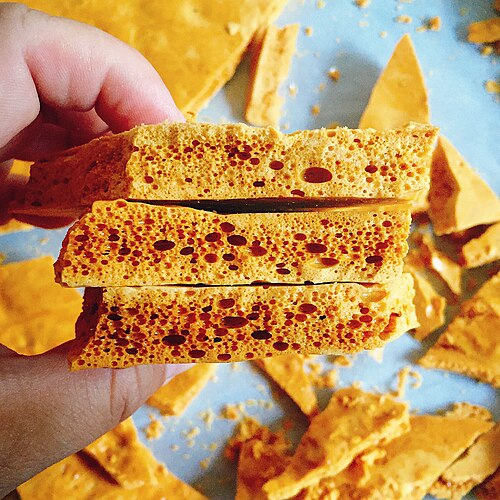
Cinder toffee, honeycomb, and sponge toffee are essentially the same sweet, but the names vary by region. In the UK, “cinder’toffee” and “honeycomb” are commonly used interchangeably. In Australia and New Zealand, the term “sponge toffee” or “sponge candy” is more popular. While the recipes are nearly identical, slight differences in syrup types or cooking temperatures may affect texture.
The main distinction lies in how the sweet is used. Honeycomb is often coated in chocolate for commercial confectionery, while cinder toffee in the UK is frequently eaten plain or crushed into desserts. Despite the naming differences, all versions share the same light, crunchy structure and caramelised flavour that make this sweet so recognisable.
How to Store and Serve Cinder Toffee
Cinder toffee is highly sensitive to moisture, which can cause it to soften and lose its crunch. It should be stored in an airtight container in a cool, dry place, ideally with silica gel or uncooked rice to absorb excess humidity. When stored correctly, it can last for several weeks without losing quality.
Serving cinder toffee is where creativity shines. It can be broken into shards and served as a sweet snack, dipped in melted chocolate, or crushed and sprinkled over cakes, ice cream, and puddings. It is also popular as a homemade gift, especially during holidays, when packaged attractively in jars or bags.
Conclusion
Cinder’toffee is a timeless sweet that combines simplicity, science, and nostalgia. With just a few ingredients and careful technique, it transforms into a dramatic and delicious treat that has stood the test of time. Its versatility makes it suitable for both traditional enjoyment and modern desserts, while its unique texture ensures it remains memorable.
Whether you know it as cinder’toffee, honeycomb, or sponge toffee, this crunchy confection continues to delight sweet lovers around the world. Making or enjoying it is not just about taste, but also about appreciating the craft and history behind one of Britain’s most iconic sweets.
Frequently Asked Questions (FAQs)
What is cinder toffee made of?
Cinder toffee is made from sugar, golden syrup, and bicarbonate of soda.
Why does cinder toffee bubble up?
The bicarbonate of soda releases carbon dioxide when heated, creating bubbles.
Is cinder toffee the same as honeycomb?
Yes, the terms are generally used interchangeably depending on region.
How long does homemade cinder toffee last?
When stored properly, it can last several weeks.
Can cinder toffee go soft?
Yes, exposure to moisture can cause it to lose its crunch.
Why is my cinder toffee bitter?
Overcooking the sugar can lead to a burnt, bitter flavour.
Can cinder toffee be frozen?
Freezing is not recommended, as moisture can affect the texture.
Is cinder toffee suitable for children?
Yes, but it should be eaten carefully due to its hard texture.
You May Also Read: When Is GCSE Results Day 2025