Driscoll Model of Reflection is a critical process in both personal and professional growth. By reflecting on experiences, individuals gain deeper understanding, improve decision-making, and enhance their skills. In fields such as healthcare, education, and professional development, structured reflection is particularly vital. It allows practitioners to analyze their actions, understand their impact, and plan for future improvement. Among the many models of reflective practice, the Driscoll Model of Reflection stands out for its simplicity and effectiveness, making it widely used across various disciplines.
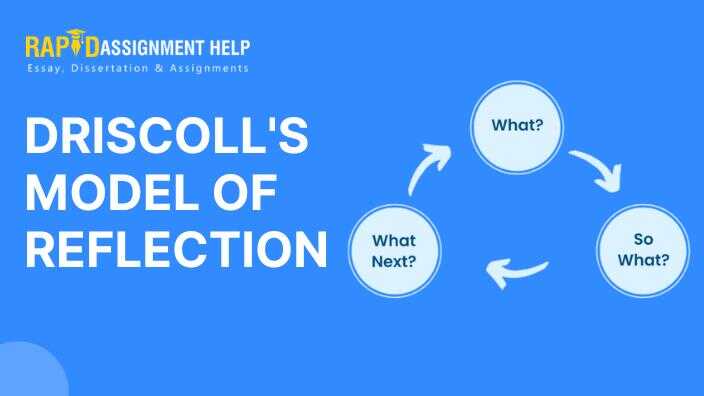
The Driscoll Model of Reflection provides a straightforward framework that guides users through reflective thinking with three key questions: “What?”, “So What?”, and “Now What?”. These prompts encourage thoughtful analysis without overwhelming the practitioner with complex stages. The model has been embraced by students, professionals, and educators for its ability to translate experiences into actionable learning.
In this article, we will explore the Driscoll Model of Reflection in detail. We will cover its history, structure, practical application, benefits, and limitations. Through real-world examples and case studies, you will learn how to effectively implement this model in your reflective practice, enhancing both personal insight and professional performance.
History and Background of the Driscoll Model
The Driscoll Model of Reflection was developed by Dr. John Driscoll in the 1990s. It was designed to provide a clear and structured approach to reflective practice, particularly in healthcare and nursing education. At the time, reflective practice was gaining recognition as a key tool for improving professional competence, and Driscoll aimed to create a model that was easy to use while still promoting deep learning.
The model draws inspiration from earlier reflective frameworks, such as Gibbs’ Reflective Cycle and Kolb’s Experiential Learning Theory. Unlike these more detailed models, Driscoll’s approach is intentionally simple, reducing the risk of practitioners becoming bogged down in procedural complexity. This simplicity allows users to focus on critical thinking and practical outcomes rather than navigating multiple stages.
Its adoption has spread beyond healthcare into education, social work, and corporate training programs. Institutions favor it for its clarity and adaptability. Students, nurses, and professionals can use it to analyze experiences ranging from clinical practice to workplace projects. Over time, the Driscoll Model of Reflection has become synonymous with effective, accessible reflective practice, earning a place among the most respected reflective frameworks globally.
Structure and Components of the Driscoll Model
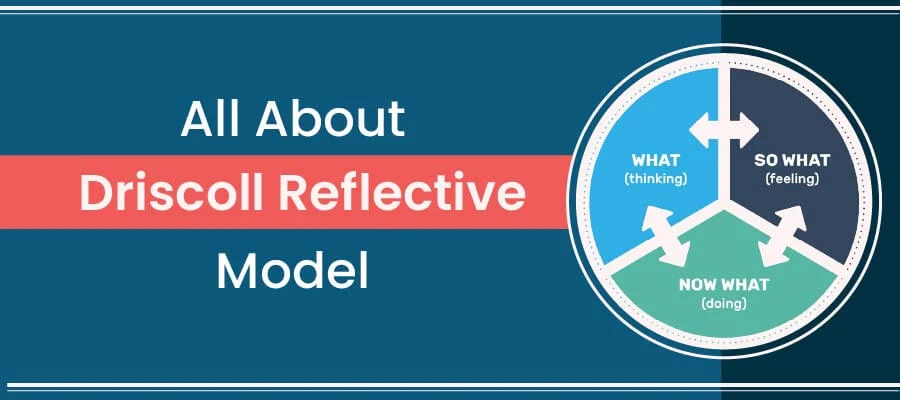
The Driscoll Model of Reflection is based on three fundamental questions: “What?”, “So What?”, and “Now What?”. Each stage is designed to guide the user through a logical reflection process.
What? focuses on describing the situation or experience. At this stage, the individual records what happened objectively, outlining facts, actions, and relevant context. This helps establish a clear foundation for further analysis without judgment or bias.
So What? emphasizes analysis and interpretation. Here, the practitioner explores the significance of the experience, considers the impact of their actions, and evaluates emotional, professional, or practical outcomes. This stage encourages critical thinking and self-awareness, transforming experiences into meaningful insights.
Now What? involves planning future actions. Based on insights gained in the previous stages, the user identifies lessons learned and sets actionable goals for improvement. This may include strategies to avoid mistakes, enhance performance, or further develop skills.
The model’s simplicity allows for flexibility. It can be applied in brief reflective exercises or extended journal entries. Its clarity makes it ideal for beginners while remaining valuable for seasoned professionals seeking a structured approach to reflection.
How to Apply the Driscoll Model in Practice
Applying the Driscoll Model of Reflection requires a disciplined approach to reflection. Start by choosing a specific event, task, or experience to examine. Using the “What?” stage, document the facts: who was involved, what actions were taken, and what outcomes occurred. Accuracy and objectivity are crucial to ensure a reliable foundation for deeper analysis.
Next, enter the “So What?” stage, where analysis takes center stage. Consider why the situation unfolded as it did, what worked well, what could have been done differently, and the broader implications of your actions. This stage encourages honest self-evaluation and can reveal hidden patterns in behavior or decision-making.
Finally, the “Now What?” stage transforms reflection into action. Develop a practical plan to apply the lessons learned, whether through new strategies, improved techniques, or behavioral adjustments. Setting measurable objectives ensures that reflection leads to tangible improvement rather than remaining a theoretical exercise.
The model is versatile. In healthcare, nurses may reflect on patient interactions to enhance care quality. Educators might analyze classroom experiences to refine teaching methods. Even in corporate settings, professionals can use the model to evaluate project outcomes, interpersonal dynamics, and leadership decisions.
Benefits and Importance of the Driscoll Model of Reflection
The Driscoll Model of Reflection offers several benefits that make it a preferred tool for reflective practice. Firstly, it enhances self-awareness by encouraging practitioners to critically assess their actions, motivations, and emotional responses. This self-knowledge is invaluable for personal growth and professional development.
Secondly, it promotes continuous learning. By analyzing experiences and planning future actions, users transform routine events into structured learning opportunities. In healthcare, this can improve patient care, while in education, it can enhance teaching effectiveness.
The simplicity of the model is another key advantage. Unlike multi-stage frameworks, the three-question structure allows users to focus on meaningful reflection rather than procedural adherence. This makes it accessible for students, trainees, and professionals alike.
Finally, the model supports evidence-based practice. By systematically documenting reflections, individuals can create records of learning that inform decisions, guide training, and demonstrate professional competency. Over time, this structured reflection contributes to both skill development and career progression.
Examples and Case Studies
Consider a nurse reflecting on a challenging patient interaction. Using the Driscoll Model of Reflection:
- What?: The nurse documents the incident objectively, detailing the patient’s condition, actions taken, and outcome.
- So What?: The nurse analyzes why certain interventions were effective, identifies emotional responses, and evaluates communication techniques.
- Now What?: The nurse develops strategies to improve future patient interactions, such as enhancing communication skills or updating procedural knowledge.
In an educational context, a teacher may reflect on a lesson that did not achieve intended learning outcomes. The “What?” stage outlines classroom dynamics, the “So What?” stage identifies instructional challenges, and the “Now What?” stage plans corrective measures to improve student engagement and understanding.
These examples demonstrate how the Driscoll Model transforms everyday experiences into actionable learning opportunities, fostering continuous improvement.
Limitations and Criticisms
Despite its effectiveness, the Driscoll Model has limitations. Its simplicity, while advantageous for accessibility, may not encourage deep reflection in complex scenarios. Some critics argue that multi-stage models, such as Gibbs’ cycle, provide more comprehensive prompts for analysis.
There is also a risk of superficial reflection if users focus only on completing the three questions without genuine introspection. Effective use requires commitment and honesty to ensure meaningful learning outcomes.
Practitioners can overcome these limitations by supplementing the model with additional questioning, peer feedback, or linking reflection to broader professional standards. When used thoughtfully, the Driscoll Model remains a powerful tool for structured reflection.
Conclusion
The Driscoll Model of Reflection is a practical and accessible framework that supports structured reflective practice. By focusing on “What?”, “So What?”, and “Now What?”, users can analyze experiences, gain insights, and plan actionable improvements. Its simplicity makes it ideal for beginners while still offering value to experienced professionals seeking efficient reflection methods.
Across healthcare, education, and corporate settings, the model enhances self-awareness, critical thinking, and continuous learning. While it has limitations, its adaptability and clarity ensure it remains a widely respected tool for reflective practice. By incorporating the Driscoll Model into daily routines, practitioners can turn experiences into meaningful growth opportunities, improving both personal and professional outcomes.
Frequently Asked Questions (FAQs)
What is the Driscoll Model of Reflection?
It is a reflective practice framework based on three questions: “What?”, “So What?”, and “Now What?”, designed to facilitate structured reflection.
How do you use the Driscoll Model of Reflection?
By documenting an experience, analyzing its significance, and planning actionable steps for future improvement.
What are the three stages of the Driscoll Model?
The stages are What? (description), So What? (analysis), and Now What? (action planning).
Who developed the Driscoll Model of Reflection?
It was developed by Dr. John Driscoll in the 1990s, primarily for healthcare and professional education.
What are the benefits of using the Driscoll Model?
It enhances self-awareness, promotes continuous learning, supports evidence-based practice, and is simple to apply.
Can the Driscoll Model be used outside healthcare?
Yes, it is widely applied in education, corporate training, and other professional settings.
How is the Driscoll Model different from Gibbs’ reflective cycle?
The Driscoll Model is simpler, with three core questions, whereas Gibbs’ cycle includes six stages and more detailed prompts.
What are common mistakes when using the Driscoll Model?
Common mistakes include superficial reflection, focusing only on completing the questions without genuine analysis, and neglecting actionable planning.
You May Also Read: Bear Grylls Net Worth