A bain marie is an essential piece of equipment in both professional kitchens and home cooking setups. Known for its ability to gently heat or cook food using indirect heat, the bain marie helps maintain the quality, texture, and flavor of a variety of dishes. From keeping soups warm at a buffet to melting chocolate without burning, its versatility makes it invaluable for chefs, caterers, and cooking enthusiasts alike.
The importance of understanding and using a bain marie properly cannot be overstated. It ensures that delicate foods are cooked evenly, prevents scorching, and maintains food at safe temperatures for extended periods. For large-scale catering events, restaurants, and hotels, a bain’marie is indispensable for keeping multiple dishes ready for service without compromising quality.
In this comprehensive guide, we’ll explore everything you need to know about bain maries, including their types, applications, and maintenance. Whether you are a professional chef seeking to optimize your kitchen or a home cook interested in efficient food warming, this article provides the knowledge needed to select, use, and care for a bain marie effectively.
What is a Bain Marie?
A bain marie, sometimes referred to as a water bath, is a cooking device designed to heat food gently and evenly. The principle involves placing a container of food inside a larger container filled with hot water, which provides indirect heat. This method allows precise temperature control and minimizes the risk of burning, which is especially useful for delicate preparations like custards, sauces, and chocolate.
The concept of the bain’marie dates back to ancient times, with its name derived from the French term meaning “Mary’s bath.” It has been widely adopted in both professional and domestic kitchens, evolving into various electric and water-heated models over time. The gentle heating process makes it ideal for slow cooking, keeping food warm at events, and preparing temperature-sensitive recipes.
Unlike direct heat cooking, a bain marie maintains a stable temperature, preventing rapid fluctuations that can ruin the consistency of food. It is also distinct from similar devices like double boilers, which often serve a narrower purpose. The bain marie’s versatility in both warming and cooking applications has solidified its position as an indispensable culinary tool across the world.
Types of Bain Marie
Electric Bain Marie
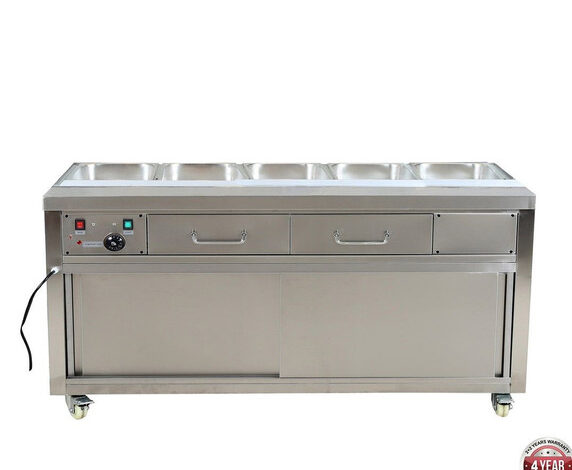
Electric bain maries are the most common in modern kitchens. They offer precise temperature control and consistent heat distribution, making them ideal for professional catering or commercial kitchens. Electric models often feature thermostatic controls, allowing chefs to set the exact temperature required for different foods, from delicate sauces to cooked meats.
Electric bain maries are easy to use, requiring minimal supervision once set. Their compact design is suitable for both countertop and built-in setups, making them versatile for kitchens with varying space constraints. They also tend to be energy-efficient, providing a cost-effective solution for maintaining food at safe serving temperatures over extended periods.
Gas and Water-Filled Bain Marie
Gas bain maries rely on a flame for heat, and while less common in domestic settings, they are popular in larger commercial kitchens. They offer rapid heating and can handle high-volume cooking, making them suitable for hotels, banquet halls, and large-scale catering events. Proper water management is crucial in gas models to prevent overheating or uneven cooking.
Water-filled bain maries are ideal for delicate items. The water acts as a buffer between the food and direct heat, reducing the risk of burning. This type is commonly used for melting chocolate, preparing custards, or maintaining sauces at stable temperatures. Water-filled models are preferred for recipes that require gentle, slow cooking to preserve flavor and texture.
Countertop vs Built-In Models
Countertop bain maries are compact, portable, and suitable for kitchens with limited space or for temporary setups like pop-up buffets. Built-in models are integrated into kitchen layouts, often found in commercial establishments. They offer larger capacities and can be seamlessly incorporated into serving stations. Choosing between the two depends on kitchen space, volume requirements, and intended use.
Uses of Bain Marie in Cooking and Catering
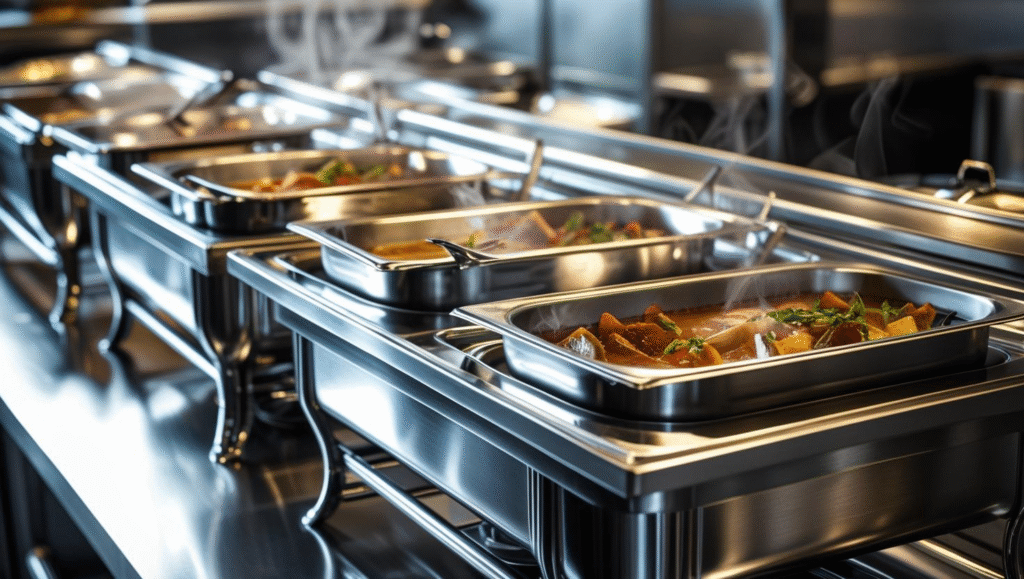
One of the primary uses of a bain marie is keeping food warm for extended periods, particularly in buffets, hotels, or catered events. By maintaining a stable temperature, it prevents overcooking or drying out dishes. Foods like stews, soups, rice dishes, and roasted vegetables stay fresh and appetizing throughout service, ensuring a high-quality experience for diners.
Bain maries are also invaluable for melting chocolate, cheese, or delicate sauces. Direct heat can quickly burn these ingredients, but a bain marie ensures even melting without altering texture or taste. Pastry chefs often rely on this method for custards, ganache, and other desserts requiring precise temperature control.
Additionally, bain maries can function as slow-cooking devices. They gently cook meat, fish, and vegetables while retaining moisture and nutrients. This makes them suitable for sous-vide-like applications, even without specialized equipment. Restaurants and catering services benefit from the versatility, as multiple dishes can be prepared or maintained simultaneously with minimal risk of overcooking.
Choosing the Right Bain Marie
Selecting the right bain marie depends on several factors. Capacity is crucial, especially for commercial kitchens or catering operations. Consider the volume of food typically prepared and whether the unit will serve multiple dishes at once. Material quality, durability, and ease of cleaning are equally important, as they affect both hygiene and longevity.
Heating method is another consideration. Electric units offer precise control, while gas models excel in high-volume environments. Water-filled units are ideal for delicate or slow-cooked dishes. Budget plays a role as well: home cooks may opt for compact, affordable countertop models, while professional kitchens often invest in larger, heavy-duty built-in systems.
Reputable brands and models also influence long-term performance. Chefs often recommend products that balance reliability, temperature consistency, and ease of maintenance. Understanding specific kitchen needs ensures the right selection, maximizing efficiency, food quality, and safety.
Maintenance and Safety Tips
Maintaining a bain marie involves regular cleaning, proper water management, and adherence to safety guidelines. Daily cleaning prevents food residue buildup and bacterial growth. Most models allow easy removal of trays and containers for thorough washing. Avoid using harsh chemicals that may damage surfaces or affect food safety.
Monitoring water levels is critical for models that rely on water baths. Low water can cause overheating, while overfilling may lead to spills and accidents. Always follow manufacturer guidelines for safe operation. Regular professional servicing ensures longevity, while careful handling prevents damage to heating elements or controls.
Common mistakes include leaving the unit unattended for extended periods, using unsuitable containers, or failing to clean regularly. Avoiding these errors ensures optimal performance and reduces the risk of accidents, making bain maries safe and effective tools in any kitchen.
Conclusion
A bain marie is a versatile and indispensable piece of culinary equipment. Its ability to gently heat, cook, or maintain food at precise temperatures makes it valuable for home cooks, professional chefs, and catering services. Understanding the types, applications, and maintenance requirements allows users to maximize its potential, ensuring food safety, quality, and consistency.
Investing in the right bain marie—whether countertop, built-in, electric, or water-filled—enhances kitchen efficiency and culinary results. From buffets to fine dining, this equipment bridges practicality with culinary excellence, enabling chefs to focus on creativity and flavor. By choosing the right model and maintaining it properly, users can enjoy reliable, professional-quality performance for years to come.
Frequently Asked Questions (FAQs)
What is a bain marie used for?
It is used for gentle cooking, melting, and keeping food warm through indirect heat.
Can I use a bain marie at home?
Yes, compact countertop models are ideal for home kitchens and small-scale cooking.
What’s the difference between an electric and water-filled bain marie?
Electric models use direct heating elements for precise control, while water-filled models provide gentler, indirect heat for delicate foods.
How do I clean and maintain a bain marie properly?
Remove trays and containers daily, wash thoroughly with mild detergent, and monitor water levels regularly.
Can a bain marie be used for baking or only warming?
It can be used for slow cooking, melting, and some baking techniques like custards and cheesecakes.
How do I choose the right size for my needs?
Consider the volume of food prepared, kitchen space, and whether it will serve multiple dishes simultaneously.
You May Also Read: Fish and Chips London