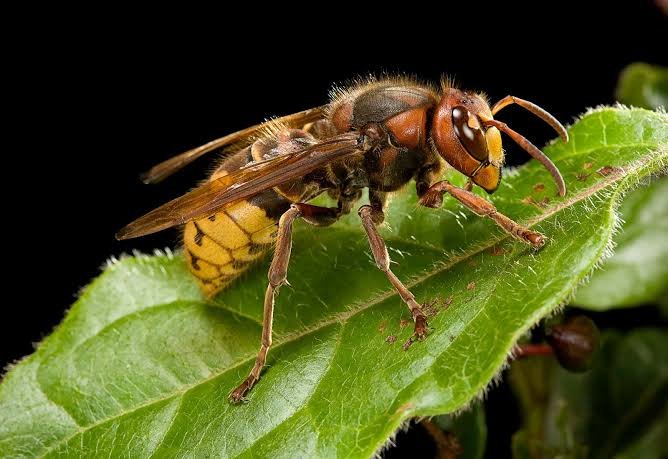
The European hornet, scientifically known as Vespa crabro, is the largest social wasp native to Europe and a familiar species across parts of the UK. Its impressive size, deep buzzing flight, and yellow-brown colouring often make it appear more threatening than it really is. Although capable of delivering a painful sting, this insect is usually calm when away from its nest and generally avoids unnecessary contact with people.
Unlike invasive hornet species, the European hornet belongs naturally within the British ecosystem. It feeds on flies, wasps, caterpillars, and other insects, helping control populations that might otherwise become troublesome. Adults also feed on sweet substances such as tree sap, nectar, and ripe fruit. Understanding its behaviour is important because many harmless native hornets are unnecessarily killed after being mistaken for invasive species or assumed to be highly aggressive.
How to Identify a European Hornet in the UK
A European hornet can usually be recognised by its large body, reddish-brown thorax, yellow abdomen, and dark brown markings. Workers commonly measure around 25 millimetres, while queens can be noticeably larger. The face appears yellow when viewed from the front, and the legs are generally reddish or brown. These characteristics distinguish the species from ordinary wasps, which are usually smaller, brighter yellow, and more sharply patterned with black.
Size alone should never be the only identification feature because different hornet species can overlap in length. Instead, examine the combination of body colour, abdominal pattern, leg colour, and head markings from a safe distance. A photograph taken without approaching the insect can be useful for identification. UK wildlife organisations provide visual comparison guides that help homeowners distinguish native hornets from invasive species without disturbing or trapping the insect unnecessarily.
European Hornet vs Asian Hornet
One of the most important identification challenges in Britain is separating the native species from the invasive Asian hornet, also known as the yellow-legged hornet. The native hornet has considerably more yellow across its abdomen, combined with reddish-brown colouring around the thorax and head. The Asian hornet is generally much darker, with a black or dark brown body, a prominent orange abdominal band, and clearly yellow lower legs.
The distinction matters because Asian hornets can pose a serious threat to honeybees and other pollinating insects. They may hover outside beehives and repeatedly capture worker bees, creating pressure on entire colonies. Native hornets can occasionally catch honeybees too, but their ecological impact is very different. If an insect strongly resembles an Asian hornet, photograph it safely and follow current UK guidance for reporting suspected sightings rather than attempting to capture it yourself.
Are European Hornets Dangerous?
A European hornet can sting, but it does not normally seek out people to attack. Most individuals seen feeding on flowers, fruit, tree sap, or insects will continue their activity without showing defensive behaviour. Problems usually arise when someone approaches a nest too closely, blocks its entrance, strikes the structure, or attempts removal without suitable equipment. Workers may then respond collectively because defending the colony is a natural part of their behaviour.
Children and pets should be kept away from active nests because sudden movements can accidentally provoke defensive hornets. Dogs may attempt to snap at flying insects, while curious children may approach nest entrances without recognising the danger. Where a colony is located far from regular activity, leaving it alone may be the safest option. When a nest is positioned near doors, paths, schools, play areas, or busy gardens, professional advice should be considered.
European Hornet Sting, Symptoms and First Aid
A European hornet sting can cause immediate sharp pain, redness, warmth, and swelling around the affected area. In many people, these symptoms remain localised and gradually improve. Hornets can sting more than once because they do not usually leave their sting embedded in the skin. Anyone who is stung should move calmly away from the area first, particularly if the incident happened near a nest where other workers may become defensive.
After reaching safety, wash the area with soap and water and apply a cold compress to help reduce swelling and discomfort. Avoid scratching because damaged skin can become irritated or infected. Medical attention is important if the person develops breathing difficulties, severe dizziness, widespread swelling, vomiting, collapse, or swelling around the mouth or throat. Multiple stings may also require professional assessment, especially in children, older adults, or anyone with a known insect-sting allergy.
European Hornet Nest Identification
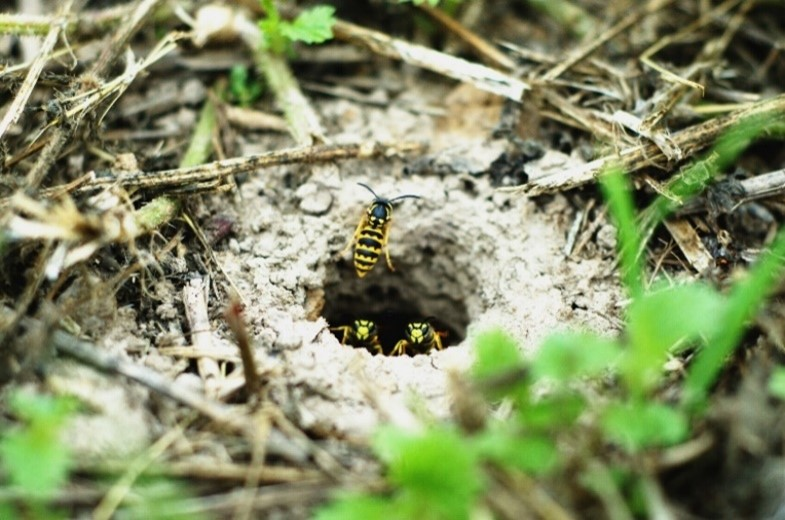
A European hornet nest is produced from chewed wood fibres mixed with saliva, creating a lightweight material that resembles coarse paper. Colonies often choose sheltered locations rather than building completely exposed nests. Hollow trees are particularly suitable, but nests can also appear in loft spaces, wall cavities, sheds, barns, outbuildings, and large bird boxes. Regular traffic of large hornets entering the same small opening may indicate a nearby hidden colony.
The colony usually begins in spring when an overwintered queen emerges and searches for a suitable nesting site. She builds the first cells, lays eggs, and raises the first workers herself. Once those workers mature, they take over food collection, nest construction, and defence. Colony numbers increase throughout summer before new queens and males are produced. As temperatures fall later in the year, the old colony naturally declines rather than remaining active indefinitely.
What to Do If You Find a Hornet Nest
Finding a nest does not automatically mean it needs to be destroyed. If it is located inside a hollow tree, remote outbuilding, or another place where people rarely pass, simply keeping a sensible distance may be appropriate. Native hornets provide useful natural pest control by hunting numerous insects, so unnecessary removal can eliminate a beneficial predator. Observe activity from far away rather than standing near the entrance to examine the colony.
Never block the entrance, strike the nest, pour liquids into it, burn it, or spray hornets from close range. These methods can trigger intense defensive activity and dramatically increase the chance of receiving several stings. If the nest creates a genuine safety concern, contact a qualified pest-control professional who can assess its location and risk. Professional assessment is particularly sensible when nests are hidden inside roofs, walls, chimneys, or heavily used parts of a property.
European Hornet Behaviour Around Homes and Gardens
European hornets often enter gardens because they are searching for insects, nectar, ripe fruit, or tree sap. Seeing one or two individuals does not necessarily mean a nest is located nearby. Gardens containing fruit trees, flowering plants, and plentiful insect life can naturally attract them. Fallen fruit may become especially appealing later in summer, so clearing decaying apples, pears, and other fruit can reduce unwanted activity near patios, doors, and outdoor seating areas.
Hornets are also capable of flying during darker conditions and may be attracted to artificial lighting. This behaviour explains why they occasionally appear around windows or enter brightly lit rooms at night. If one enters a house, avoid swatting it. Turn off unnecessary indoor lights, open a nearby window or external door, and allow the insect time to leave. Remaining calm usually provides a safer outcome than attempting to trap or hit it.
Why European Hornets Matter to the UK Ecosystem
Although their size can be intimidating, native hornets perform a valuable ecological role. They capture flies, wasps, caterpillars, and many other insects, helping maintain balance within woodland, gardens, and rural habitats. Their presence therefore contributes to natural pest control. They also form part of the food web, interacting with numerous plants, insects, birds, and other wildlife throughout the warmer months of the year.
Protecting native species becomes particularly important when public concern about invasive hornets increases. Misidentification can lead people to destroy harmless native insects while overlooking the characteristics that genuinely distinguish invasive species. Learning the key differences between native and Asian hornets improves both public safety and conservation. Respecting their ecological function does not mean ignoring genuine risks; it means responding proportionately when nests are safely positioned and seeking professional help when they are not.
Conclusion
The European hornet is a striking but often misunderstood part of Britain’s wildlife. Its large body and powerful flight can appear alarming, yet it usually avoids people when left undisturbed. Correct identification depends on recognising its reddish-brown thorax, yellow abdomen, dark markings, and overall structure rather than relying on size alone. Understanding these features also helps prevent confusion with invasive Asian hornets that require a different response.
Safety remains important around any active nest. Keep children and pets away, avoid disturbing nest entrances, and seek professional assistance when a colony occupies a high-risk location. At the same time, hornets feeding quietly in gardens should not automatically be treated as pests. A balanced approach protects households while allowing an important native predator to continue contributing to the UK ecosystem.
FAQs
Are European hornets dangerous in the UK?
They can sting, but they are usually calm unless their nest is disturbed.
How can I identify a European hornet?
Look for a large body, reddish-brown thorax, yellow abdomen, and dark markings.
Do European hornets sting more than once?
Yes, they can sting repeatedly because they do not usually leave the sting behind.
Where do European hornets build nests?
They often nest in hollow trees, roof spaces, sheds, wall cavities, and other sheltered areas.
Should I report a European hornet in the UK?
Usually no. Report suspected Asian hornets instead, especially if the insect has yellow legs and a darker body.
You May Also Read: Guatemala City