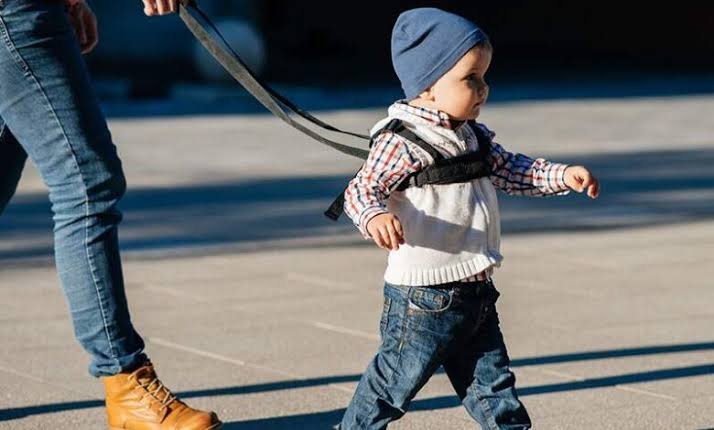
Toddlers often reach the stage where they want to walk everywhere before they fully understand why staying close to an adult matters. The best reins for toddlers can provide a useful middle ground: your child gets more freedom to walk and explore, while you maintain a physical connection in places where wandering could quickly become a problem. They can be particularly useful on busy pavements, during travel, at attractions, or anywhere a pushchair is inconvenient.
Choosing toddler reins should not be about finding the longest lead or the most colourful design. A secure fit, comfortable straps, sensible adjustment and a design suited to your child’s walking ability matter much more. Traditional harnesses, backpack reins and wrist links all work differently, so the best option depends on where you intend to use it and how confidently your toddler already walks. Reins should always complement close adult supervision rather than replace it.
Best Reins for Toddlers: Options Worth Considering
For a conventional harness, the Trunki ToddlePak is one of the more versatile choices. Instead of adding backpack storage, it focuses on the harness itself, with adjustment at the shoulders and waist and a broad padded chest section. Trunki currently specifies a chest range of 38–70 cm and a recommended age of 6–48 months. Its training and leading configuration may make it particularly interesting to families looking for a product that can accommodate different stages of early walking. Check your child’s measurements and the current manufacturer’s instructions before choosing by age alone.
The LittleLife Toddler Reins offer a simpler alternative for parents who do not need a backpack. The current standard version weighs 133 g, is listed for ages 1–3 and complies with BS EN 13210-2:2020 according to LittleLife. The company also sells a lighter Basic Toddler Reins model, currently listed at 107 g and for ages 1–4. Families who prefer a bag-style design can instead consider LittleLife’s animal backpack reins. The important distinction is practical: choose a simple harness when low bulk is the priority and a backpack version when storage and child appeal genuinely add value.
How to Choose Toddler Reins That Fit Your Child
Fit should be your first consideration because a feature-packed harness has little value if it sits poorly on your toddler. Look for sufficient adjustment around the areas specified by the manufacturer and make adjustments while your child is wearing the clothes they will actually use outdoors. Winter coats can change the required fit considerably compared with a T-shirt. Once adjusted, the harness should remain secure without unnecessarily restricting ordinary walking or arm movement. Always use the manufacturer’s fitting instructions because fastening systems differ between products.
Next, consider how and where the reins will be used. Lightweight traditional reins are convenient when you regularly need to pack them away, whereas padded harnesses may be preferable when comfort during longer outings is important. Backpack reins can appeal to toddlers who enjoy carrying their own small bag, but storage should not distract from the quality of the harness and fastening system. Detachable reins are useful when you want a product to transition between controlled walking and ordinary backpack use. Prioritise functional differences rather than choosing solely on appearance.
Harness Reins vs Backpack Reins
Traditional harness reins keep the design relatively simple. Shoulder, chest or waist straps—depending on the particular model—secure the child while a rein provides the adult connection. With no storage compartment attached, this style can be lighter and less bulky than a backpack. It may suit families who want reins primarily for short walks, shopping trips or crowded locations and would rather carry the child’s belongings separately. A simple design can also be convenient when the reins need to fit into a changing bag between uses.
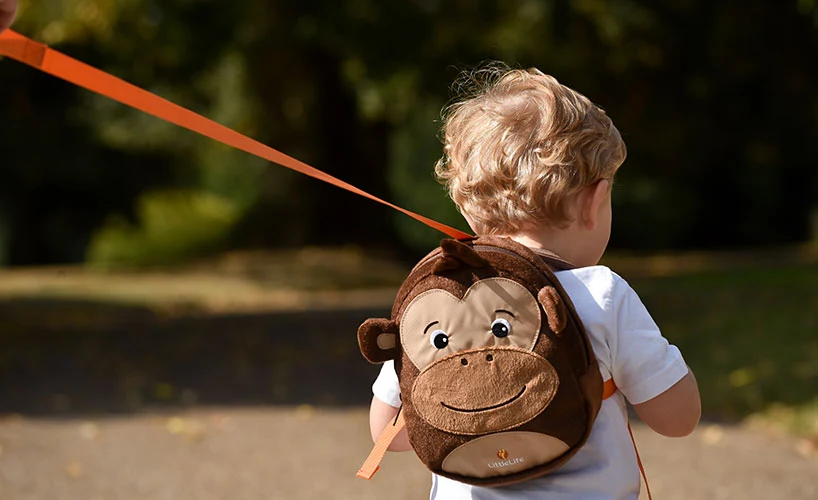
Backpack reins combine a small children’s bag with a safety rein. Their biggest practical advantage is versatility rather than automatically being safer or better. A toddler may enjoy wearing a character backpack, while the adult retains the option of attaching the rein where the product is designed for it. Once the rein is unnecessary, some designs continue to function as small backpacks. However, additional storage creates extra bulk, so avoid treating the child’s backpack as your main day bag. Current UK comparisons continue to feature both traditional and backpack styles, confirming that each serves a different use case.
Safety Features That Matter Most
Secure adjustment deserves more attention than decorative extras. Before going out, check the straps, stitching, clips, buckles and rein attachment for visible wear or damage. Make sure the product remains correctly adjusted after changing clothing and confirm that every fastening is properly engaged. For UK shoppers, it is also useful to check the safety-standard information supplied with the exact product rather than assuming that every item sold as “toddler reins” follows identical requirements. LittleLife, for example, currently states BS EN 13210-2:2020 compliance for its toddler reins.
How the reins are used is equally important. They should provide an additional connection to a toddler, not encourage an adult to pull, lift or abruptly jerk the child by the rein. Keep your child close in higher-risk environments and continue supervising them directly. Reins also should not replace basic pedestrian learning. As your toddler develops, continue practising stopping before roads, staying beside an adult and holding hands when appropriate. The long-term objective is safe independent walking; reins are simply one practical aid during the stages when additional control is useful.
When Are Toddler Reins Most Useful?
Crowded and unfamiliar places are where toddler reins can be particularly convenient. Airports, railway stations, shopping centres, busy attractions and city pavements combine distractions with plenty of opportunities for an adventurous toddler to change direction unexpectedly. Reins may also be useful when one adult is responsible for more than one young child or needs to manage a pushchair or luggage. In these situations, the extra physical connection can make walking more manageable while still allowing the toddler to use their own feet.
Reins do not need to be used throughout every outing. When your child is in an appropriate secure environment where free movement is safe, giving them room to walk, run and explore naturally is valuable. Parents can therefore use reins according to circumstances rather than making them the default every time a toddler leaves the house. As awareness and communication improve, a child may need them less frequently. This flexible approach keeps the focus on what reins are designed to provide: additional control when the surroundings make staying close especially important.
How to Use Toddler Reins Properly
Set up the harness before arriving somewhere busy. Adjusting unfamiliar straps for the first time in an airport terminal or beside a busy road creates unnecessary difficulty. At home, identify each fastening, fit the harness according to its instructions and allow your toddler to walk around in it. Check that the straps stay in their intended position as the child bends, turns and walks. If the product includes alternative rein positions or configurations, make sure you understand their intended purposes before switching between them.
During an outing, hold the rein with enough control to keep your child within an appropriate distance without maintaining constant pulling tension. A rein should not become a substitute for communication. Talk to your toddler about stopping, waiting and staying nearby, and use hand-holding when circumstances make it appropriate. Regularly inspect the product as well. Growing children can quickly outgrow an adjustment that previously worked, while frequently used straps and fastenings can become worn. Stop using a product if it is damaged or no longer fits within the manufacturer’s specifications.
FAQs
What age are toddler reins suitable for?
Age recommendations vary by product, so always check the manufacturer’s stated age, size and fitting guidance before use.
Are backpack reins better than harness reins?
Neither is universally better. Harness reins are usually simpler and lighter, while backpack reins add storage and may appeal more to some toddlers.
What are the best reins for a two-year-old?
Choose reins that fit securely, allow comfortable movement and are specifically suitable for your child’s measurements and walking ability.
Can toddler reins be used while travelling?
Yes, they can be useful in busy places such as airports and stations, provided they are used according to the manufacturer’s instructions and with close adult supervision.
How should toddler reins fit?
They should sit securely without unnecessarily restricting movement or causing discomfort. Follow the specific fitting instructions supplied with your chosen product.
You May Also Read: Dash Cam with Battery Pack