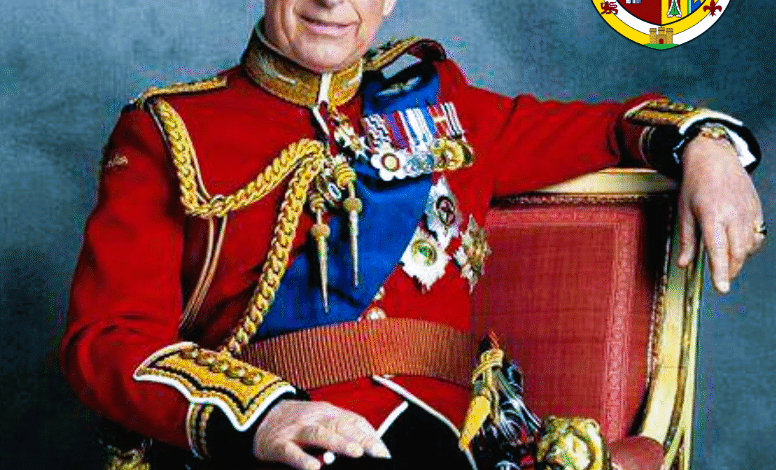
King Charles III has a documented family connection to Freemasonry, which is one reason the question “Is King Charles a Freemason?” continues to appear in search results. Several members of the British royal family have belonged to Masonic organisations, including Charles’s father, Prince Philip, and his grandfather, King George VI. However, family history should not be confused with personal membership. There is no verified public record establishing King Charles III as a Freemason, while official Masonic records provide detailed evidence for other royal members. This distinction is important when separating documented history from assumptions, photographs, ceremonies, and online speculation.
The subject also became more confusing because Charles has participated in royal occasions involving Masonic traditions. During a 2024 visit to Guernsey, for example, King Charles III and Queen Camilla viewed proceedings from historic chairs belonging to St Martin’s Lodge. UGLE explained that these chairs had traditionally been used by royal visitors to the island. Their use was ceremonial and connected to a longstanding local tradition; it was not presented by UGLE as evidence that Charles belonged to the lodge. Understanding that difference provides a more accurate starting point for examining the question.
Is King Charles a Freemason?
The available public evidence does not establish King Charles III as a Freemason. A recent 2026 Masonic reference published by American Freemasons states that Charles is not a Freemason and that there is no lodge record placing him in the Craft. While that source is not an official royal or UGLE record, it reflects the distinction found across available Masonic material: Charles is discussed in connection with the fraternity because of his family’s history, not because a documented membership record identifies him as a Mason.
It is nevertheless more precise to say that no verified public evidence or publicly documented Masonic membership record establishes Charles as a Freemason rather than making claims about information that could theoretically be private. His position as monarch does not automatically make him a member of Freemasonry, just as having relatives who belonged to lodges does not transfer membership from one generation to another. The strongest evidence concerns the individuals whose initiation, offices, and lodge involvement have actually been recorded, and those records point clearly to other members of the royal family.
Why Is King Charles Linked With Freemasonry?
The connection becomes easier to understand when Charles’s immediate family history is examined. His father, Prince Philip, Duke of Edinburgh, was a documented Freemason. UGLE states that Philip began his Masonic career in 1952, when he was 31, and was initiated into Navy Lodge No. 2612 on December 5 of that year. He progressed through the degrees during 1953 and remained a member until his death in 2021. These details are recorded by UGLE itself, making Prince Philip’s membership a matter of documented history rather than online speculation.
Charles’s grandfather, King George VI, also had a substantial Masonic history before and during his royal career. UGLE records his initiation into Navy Lodge No. 2612 in 1919 and his later senior Masonic offices. However, his story also demonstrates why assumptions about royal membership can be misleading: UGLE records that George VI formally withdrew from Freemasonry after becoming king in 1937. The history therefore involves specific people, dates, and decisions rather than a blanket tradition in which every British monarch automatically belonged to the fraternity.
Prince Philip and King George VI Were Documented Masons

Prince Philip is particularly relevant because he was Charles’s father and because his Masonic membership is supported by an official organisational record. UGLE identifies Navy Lodge No. 2612 as the lodge into which Philip was initiated and records his progress through the Second and Third Degrees in 1953. The organisation also notes that the lodge had a history of royal membership, including Edward VII, Edward VIII, and George VI. These records explain why the British royal family and Freemasonry are frequently discussed together, but they still provide no basis for transferring Philip’s membership to his son.
George VI offers an equally important historical example, although his relationship with Freemasonry changed after his accession. UGLE records that he became a Mason in 1919 and subsequently held senior positions within the organisation. His formal withdrawal following his coronation is an important detail because it demonstrates that royal office and Masonic membership were not necessarily permanent or interchangeable. Including this distinction makes the history more accurate and prevents a common mistake: treating the documented membership of one royal as evidence that another royal must have followed the same path.
What About the Duke of Kent?
The Duke of Kent is the clearest current royal connection to English Freemasonry and is an important reason the subject remains associated with the monarchy. UGLE’s current governance information identifies the Duke of Kent as its Grand Master and says he is the organisation’s longest-serving Grand Master. He was initiated into Royal Alpha Lodge No. 16 in London in December 1963, completed his Third Degree in June 1964, and became Grand Master in 1967. UGLE also describes him as a relative of King Charles III.
This current relationship should not be confused with Charles’s own status. The Duke of Kent’s Masonic position is openly documented by UGLE, including his initiation and continuing leadership role, whereas comparable public documentation has not established Charles as a member. UGLE’s governance page remains current in 2026 and continues to identify the Duke of Kent as Grand Master. This makes him useful context for understanding the modern royal connection, but it does not turn the broader royal association into evidence about Charles personally.
Did King Charles Ever Appear at a Masonic Event?
One particularly interesting source of confusion involves Charles’s 2024 visit to Guernsey. UGLE reported that King Charles III and Queen Camilla visited the island on July 16, 2024, and viewed proceedings from the Worshipful Master and Past Master’s chairs associated with St Martin’s Lodge No. 4142. UGLE explained that the chairs had traditionally been provided for royal visitors and had been used only a limited number of times because the custom applied to a monarch’s first visit to the island. Their presence therefore had a historical and ceremonial explanation.
This example shows why photographs and ceremonial settings should be interpreted carefully when investigating Is King Charles a Freemason. Appearing in a place associated with a Masonic lodge, sitting in historically significant chairs, or receiving the courtesy of a Masonic organisation does not itself establish membership. The relevant question is whether there is evidence that Charles was initiated into a lodge or formally belonged to the organisation. In the available public record, the Guernsey visit demonstrates a royal connection to a Masonic tradition, not documented personal membership.
What Does Current 2026 Information Tell Us?
The wider Masonic landscape has also continued to develop during 2026, which makes it useful to distinguish current organisational information from older claims circulating online. UGLE remains the governing body of Freemasonry in England, Wales, the Channel Islands, the Isle of Man and certain overseas districts. In July 2026, UGLE reported that the Grand Lodge of Scotland had officially joined the Council for Freemasonry in Great Britain, expanding cooperation between the major organisations involved in British Freemasonry.
These developments do not provide new evidence that Charles is a Freemason, but they show why current sourcing matters. Freemasonry continues to publish information about its leadership, history, membership and public activities, while current UGLE pages identify the Duke of Kent’s role in its governance. When researching a question about a living monarch, older articles, social-media claims, and recycled conspiracy posts should not be treated as equivalent to current organisational records. The evidence should be specific to Charles rather than inferred from the institution’s relationship with the wider royal family.
Conclusion
The evidence surrounding Is King Charles a Freemason is best understood by separating Charles’s own publicly documented affiliations from the genuine Masonic history of other members of his family. Prince Philip was a documented Freemason, and King George VI had an extensive Masonic career before formally withdrawing after becoming king. The Duke of Kent is also a documented and current senior figure in English Freemasonry, serving as UGLE’s Grand Master. These facts explain the longstanding connection between the British royal family and Freemasonry without establishing membership for Charles himself.
The most careful conclusion is therefore that there is no verified public evidence or publicly documented Masonic membership record establishing King Charles III as a Freemason. His appearance at a 2024 Guernsey ceremony involving historic Masonic chairs does not change that assessment, because UGLE described the chairs as part of a longstanding royal tradition. The question remains popular because the family history is real, but the available evidence supports a distinction between Charles and those royal relatives whose Masonic memberships are formally documented.
FAQs
Is King Charles a Freemason?
No verified public record establishes that King Charles III is a Freemason.
Was Prince Philip a Freemason?
Yes, Prince Philip was a documented Freemason.
Was King George VI a Freemason?
Yes, King George VI was initiated into Freemasonry in 1919.
Is the Duke of Kent a Freemason?
Yes, the Duke of Kent is a Freemason and has served as UGLE Grand Master since 1967.
Did King Charles attend a Masonic event?
There is no verified evidence that his ceremonial appearances prove Masonic membership.
You May Also Read: Fada I