Peter Gurney was a British bomb disposal expert whose career spanned the British Army and the Metropolitan Police during some of the most challenging years for explosives officers in the United Kingdom. Born Peter Edwin Spencer Gurney on December 12, 1931, he became known for handling dangerous explosive devices, responding to terrorist bombings, and later leading the Metropolitan Police Explosives Office. His work earned him major honours for gallantry, including the George Medal and a Bar to the same award.
Gurney’s career was defined by more than individual acts of bravery. He spent decades building practical knowledge of explosives at a time when bomb-disposal methods and equipment were rapidly developing. His experiences ranged from military operations to IRA-related incidents in London, including the 1991 mortar attack on 10 Downing Street. After retiring, he continued sharing his expertise and recorded his experiences in his autobiography, Braver Men Walk Away. He died on September 19, 2025, aged 93.
Early Life and the Beginning of Peter Gurney’s Career
Peter Edwin Spencer Gurney was born in Greenwich, London, in 1931. His professional connection with explosives developed after he joined the British Army in 1950. He served in the Royal Army Ordnance Corps and spent more than two decades in military service. His postings included service outside Britain, while his responsibilities gradually brought him closer to ammunition inspection and disposal. By the later stages of his Army career, bomb disposal had become a central part of his professional life.
This experience became particularly important as bomb-disposal teams faced increasingly complex threats. Gurney worked in an occupation where technical knowledge had to be combined with careful judgment because explosive devices could differ greatly in construction and purpose. His Army career eventually took him into bomb-disposal operations connected with Northern Ireland. His work there resulted in significant official recognition and helped establish the expertise that he would later bring to the Metropolitan Police.
British Army Service and the George Medal
One of the defining periods of Peter Gurney’s military career came during the Troubles in Northern Ireland. Bomb-disposal personnel were regularly required to examine and neutralize explosive devices under dangerous conditions. Gurney served as a Warrant Officer Class 1 in the Royal Army Ordnance Corps, taking responsibility for work in an environment where terrorist bombings placed both civilians and security personnel at considerable risk.
His service resulted in the award of the George Medal in 1973. The official announcement recognized his outstanding bravery in Northern Ireland during the period from November 1, 1972, to January 31, 1973. The honour marked an important point in his career because it formally recognized the risks involved in his bomb-disposal work. Rather than ending his involvement with explosives after leaving military service, Gurney soon moved into another role where his experience was urgently needed.
Metropolitan Police Explosives Office
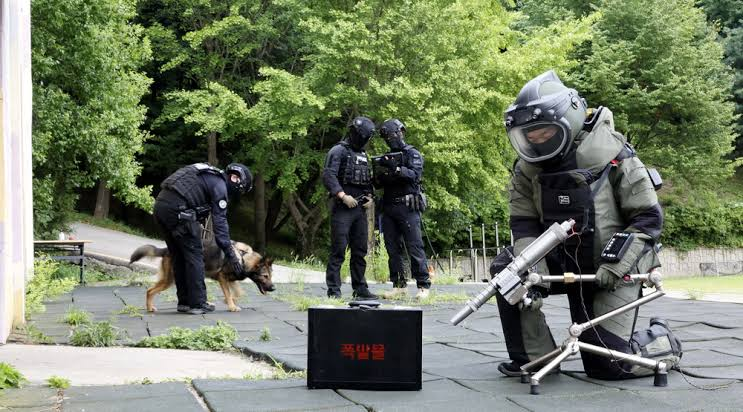
Peter Gurney joined the Metropolitan Police Explosives Office in 1973 after more than two decades of Army service. The timing placed him at the centre of a difficult security period in London. IRA bombing activity created repeated demands for experienced explosives officers who could examine suspicious devices and respond when unexploded bombs remained at a scene. Gurney’s military background gave him extensive practical experience when he entered this new phase of his career.
His responsibilities continued to grow, and in October 1985 he became head of the Metropolitan Police Explosives Office. By that point, he had already spent years responding to serious incidents and developing his knowledge of terrorist devices. Heading the office added leadership and coordination to his operational responsibilities. He remained in the role during the final years of his police career and continued working in bomb disposal until his retirement in 1991.
Major Bomb Disposal Operations and Acts of Gallantry
Gurney’s police career included incidents that demonstrated why experienced explosives officers were so important. Soon after he joined the Metropolitan Police, IRA car bombs appeared in London in March 1973. His work during this period contributed to further recognition for gallantry. He was appointed MBE for gallantry, adding another major distinction to the George Medal he had already received during his military career.
Another defining event occurred in October 1981. Explosives officer Kenneth Howorth was killed while dealing with a bomb in Oxford Street. Gurney subsequently dealt with another dangerous device despite the loss of his colleague. His actions led to a Bar being awarded to his existing George Medal. The recognition made his honours record particularly notable and reflected the exceptional risks repeatedly encountered during his years in military and police bomb disposal.
The Downing Street Mortar Attack
One of the best-known incidents of Peter Gurney’s later career occurred on February 7, 1991, when the IRA launched a mortar attack against 10 Downing Street. Three mortar rounds were fired from a van in Whitehall while Prime Minister John Major and senior ministers were inside. One exploded in the Downing Street garden, while other devices failed to function as intended, leaving explosives specialists with additional dangers to address after the initial attack.
Gurney responded to the scene as head of the Metropolitan Police Explosives Office and dealt with unexploded ordnance associated with the attack. The incident came during the final year of his police career and became one of the operations most closely associated with his name. It demonstrated an important reality of bomb disposal: the threat can continue after an attack appears to be over because unexploded devices may remain unstable and dangerous to emergency workers and the surrounding public.
Bomb Disposal Technology and the Wheelbarrow Robot
Gurney’s career also overlapped with major changes in bomb-disposal technology. Earlier explosives officers often had to approach suspicious devices with relatively limited equipment, increasing the danger of direct intervention. The development of remotely operated machines offered a way to perform some tasks from a greater distance. Among the best-known British developments was the Wheelbarrow, an early bomb-disposal robot designed to help specialists deal with explosive devices while reducing their direct exposure.
Gurney was among the early bomb-disposal specialists who worked with versions of the Wheelbarrow in Northern Ireland. Early machines were far less sophisticated than modern bomb-disposal robots, and operational experience helped expose their limitations and guide improvements. For Gurney, remote equipment represented an important change in a profession where increasing the distance between an operator and a bomb could save lives. His career therefore provides a useful window into the transition from highly manual bomb disposal toward greater use of remotely controlled technology.
Braver Men Walk Away and Life After Retirement
Peter Gurney retired from the Metropolitan Police in 1991, bringing his full-time operational career to an end. Retirement, however, did not completely separate him from the field in which he had accumulated decades of experience. He continued working as a consultant on terrorism involving explosives and contributed to the training of police forces overseas. In this way, knowledge developed during dangerous frontline operations could be passed to other specialists facing similar threats.
In 1993, Gurney published his autobiography, Braver Men Walk Away. The book documented experiences from his long career and offered readers insight into the realities of bomb disposal. Its significance comes from Gurney’s firsthand perspective across both military and police service. Instead of presenting bomb disposal only through major news events, his account helped preserve the professional experiences behind those incidents and the changing methods used to respond to explosive threats.
The Purple Fund and Peter Gurney’s Charitable Legacy
Peter Gurney’s later life also included substantial charitable involvement. Together with his wife, Sheridan, he established the Purple Fund through Sussex Community Foundation. The fund supported organizations addressing a range of community needs, including social isolation among older people, mental health difficulties, support for veterans, and assistance for people affected by sight or hearing loss. It also supported organizations using animals in therapeutic settings.
The Purple Fund became a lasting part of Gurney’s legacy beyond his bomb-disposal career. Sussex Community Foundation reported after his death that the fund had distributed more than £200,000 to charities across Sussex during the previous five years, with much of that support benefiting organizations in West Sussex. Because it was established as an endowment fund, charitable support can continue in memory of Peter and Sheridan Gurney, extending their contribution to communities beyond their lifetimes.
Peter Gurney’s Death and Legacy
Peter Gurney died on September 19, 2025, at the age of 93. His death brought renewed attention to a career that had stretched from post-war Army service through decades of changing terrorist threats and bomb-disposal technology. His record included more than twenty years in the Army, service with the Metropolitan Police Explosives Office, leadership of that office, major gallantry honours, involvement in historically significant incidents, and continued specialist work after retirement.
His legacy is best understood through the combination of those achievements rather than through any single operation. The George Medal and Bar and his MBE documented official recognition of his gallantry, while Braver Men Walk Away preserved his own account of a demanding profession. His work with bomb-disposal technology and later training helped carry specialist knowledge forward, while the Purple Fund created an entirely different form of long-term impact. Together, these contributions explain why Peter Gurney remains an important figure in the history of British bomb disposal.
Conclusion
Peter Gurney spent much of his professional life confronting explosive threats that required technical knowledge, experience, discipline, and controlled decision-making. From his entry into the British Army in 1950 to his later leadership of the Metropolitan Police Explosives Office, his career followed the changing nature of bomb disposal across four decades. His George Medal, Bar and MBE provide lasting recognition of the dangers he faced and the service he provided during that period.
His story also continued beyond frontline operations. Gurney shared his experience through consulting, international police training and his autobiography, while his involvement in the Purple Fund created a charitable legacy unrelated to the dangers that had defined his profession. His death in 2025 closed a remarkable personal chapter, but his documented career, contributions to bomb disposal, published recollections and charitable work continue to provide a clear record of his life and achievements.
FAQs
Who was Peter Gurney?
Peter Edwin Spencer Gurney was a British bomb disposal expert who served in the British Army and later joined the Metropolitan Police Explosives Office. He became head of the office in 1985 and was involved in numerous dangerous bomb-disposal operations during his long career.
What medals and honours did Peter Gurney receive?
Peter Gurney received the George Medal for outstanding bravery during his Army service in Northern Ireland. He later received a Bar to the George Medal following further bomb-disposal work and was also appointed MBE for gallantry during his career.
Was Peter Gurney involved in the Downing Street mortar attack?
Yes. Gurney responded after the IRA mortar attack on 10 Downing Street on February 7, 1991. As head of the Metropolitan Police Explosives Office, he was involved in dealing with unexploded ordnance remaining after the attack.
What book did Peter Gurney write?
Peter Gurney wrote Braver Men Walk Away, an autobiography published in 1993. It recounts experiences from his military and police bomb-disposal career and provides a firsthand perspective on the dangers and development of the profession.
When did Peter Gurney die?
Peter Gurney died on September 19, 2025, at the age of 93. He left a legacy that included decades of bomb-disposal service, major gallantry honours, specialist training and consulting, an autobiography, and charitable work through the Purple Fund.
You May Also Read: Knott Drive