A septum piercing is one of the most popular facial piercings in modern fashion. Known for its bold yet versatile look, this piercing passes through the soft tissue beneath the nasal septum, allowing jewelry such as horseshoe rings, clickers, and retainers to be worn comfortably. Over the past decade, septum piercings have moved from niche subcultures into mainstream style, embraced by celebrities, artists, and everyday people who value self-expression.
One of the biggest reasons for the popularity of the septum piercing is flexibility. Unlike some facial piercings, a septum piercing can often be hidden by flipping certain jewelry upward inside the nostrils. This makes it appealing for people who want a stylish look while still keeping options open for work, school, or formal settings. It offers both visibility and discretion depending on the jewelry chosen.
Many people considering a septum piercing have common questions: Does it hurt? How long does it take to heal? What jewelry is best? Is it expensive? These are important concerns, because facial piercings require proper placement, high-quality materials, and consistent aftercare. A professional piercing experience can make a major difference in comfort and healing outcomes.
This complete guide covers everything you need to know about septum piercing pain, healing time, jewelry choices, cost, risks, and styling tips. Whether you are curious or ready to book an appointment, this article will help you make an informed decision.
What Is a Septum Piercing?
A septum piercing is placed through the thin strip of soft tissue located just below the cartilage that separates the nostrils. Many people assume the piercing goes directly through cartilage, but in most proper procedures, it passes through what piercers often call the “sweet spot.” This softer area makes the process easier and generally less painful than piercing hard cartilage.
Placement matters greatly. If the piercing is too low, it may look awkward or heal poorly. If it is too high or through cartilage, pain and healing complications can increase. This is why choosing an experienced professional piercer is essential. They understand anatomy variations and know how to locate the correct position for each person.
Septum piercings also have deep cultural history. Different societies have worn nasal piercings for ceremonial, spiritual, and decorative reasons for centuries. In some traditions, they symbolized maturity, identity, status, or beauty. Today, the piercing is commonly associated with creativity, confidence, and individuality.
Modern wearers choose septum piercings for many reasons. Some enjoy the edgy aesthetic, others like the minimal elegance of a small ring, and many appreciate the option to switch styles easily. It can look dramatic or subtle depending on the jewelry selected.
Septum Piercing Procedure: What to Expect
Getting a septum piercing begins with selecting a clean, reputable studio. A professional piercer should use sterilized tools, single-use needles, gloves, and high-quality jewelry. The environment should feel hygienic and welcoming. If anything seems rushed or unsanitary, it is wise to choose another studio.
During the appointment, the piercer usually discusses placement, jewelry options, and your medical history. They may inspect your nose anatomy to determine whether your sweet spot is suitable for piercing. Once agreed, they mark the area and ask for approval before beginning.
The actual piercing process is quick. A clamp or freehand technique may be used to steady the tissue. Then a hollow needle passes through the marked spot, followed by insertion of the chosen jewelry. The entire process often takes only a few moments, though preparation and aftercare discussion take longer.
Pain levels vary by person, but many describe septum piercing pain as a sharp pinch followed by watering eyes and pressure rather than severe pain. Because the sweet spot is soft tissue, discomfort is often shorter and milder than people expect. Anxiety beforehand can feel worse than the procedure itself.
Healing Time and Aftercare
Healing a septum piercing typically takes around 2 to 3 months for initial recovery, though full internal healing can sometimes take longer depending on the person. Some people feel normal quickly, while others experience tenderness for several weeks. Healing speed depends on aftercare, general health, and whether the piercing was properly placed.
The best aftercare routine usually includes sterile saline rinses once or twice daily. This helps loosen dried discharge and keeps the area clean without harsh chemicals. Warm saline compresses can also be soothing if the area feels irritated. Gentle care is far more effective than aggressive cleaning.
Avoid touching the jewelry with dirty hands, rotating it unnecessarily, or using alcohol, peroxide, and scented products near the piercing. These can irritate tissue and delay healing. Sleeping carefully and avoiding accidental bumps are also important, especially in the early weeks.
During healing, mild crusting, temporary tenderness, and occasional sensitivity are common. However, severe swelling, persistent redness, thick yellow or green discharge, or increasing pain may indicate a problem. If symptoms worsen, seek advice from a professional piercer or healthcare provider.
Septum Piercing Jewelry Guide
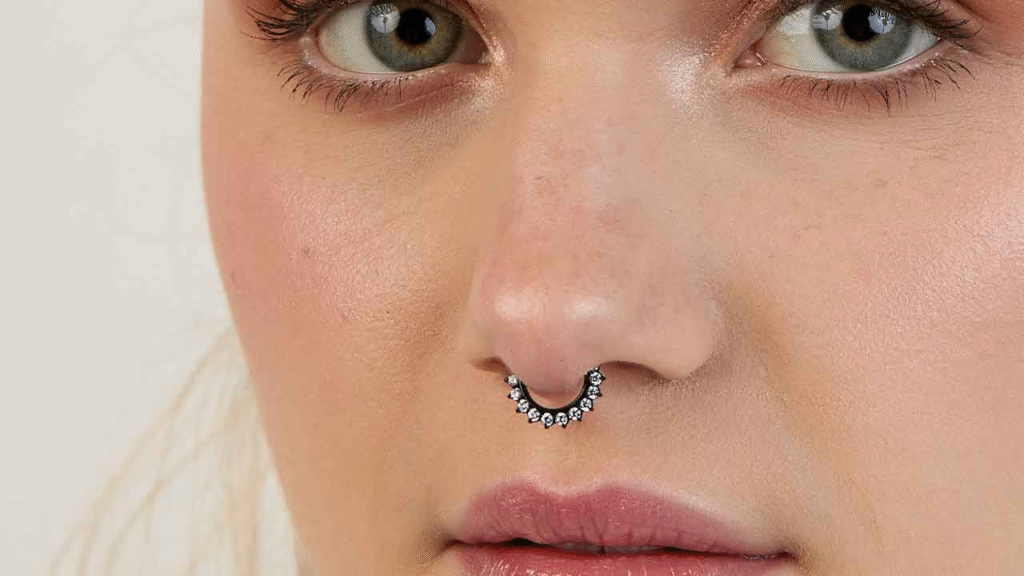
Jewelry choice strongly influences both comfort and style in a septum piercing. One of the most common starter options is the horseshoe barbell, which offers easy cleaning and can often be flipped upward. Circular barbells are practical and beginner-friendly.
Clickers are another favorite once healing progresses. These rings open and close with a hinge mechanism, making them convenient to wear and stylish in many designs. Seam rings offer a smooth continuous appearance, while retainers are ideal for hiding the piercing discreetly.
Material quality is extremely important. Implant-grade titanium is widely recommended for new piercings because it is lightweight, durable, and hypoallergenic for many people. High-quality surgical steel may also be used, though sensitive individuals often prefer titanium. Solid gold in appropriate purity can be an option after healing.
Gauge and diameter affect fit. Common starter sizes include 16g or 14g depending on anatomy and piercer preference. Diameter determines how snug or loose the ring sits under the nose. A professional can recommend sizing that complements your face and feels comfortable.
Cost, Risks, and Common Problems
The cost of a septum piercing depends on region, studio reputation, and jewelry quality. Many basic professional piercings fall into a moderate price range, while premium studios or upgraded titanium and gold jewelry can cost more. Paying for expertise and safe materials is usually worth it.
Like any piercing, risks exist. Poor placement can result in crooked jewelry or discomfort. Low-quality metal may cause irritation or allergic reactions. Inconsistent aftercare can lead to prolonged healing or infection. These risks are reduced significantly by choosing an experienced piercer.
Some people experience irritation bumps caused by trauma, touching, or friction rather than infection. This often improves when the source of irritation is removed and aftercare is simplified. Patience is important because tissue needs time to settle.
If you notice intense pain, fever, spreading redness, foul-smelling discharge, or jewelry embedding into tissue, seek professional help promptly. Early attention prevents minor issues from becoming serious complications.
Styling and Lifestyle Tips
A major benefit of a septum piercing is versatility. You can wear a tiny understated ring for a minimalist look or a bold decorative clicker for stronger expression. Jewelry style can dramatically change the vibe of the piercing.
Many people appreciate the ability to hide it. Retainers or flip-up horseshoes make the piercing practical for workplaces, schools, or formal events. This adaptability makes septum piercing more accessible than some visible facial piercings.
Wait until healing is sufficiently advanced before changing jewelry. Early changes can irritate tissue and restart healing. If unsure, visit a professional piercer for the first swap.
Conclusion
A septum piercing offers a unique combination of style, flexibility, and personal expression. With correct placement through the sweet spot, quality jewelry, and consistent aftercare, many people enjoy a smooth healing experience and long-term comfort.
Choosing a reputable piercer is the most important first step. Good technique reduces pain, improves alignment, and supports healthy healing. From subtle rings to bold statement pieces, septum jewelry offers endless customization.
If you are considering a septum piercing, take time to research, invest in quality, and commit to aftercare. Done properly, it can be one of the most rewarding and versatile facial piercings available.
FAQs
How painful is a septum piercing?
Usually a quick sharp pinch with watering eyes and brief pressure.
How long does a septum piercing take to heal?
Initial healing often takes 2–3 months, with full healing sometimes longer.
Can I hide a septum piercing?
Yes, certain jewelry can be flipped up or replaced with retainers.
What jewelry is best for a new septum piercing?
Implant-grade titanium starter jewelry is a popular safe option.
Does a septum piercing go through cartilage?
Typically no. It should pass through the soft sweet spot tissue.
When can I change my jewelry?
Usually after healing progresses, ideally with professional guidance.
You May Also Read: Ozzy Osbourne Funeral