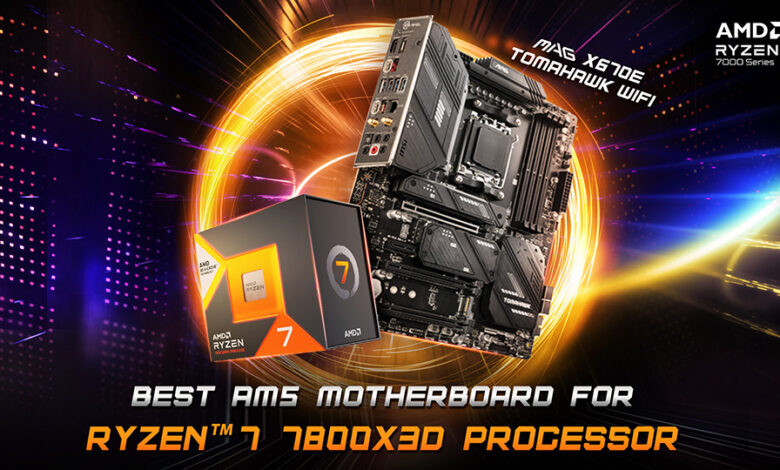
The AMD Ryzen series has established itself as a dominant force in modern computing, providing high-performance processors for gamers, content creators, and PC enthusiasts alike. Among its latest offerings, the Ryzen 7 7800X3D stands out as a flagship CPU designed to deliver exceptional gaming and productivity performance. Utilizing AMD’s innovative 3D V-Cache technology, this processor combines high core counts, fast clock speeds, and enhanced cache to minimize latency and boost frame rates in gaming. For users building a high-performance PC, understanding the specifications, real-world performance, compatibility, and optimal setups for this CPU is essential to maximize both gaming and professional workloads.
The Ryzen 7 7800X3D is part of AMD’s Ryzen 7000 series and targets enthusiasts who demand top-tier performance without the extreme power consumption of some larger CPUs. It is particularly popular among gamers who want to maintain high FPS at 1440p or 4K resolutions while using modern titles. Beyond gaming, the processor excels in multi-threaded applications such as video rendering, 3D modeling, and content creation. Its combination of performance and efficiency makes it a versatile choice, bridging the gap between gaming rigs and productivity workstations. This guide will explore the CPU’s specifications, analyze its performance, provide system-building advice, and highlight who will benefit most from this processor.
Overview of Ryzen 7 7800X3D
The Ryzen 7 7800X3D features 8 cores and 16 threads, making it capable of handling demanding multi-threaded tasks while still maintaining strong single-threaded performance crucial for gaming. With base clock speeds typically around 4.2 GHz and boost clocks up to 5.0 GHz, the CPU offers excellent performance without requiring extreme overclocking. One of the key differentiators of the 7800X3D is AMD’s 3D V-Cache technology, which stacks additional L3 cache on top of the processor die, significantly reducing latency and improving gaming frame rates.
Compared to other Ryzen 7000 series CPUs, the 7800X3D focuses on optimizing gaming performance rather than raw multi-core computational power. While processors like the Ryzen 9 7900X excel in heavy multi-threaded tasks, the 7800X3D delivers a balanced performance for both gaming and productivity, with a particular edge in games that rely heavily on cache. This makes it a go-to option for gamers seeking the ultimate FPS without compromising versatility.
AMD markets this processor towards enthusiasts, gamers, and content creators who need high performance without the extreme energy demands of larger CPUs. Its combination of modern architecture, large cache, and energy efficiency makes it appealing for both desktop gamers and professionals using resource-intensive software. By understanding these specifications, users can determine if the 7800X3D fits their needs, whether they prioritize high FPS gaming, streaming, or creative work.
Performance Analysis
Gaming Performance
The Ryzen 7 7800X3D truly shines in gaming scenarios thanks to its large L3 cache and high clock speeds. Benchmarks across popular AAA titles and esports games demonstrate significant FPS improvements over standard Ryzen 7000 CPUs, especially in cache-sensitive titles like Cyberpunk 2077, Assassin’s Creed, and Microsoft Flight Simulator. Compared to Intel’s i7 and i9 processors, the 7800X3D often matches or exceeds performance in gaming while maintaining lower power consumption, making it a highly efficient choice for gaming enthusiasts.
The 3D V-Cache technology reduces memory latency, which is particularly beneficial in high-refresh-rate gaming or 1440p setups. Players can enjoy smoother frame rates and reduced stutter without necessarily pairing the CPU with the most expensive GPUs. This balance makes the 7800X3D one of the best CPUs for gamers who want high FPS with consistent performance across various titles. Additionally, its performance advantage becomes more noticeable in CPU-bound scenarios where cache and low latency directly affect gameplay quality.
Productivity and Creative Workloads
While gaming is a key strength, the Ryzen 7 7800X3D also performs well in productivity tasks such as video editing, 3D rendering, and content creation. Its 8 cores and 16 threads provide strong multi-threaded performance, making it suitable for software like Adobe Premiere Pro, Blender, and DaVinci Resolve. Though slightly outperformed by higher-core-count CPUs like the Ryzen 9 7900X in extreme multi-threaded workloads, the 7800X3D strikes a strong balance between gaming and professional tasks.
Single-threaded performance is equally impressive, which benefits programs and applications that rely on fewer cores but require fast processing speeds. Its combination of speed and efficiency ensures smooth multitasking, making it an ideal processor for streamers or creators who need to game while recording or rendering content simultaneously. This versatility is what sets the 7800X3D apart from CPUs designed purely for either gaming or productivity.
Power Efficiency and Thermal Performance
Despite its high performance, the Ryzen 7 7800X3D maintains excellent power efficiency. Under load, its TDP is lower than some high-core-count alternatives, reducing heat generation and minimizing the need for expensive cooling solutions. Still, pairing it with quality cooling—such as AIO liquid coolers or high-end air coolers—ensures stable boost clocks and long-term reliability.
Overclocking potential is moderate; the CPU is designed to operate close to its performance limits out of the box. Users can still fine-tune settings, but most will achieve optimal results using default speeds. Efficient thermal management ensures that the CPU maintains consistent performance, even during long gaming or rendering sessions. This combination of power efficiency, moderate heat output, and solid cooling compatibility makes the 7800X3D suitable for compact or high-performance PC builds.
Compatibility and System Building
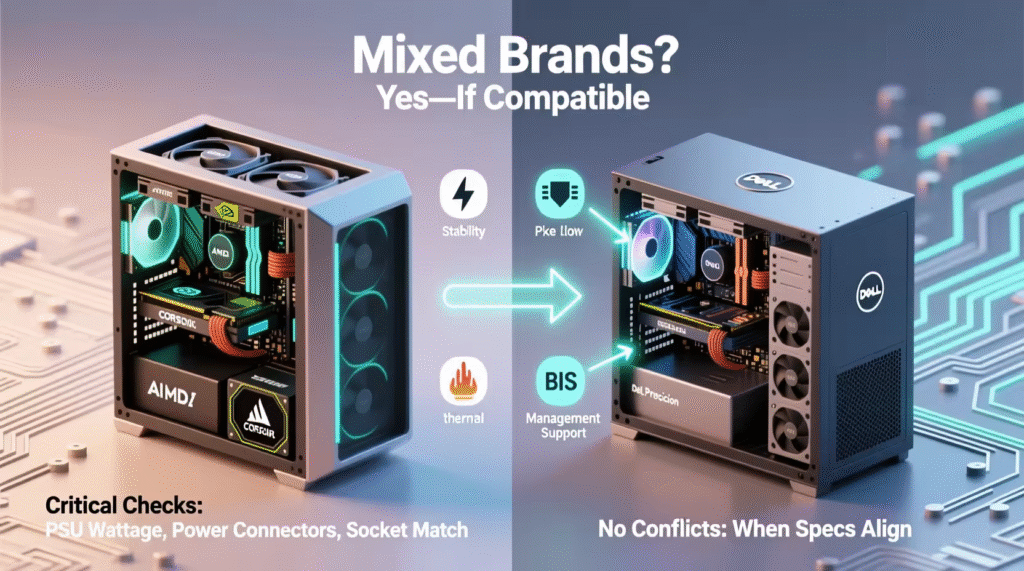
Motherboards and Chipsets
The Ryzen 7 7800X3D is compatible with AM5 motherboards, specifically those with B650 and X670 chipsets. High-end motherboards offer features such as PCIe 5.0 support, faster VRM designs for stability, and optimized BIOS for 3D V-Cache performance. Users should ensure BIOS updates are applied to fully unlock the CPU’s capabilities and avoid compatibility issues.
RAM and Storage Recommendations
For best results, pairing the 7800X3D with DDR5 RAM is recommended, ideally in the 5600-6000 MHz range, which complements the CPU’s architecture and reduces memory latency. NVMe SSDs, particularly Gen 4 or Gen 5, help maximize system responsiveness and reduce load times in both games and productivity software. Balancing cost and performance is key, especially when pairing with high-end GPUs.
Recommended PC Builds
- Budget Build: Ryzen 7 7800X3D with mid-range DDR5 RAM, B650 motherboard, and RTX 4060 GPU for solid 1080p/1440p gaming.
- Mid-Range Build: Ryzen 7 7800X3D with 32GB DDR5, X670 motherboard, and RTX 4070/4070 Ti for 1440p high FPS gaming and productivity.
- High-End Build: Ryzen 7 7800X3D with premium DDR5 RAM, X670E motherboard, and RTX 4080/4090 for 4K gaming and professional workloads.
Pros, Cons, and Real-World Use Cases
Pros: Excellent gaming performance, 3D V-Cache benefits, energy efficiency, strong single-threaded and multi-threaded performance.
Cons: Premium price, limited overclocking headroom, requires AM5 motherboard and DDR5 RAM for best performance.
Use Cases: Ideal for gamers seeking high FPS, content creators needing balanced multi-threaded performance, and PC enthusiasts building high-performance, energy-efficient systems.
Conclusion
The Ryzen 7 7800X3D is a versatile, high-performance CPU that excels in gaming, content creation, and productivity workloads. Its 3D V-Cache technology provides a clear advantage in cache-sensitive games, while its efficient architecture ensures excellent thermal performance and energy savings. Whether you are a gamer seeking ultra-smooth frame rates or a creator balancing gaming with professional tasks, the 7800X3D is an excellent choice. Proper pairing with compatible motherboards, fast DDR5 RAM, and adequate cooling ensures users get the most out of this powerful processor.
FAQs
What is the Ryzen 7 7800X3D and what makes it different from other Ryzen CPUs?
It features 3D V-Cache, offering larger L3 cache for improved gaming performance and low latency.
How does 3D V-Cache improve gaming performance?
By reducing memory latency and increasing cache, it boosts FPS in cache-sensitive games.
What motherboards are compatible with Ryzen 7 7800X3D?
AM5 motherboards with B650 or X670 chipsets are recommended.
Can I overclock the Ryzen 7 7800X3D safely?
Moderate overclocking is possible, but the CPU is optimized for high performance at stock speeds.
Is Ryzen 7 7800X3D better than Intel i9 for gaming?
In many cache-sensitive and 1440p games, the 7800X3D matches or exceeds Intel’s performance.
What RAM speed is recommended for Ryzen 7 7800X3D?
DDR5 RAM at 5600-6000 MHz is optimal for performance.
How much power does the Ryzen 7 7800X3D consume?
Its TDP is lower than some high-core-count CPUs, making it energy-efficient.
Is this CPU suitable for content creation and streaming?
Yes, it handles multi-threaded workloads like video editing and rendering effectively.
What GPUs pair best with Ryzen 7 7800X3D for 1440p or 4K gaming?
Mid-to-high range GPUs like RTX 4070, 4080, or 4090 are ideal for optimal performance.
Should I upgrade from a previous Ryzen 5000 or 7000 series CPU to the 7800X3D?
Gamers who prioritize FPS and cache-sensitive titles will see a noticeable improvement; others may wait depending on their workload needs.
You May Also Read: Ninja Crispi Air Fryer