Flags are powerful symbols that represent history, culture, and identity. The Northern Ireland flag is one such emblem that carries deep historical and political meaning. While many regions around the world have widely recognized official flags, Northern Ireland’s flag story is unique and sometimes complex. It reflects the region’s past, its political developments, and the cultural identities of the people who live there.
Northern Ireland is part of the United Kingdom, and its symbols often connect with both British traditions and regional heritage. Over the years, the Northern Ireland flag—commonly known as the Ulster Banner—has been used in various contexts, especially during sporting events and by certain communities. However, its official status and the meaning behind its design have been topics of debate and discussion.
Understanding the Northern Ireland flag requires looking at its history, symbolism, and role in modern society. The flag includes several meaningful elements such as the red hand, a six-pointed star, and a crown. Each of these symbols tells a story connected to the region’s heritage and political history.
In this article, we explore the origins of the Northern Ireland flag, its design and meaning, and how it continues to influence cultural and political conversations today. By examining the flag’s history and symbolism, readers can better understand why this emblem remains significant in Northern Ireland and beyond.
What Is the Northern Ireland Flag?
The term Northern Ireland flag usually refers to the Ulster Banner, a historic flag associated with the region. Although Northern Ireland is part of the United Kingdom and officially represented by the Union Flag, the Ulster Banner has been widely recognized as a symbol of Northern Ireland in the past. The design includes a red cross on a white background, similar to the cross of Saint George, with additional symbols placed at the center.
The Ulster Banner was once used by the Government of Northern Ireland when the region had its own parliament. During that period, it served as the official regional flag and was displayed at government buildings and official events. Over time, it became closely linked with Northern Ireland’s identity, particularly within communities that supported the region’s connection with the United Kingdom.
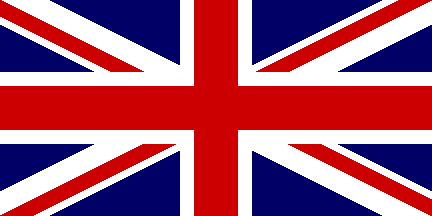
However, the situation changed after political reforms in the 1970s. When the Northern Ireland Parliament was suspended in 1972 and later abolished, the Ulster Banner lost its official status. Since then, there has been no legally recognized regional flag for Northern Ireland. Instead, the Union Flag represents Northern Ireland as part of the United Kingdom.
Despite this change, the Ulster Banner still appears in certain contexts today. It is often used during international sports competitions to represent Northern Ireland teams, and it remains an important symbol for many people in the region. As a result, the Northern Ireland flag continues to play a role in discussions about identity, heritage, and tradition.
The History of the Northern Ireland Flag
The history of the Northern Ireland flag is closely tied to the creation of Northern Ireland itself. In 1921, Ireland was divided following political negotiations and the establishment of two separate entities: Northern Ireland and what later became the Republic of Ireland. Northern Ireland remained part of the United Kingdom, and its government was based in Belfast.
The Ulster Banner was officially introduced in 1953 during the coronation year of Queen Elizabeth II. The design was intended to represent Northern Ireland’s connection with the British monarchy while also acknowledging its regional heritage. The flag quickly became associated with the Northern Ireland government and was displayed on official buildings and during public ceremonies.
For nearly two decades, the Ulster Banner functioned as the official regional flag. It was widely used by government institutions and recognized internationally as the symbol of Northern Ireland. During this time, the flag appeared in various contexts, including diplomatic events and sports competitions.
The situation changed in 1972 when the British government suspended the Northern Ireland Parliament during a period of political conflict known as the Troubles. In 1973, the parliament was officially abolished, and the Ulster Banner lost its official status. Since then, the region has not adopted a new official flag, leaving the question of symbolic representation open to interpretation.
Design and Symbols of the Northern Ireland Flag
The design of the Northern Ireland flag is rich with symbolic elements that reflect the region’s history and identity. The background features a red cross on a white field, which resembles the cross of Saint George. This design connects the flag to the broader heritage of the United Kingdom and reflects Northern Ireland’s historical ties to Britain.
At the center of the flag is a six-pointed white star. This star represents the six counties that make up Northern Ireland: Antrim, Armagh, Down, Fermanagh, Londonderry, and Tyrone. The star highlights the unity of these counties within the region and serves as a visual reminder of Northern Ireland’s geographic composition.
Inside the star is one of the most recognizable symbols in Irish history—the Red Hand of Ulster. This symbol has ancient origins and has been associated with the province of Ulster for centuries. The red hand appears in many historical crests and emblems and is widely recognized as a symbol of regional heritage.
Above the star sits a crown, representing loyalty to the British monarchy. The inclusion of the crown reflects Northern Ireland’s political relationship with the United Kingdom and emphasizes its status as part of the British state. Together, these elements create a flag that blends regional identity with political symbolism.
Symbolism and Meaning of the Northern Ireland Flag
The Northern Ireland flag carries multiple layers of symbolism. For many people, the Ulster Banner represents regional pride and a connection to Northern Ireland’s history. The red hand, star, and crown together tell a story about the region’s cultural traditions and political background.
Within unionist communities, the flag is often seen as a symbol of loyalty to the United Kingdom. The crown and the cross of Saint George reinforce this connection and highlight Northern Ireland’s place within the British political system. For supporters of this viewpoint, the flag represents stability, tradition, and national identity.
However, the symbolism of the flag is not universally accepted across all communities. Northern Ireland has a complex political landscape shaped by different historical experiences and cultural identities. While some people view the Ulster Banner as an important heritage symbol, others associate it with particular political perspectives.
Despite these differences, the Northern Ireland flag remains an important historical emblem. It reflects the region’s past and serves as a reminder of the social and political developments that have shaped Northern Ireland over time.
Controversies Surrounding the Northern Ireland Flag

The Northern Ireland flag has long been connected to political and cultural debates. The region has experienced decades of tension between different communities, particularly between unionists, who support remaining part of the United Kingdom, and nationalists, who identify more closely with Ireland.
Because the Ulster Banner was used by the former Northern Ireland government, some communities view it as representing only one side of the political spectrum. This has led to disagreements over whether the flag should continue to represent Northern Ireland in modern contexts.
These disagreements are part of a broader conversation about identity and symbolism in Northern Ireland. Flags, murals, and emblems often carry strong emotional meaning, and their display can sometimes lead to debate or controversy. As a result, discussions about flags are closely linked to the region’s history and ongoing political developments.
In recent years, efforts have been made to promote understanding and respect between different communities. While the Northern Ireland flag remains a historical symbol, many people continue to discuss how shared cultural symbols can represent everyone in the region.
Other Flags Associated with Northern Ireland
Although the Ulster Banner is often called the Northern Ireland flag, several other flags are also connected to the region. The most important of these is the Union Flag, which represents the United Kingdom as a whole. Since Northern Ireland is part of the UK, this flag is the official national symbol used by government institutions.
Another flag sometimes associated with the region is the Ulster provincial flag, which represents the historic province of Ulster. However, Ulster includes nine counties, three of which are located in the Republic of Ireland. As a result, this flag does not exclusively represent Northern Ireland.
In some communities, the Irish tricolour is also displayed, particularly by those who identify with Irish nationalism. This flag represents the Republic of Ireland and symbolizes unity between different traditions on the island.
The presence of multiple flags in Northern Ireland reflects the region’s diverse identities and cultural influences. Each symbol carries its own meaning and historical background.
Conclusion
The Northern Ireland flag, commonly known as the Ulster Banner, is a symbol deeply rooted in history, politics, and cultural identity. Although it is no longer the official flag of the region, it remains an important emblem connected to Northern Ireland’s past and traditions.
From its design elements—such as the Red Hand of Ulster, the six-pointed star, and the crown—to its role in government and sports, the flag represents a unique blend of regional heritage and political symbolism. Its story reflects the broader history of Northern Ireland and the events that have shaped the region over the past century.
Today, the Northern Ireland flag continues to spark discussions about identity and representation. Whether viewed as a historic emblem or a cultural symbol, it remains an important part of Northern Ireland’s story and its evolving relationship with history, tradition, and community.
Frequently Asked Questions (FAQs)
What is the official flag of Northern Ireland?
Northern Ireland does not currently have its own official regional flag. The Union Flag represents it as part of the United Kingdom.
Why is the Ulster Banner associated with Northern Ireland?
The Ulster Banner was used as the official flag of the Northern Ireland government from 1953 until the government was abolished in 1973.
What does the Red Hand of Ulster represent?
The Red Hand of Ulster is an ancient symbol associated with the province of Ulster and is widely recognized as a representation of regional heritage.
Is the Northern Ireland flag still officially used today?
No, the Ulster Banner is no longer an official flag, though it is sometimes used in sports and cultural contexts.
Why is the Northern Ireland flag considered controversial?
Some communities associate the flag with particular political traditions, which has led to debates about representation.
What is the difference between the Ulster Banner and the Ulster flag?
The Ulster Banner represents Northern Ireland’s former government, while the Ulster provincial flag represents the entire historic province of Ulster.
Do people in Northern Ireland use different flags?
Yes, depending on cultural or political identity, people may display the Union Flag, the Ulster Banner, or the Irish tricolour.
When was the Northern Ireland flag first introduced?
The Ulster Banner was introduced in 1953 and used officially until 1973.
You May Also Read: Arthur Morgan