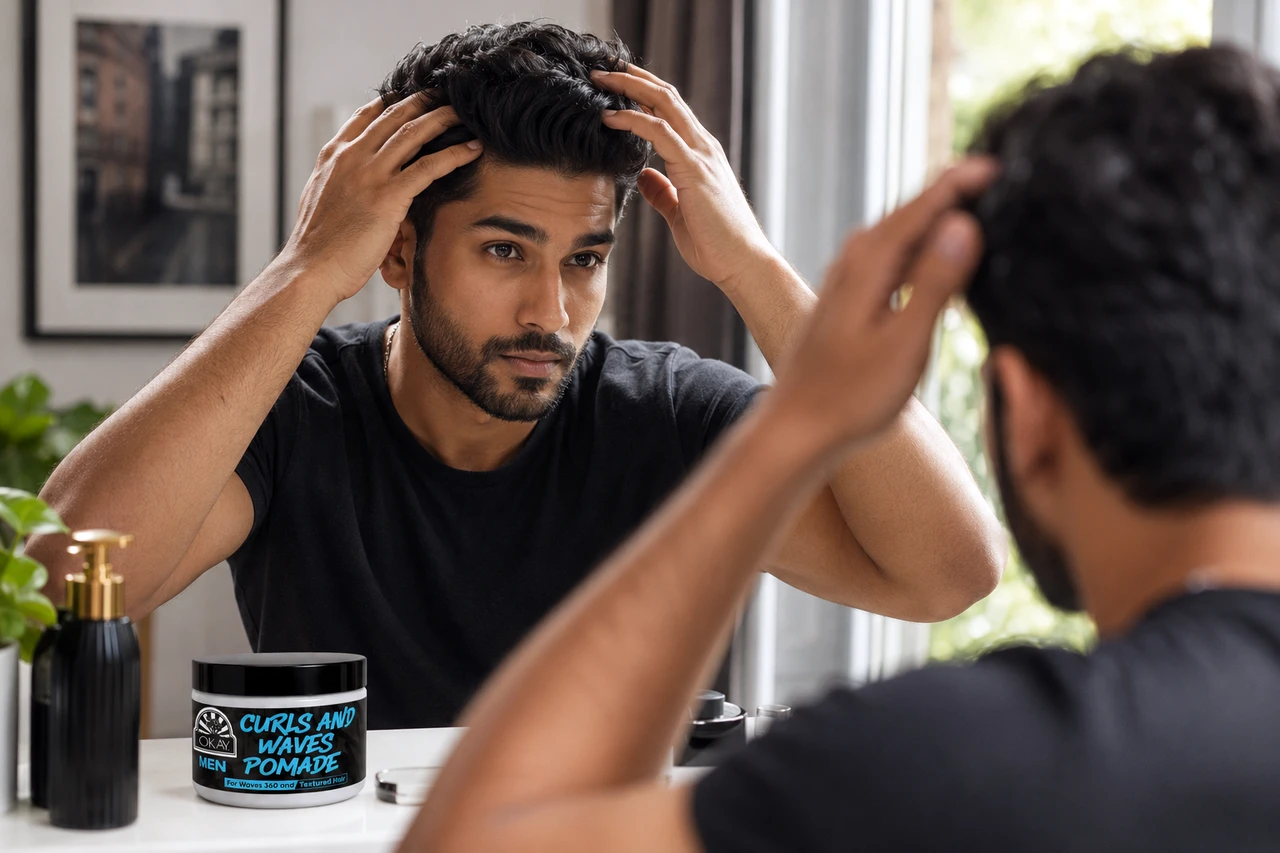
Curly hair has always had a unique character. It can create impressive volume, natural movement, and a distinctive style, but maintaining well-defined curls often requires the right balance of moisture, control, and styling support. Many people struggle with frizz, dryness, undefined curl patterns, and hairstyles that lose shape throughout the day. This is why pomade with curly hair has become a popular styling solution for people who want better curl definition without sacrificing a natural appearance.
Although pomade was traditionally associated with classic hairstyles and sleek finishes, modern formulas have changed the way people use this product. Today, pomades are available in lightweight, water-based, matte, and nourishing formulas that can work with different curl patterns. The right pomade can help enhance texture, smooth flyaways, add shine, and provide flexible hold while allowing curls to remain soft and touchable.
Choosing the correct product is important because curly hair varies greatly from person to person. A pomade that works well for loose waves may not provide enough moisture or control for thick coils. This guide explains how pomade for curly hair works, how to choose the right formula, how to apply it correctly, and how it compares with other popular styling products.
Is Pomade Good for Curly Hair?
Many people ask whether pomade is actually suitable for curly hair because it has historically been used for straight, short, or slick hairstyles. The answer depends on the formula and the type of curls you have. Modern pomades are designed with different levels of hold, texture, and ingredients, making them useful for many curly hair types when selected correctly.
The main advantage of using pomade on curly hair is its ability to provide definition while maintaining flexibility. Unlike some styling gels that can leave curls feeling hard or crunchy, many pomades create a softer finish that keeps curls looking natural. They can help control frizz, shape individual curls, and improve the overall appearance of textured hair.
However, pomade should not replace every part of a curly hair routine. Curly hair often requires hydration first, which means products like leave-in conditioners or curl creams may still be important. Pomade works best as a finishing product that helps lock in style, improve texture, and provide additional control after moisture needs have been addressed.
How Pomade Works on Curly Hair
Pomade works by creating a lightweight layer around the hair strands that helps smooth the surface and improve styling control. Curly hair naturally has more bends and curves, which can make moisture travel less easily from the scalp to the ends. Because of this, curls often become dry or frizzy, especially in changing weather conditions.
A suitable pomade can help reduce the appearance of frizz by smoothing the outer layer of the hair. It can also make curls appear more organised by separating strands and enhancing their natural pattern. Depending on the formula, pomade may provide shine, a natural finish, or stronger hold for more structured hairstyles.
Different ingredients create different results. Water-based pomades are usually easier to wash out and provide lightweight styling, while oil-based formulas often offer stronger hold and more shine. Natural pomades containing ingredients such as shea butter, beeswax, jojoba oil, or aloe vera may provide additional softness and manageability depending on the formula.
Choosing the Best Pomade for Curly Hair Types
The best pomade for curly hair depends on your curl pattern, hair thickness, and the final style you want to achieve. Curly hair is not one single category, and different textures require different levels of moisture and hold. Understanding your hair type helps you avoid products that make curls heavy, greasy, or difficult to manage.
For wavy hair and loose curls, lightweight pomades are usually a better choice because they provide definition without removing natural movement. A flexible water-based pomade can enhance texture while preventing waves from becoming flat. These formulas work well for people who want a natural everyday style with controlled frizz.
For tighter curls and coils, richer pomades may provide better support because these hair types often need more moisture retention and stronger definition. Ingredients like shea butter, castor oil, and natural waxes can help create a smoother finish. However, even thick curly hair can become weighed down if too much product is applied, so moderation is important.
Water-Based vs Oil-Based Pomade for Curly Hair
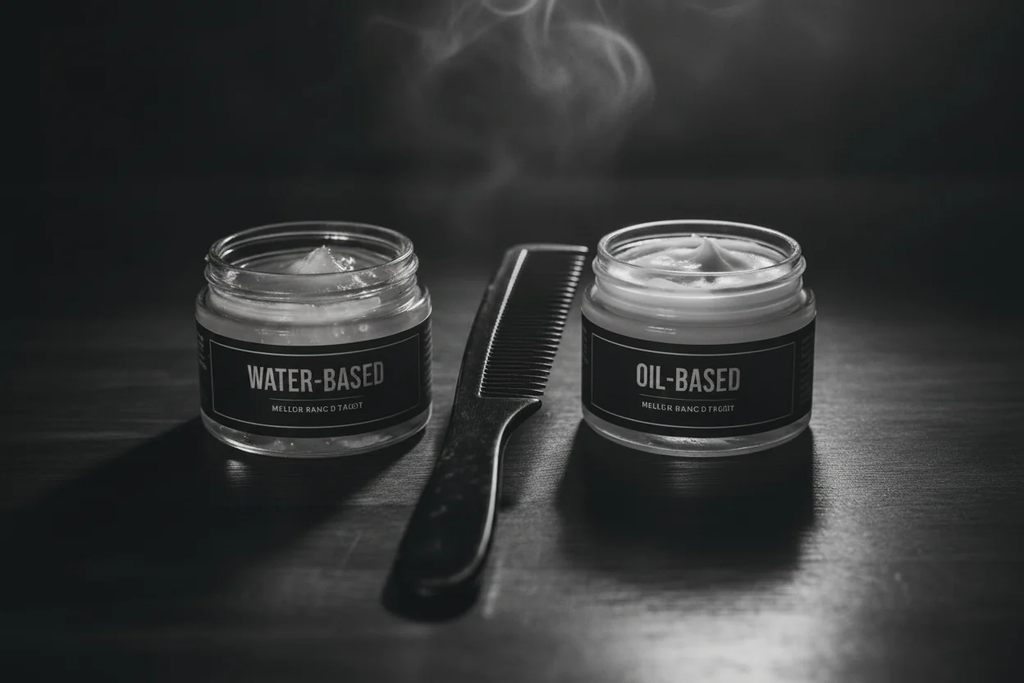
Choosing between water-based and oil-based pomade is one of the most important decisions when selecting a styling product. Water-based pomades are popular because they provide easier application, lighter texture, and simpler removal. They are suitable for people who style their hair regularly and prefer a cleaner feeling product.
Oil-based pomades usually provide stronger hold and a higher shine finish. They can be useful for thicker curly hair that requires additional control, especially for hairstyles that need more structure. However, they may require more effort to remove because oils and waxes can build up over time if the hair is not properly cleansed.
Neither option is automatically better than the other. The right choice depends on your hair needs. Someone with fine curls may prefer a lightweight water-based formula, while someone with dense curls may appreciate the extra control provided by a richer pomade.
Ingredients to Look for in Curly Hair Pomade
Ingredients play an important role when choosing a pomade for curly hair. Since curls are naturally more vulnerable to dryness and frizz, many people prefer formulas that provide styling benefits without creating unnecessary heaviness. Understanding common ingredients can help you make a better choice.
Shea butter is often used because it provides softness and helps improve the feel of dry hair. Jojoba oil is popular because its lightweight texture can help create smoothness without feeling overly greasy. Aloe vera is commonly included in hair products because of its soothing and moisturising properties.
Beeswax and natural waxes are often used to provide hold and structure. These ingredients can help curls maintain shape, especially in humid conditions. However, people with fine curls should be careful with very heavy wax-based products because they may reduce volume.
How to Apply Pomade With Curly Hair Correctly
Using the correct amount of pomade is essential for achieving good results. Start with clean, conditioned hair and allow it to become slightly damp. Applying pomade to slightly damp curls can help distribute the product more evenly and prevent certain areas from receiving too much product.
Begin with a small amount, usually around the size of a fingertip. Warm the pomade between your hands until it becomes easier to spread. Apply it through the middle sections and ends of your hair rather than concentrating too much product near the roots, where buildup can make hair appear greasy.
After applying pomade, use your fingers to shape curls and encourage natural definition. Avoid over-manipulating the hair because excessive touching can increase frizz. For refreshing curls the next day, lightly dampen the hair and apply a very small amount of pomade only where extra control is needed.
Pomade vs Curl Cream vs Gel vs Wax
Many people confuse pomade with other styling products because they all help create different types of hairstyles. Curl cream is mainly designed for hydration and softness. It works well for people who want natural-looking curls with improved moisture and reduced dryness.
Gel usually provides stronger hold and is often used when maximum curl definition is the goal. Some gels create a firmer texture, although modern formulas can provide a softer finish. Pomade offers a middle ground by combining hold, shine, and flexibility.
Wax is generally heavier and provides stronger structure, making it more common for shorter hairstyles. Pomade is often a better choice for people who want curly hair definition without losing movement. The best product depends on whether your priority is moisture, hold, shine, or long-lasting shape.
Common Mistakes When Using Pomade on Curly Hair
One of the biggest mistakes people make is applying too much pomade. Because pomade is concentrated, a small amount can often provide enough control. Using excessive product may cause curls to appear oily, reduce volume, and create buildup that makes future styling more difficult.
Another common mistake is choosing a product without considering hair type. A heavy pomade may work well for thick curls but overwhelm fine hair. Similarly, a lightweight formula may not provide enough control for people with dense curls that need stronger definition.
Ignoring proper cleansing is another issue. Regular pomade users should maintain a balanced washing routine to remove residue while protecting natural moisture. Using a gentle clarifying shampoo occasionally can help prevent buildup without damaging the curl pattern.
Styling Tips for Better Results With Pomade
Professional styling techniques often involve using pomade as a finishing product rather than the only product in your routine. Applying a moisturising product first and then adding a small amount of pomade can create a better balance between hydration and control.
For more volume, avoid applying heavy amounts near the roots. Instead, focus pomade on areas where curls need more definition or where frizz appears. People with shorter curly hairstyles can also use pomade to create sharper shapes and more controlled texture.
Experimenting with application methods is important because every curl pattern responds differently. Some people may prefer applying pomade while hair is damp, while others may get better results using it on dry curls as a finishing touch.
Conclusion
Pomade with curly hair can be an effective styling option for people who want improved definition, reduced frizz, and a more polished curl pattern. The key is choosing a formula that matches your hair type and using the product correctly.
From lightweight water-based pomades for loose curls to richer formulas for thick coils, there are options available for different styling needs. Pomade does not replace proper hydration, but when combined with a healthy curly hair routine, it can become a valuable tool for enhancing natural texture.
The best results come from understanding your own curls and finding the right balance between moisture and control. With the right product and technique, pomade can help you create defined, flexible, and natural-looking curls.
FAQs
Is pomade good for curly hair?
Yes, pomade can help define curls, reduce frizz, and provide flexible hold when the correct formula is used.
Can pomade replace curl cream?
No. Curl cream mainly provides moisture, while pomade focuses on styling, hold, and finishing.
What is the best pomade for thick curly hair?
Thicker curls often benefit from richer formulas with ingredients like shea butter, natural waxes, or nourishing oils.
Can pomade make curly hair greasy?
Yes, using too much product can make curls look greasy, so it is best to start with a small amount.
Should I apply pomade on wet or dry curly hair?
Slightly damp hair usually helps with even distribution, while dry hair can work well for finishing and controlling frizz.
You May Also Read: Scotland Ginger