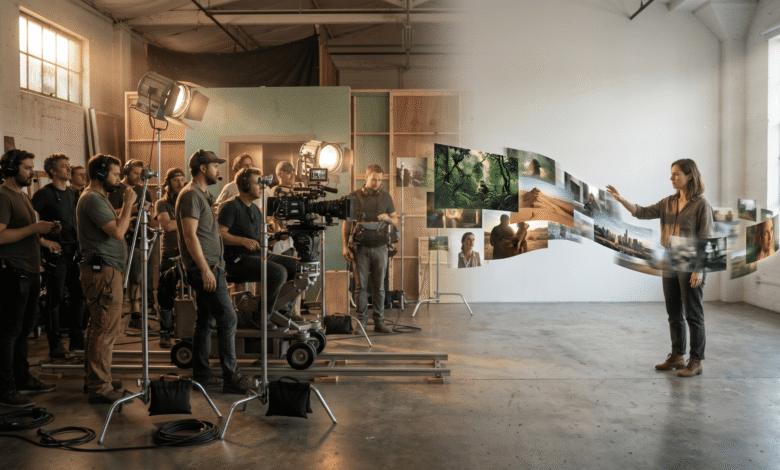
Video creation is going through a major transformation. What once depended on cameras, crews, and long editing cycles is now moving toward faster, more flexible systems powered by AI.
This change is not happening slowly.
Content demand has increased across platforms, and teams need to produce videos more frequently without sacrificing quality. Traditional workflows are struggling to keep up with this pace, which is pushing the industry toward new approaches. This shift is reshaping how teams think about production. It is also changing how quickly ideas can be turned into real content.
That’s where Higgsfield AI and Seedance 2.0 are playing a key role. Instead of just adding speed to existing processes, they are contributing to a broader shift in how video content is created.
From Production-Heavy to AI-Driven Workflows
Traditional video production has always required multiple stages. Planning, shooting, editing, and finalizing each video takes time and coordination.
This structure works well for large projects but becomes difficult when content needs to be produced quickly and consistently.
AI-driven workflows are changing this model. Instead of relying on separate stages, they combine multiple processes into a single system. This allows creators to move from idea to output more efficiently. It also reduces the delays caused by handoffs between stages.
Industry shift becomes more visible as teams adopt tools that reduce complexity while maintaining quality.
Seedance 2.0 supports this transition by allowing structured video generation without following every traditional step. It supports a more flexible approach to creation.
Redefining How Videos Are Created
The way videos are created is evolving. Instead of starting with footage, creators are starting with ideas, inputs, and references.
These inputs can include scripts, images, audio, and even existing video clips. Seedance 2.0 brings these elements together in one generation process. This creates a more direct path from concept to output.
The result feels more aligned with the original idea, as fewer steps are involved in translating it into a video. It reduces the gap between planning and execution. It also helps creators stay closer to their original creative vision.
Speed as a Core Requirement
Speed has become a critical factor in content creation. Teams need to respond quickly to trends, campaigns, and audience behavior.
Traditional workflows can slow this down.
Seedance 2.0 allows videos to be generated in minutes, which helps teams stay responsive. This makes it easier to test ideas and launch content quickly.
Faster production cycles are becoming an essential part of modern workflows. It also allows teams to stay competitive in fast-moving environments. Quick turnaround is no longer optional, it is expected.
Consistency Across Increasing Content Volume
As video output increases, maintaining consistency becomes more challenging.
Different team members, timelines, and formats can lead to variations in quality and style.
Seedance 2.0 addresses this by maintaining alignment across scenes and outputs. Characters remain consistent, and visual elements stay connected. This helps maintain a unified content identity. It reduces the need for repeated corrections.
Higgsfield AI supports this with tools like Cinema Studio 3.0 and Motion Control, allowing creators to guide visual details without disrupting consistency.
For teams looking to understand how AI is shaping content workflows, AI in content creation highlights how automation is improving efficiency.
Multi-Input Creation as a New Standard
Earlier AI tools relied heavily on text prompts. While useful, this approach often lacked depth.
Modern tools are moving toward multi-input systems. Seedance 2.0 supports text, images, videos, and audio in a single generation. This allows creators to shape outputs more precisely and align them with their vision. Combining inputs leads to more accurate and intentional results. It also gives creators more control over the final output. This flexibility is becoming a standard expectation.
Reducing Dependency on Traditional Production Resources
Video production has traditionally required significant resources. Equipment, locations, and teams all contribute to the process. This can limit how much content can be produced. Seedance 2.0 reduces this dependency by handling much of the production process digitally. Creators can generate video without needing full production setups.
This makes video creation more accessible and scalable. It opens up new possibilities for smaller teams. It also lowers the barrier to entry for high-quality content.
Supporting Continuous Content Creation
Content creation is no longer a one-time effort. Teams need to produce videos regularly to stay relevant. Maintaining this level of output requires efficient systems. Seedance 2.0 supports continuous creation by allowing inputs to be reused and adapted. This reduces the effort required for ongoing projects. It helps maintain a steady content flow.
Higgsfield AI provides a workspace where this process can be managed efficiently, allowing teams to maintain a steady flow of content. This makes long-term content strategies easier to execute.
Improving Collaboration in AI-Driven Workflows
Collaboration remains important, even in AI-driven systems. Teams still need to review, refine, and approve content. Seedance 2.0 simplifies collaboration by reducing the number of steps involved in production.
Higgsfield AI enhances this with real-time interaction, allowing teams to work together more effectively. This keeps workflows smooth and reduces delays. It also improves overall coordination.
Changing Expectations Across the Industry
As AI tools become more capable, expectations around video creation are changing. What once required large teams and long timelines can now be achieved more efficiently. Seedance 2.0 is part of this shift by making structured video creation more accessible.
This is influencing how teams approach content production and what they expect from their tools. It is setting new standards for efficiency and quality. These expectations will continue to evolve as adoption grows.
Conclusion
The shift toward AI-driven video creation is reshaping how content is produced.
Seedance 2.0 supports this change by simplifying workflows, reducing dependency on traditional processes, and allowing creators to produce video more efficiently. It aligns with modern content demands.
When used within Higgsfield AI, it becomes part of a connected system that supports both speed and consistency.
For teams adapting to modern content demands, Seedance 2.0 represents a practical step toward the future of video creation.
You May Also Read: Periodic Table GCSE