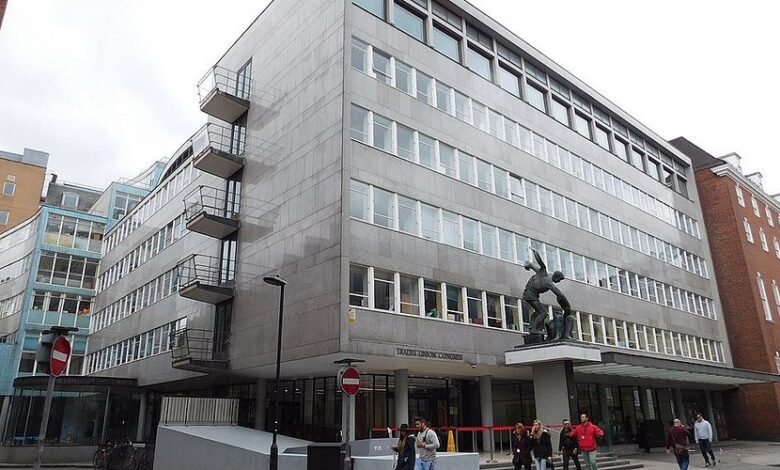
Congress House London is a Grade II* listed building in Bloomsbury, London, and the historic headquarters of the Trades Union Congress (TUC). Located at 23–28 Great Russell Street, the building has been an important part of Britain’s social, political, and architectural history since it officially opened in 1958. Positioned close to the British Museum and other major cultural landmarks, Congress House represents the connection between modern architecture and the development of organised labour in the United Kingdom.
The purpose of Congress House was to provide the TUC with a permanent headquarters that reflected the importance of the organisation and the growing role of trade unions in British society. The building was designed during the post-war period when many new architectural projects aimed to represent renewal, progress, and modern ideas. Its creation marked a significant moment for the TUC, providing a central location for meetings, conferences, and discussions related to employment, workers’ interests, and social issues.
Congress House London is more than an office building. It combines architectural design, historical importance, and artistic features that make it a notable landmark in central London. The building attracts interest from people studying modern architecture, British history, heritage buildings, and the development of social movements.
For visitors searching for information about Congress House London, understanding its identity is important. It is not only associated with the TUC but also recognised as a significant example of post-war modernist architecture. Its location, design, and historical connections make it one of Bloomsbury’s distinctive buildings.
History of Congress House London: From Design Competition to Modern Heritage
The story of Congress House London began after the Second World War when the Trades Union Congress planned to create a new headquarters that represented its position within British society. Before Congress House was built, the TUC operated from different locations, but the organisation required a dedicated space that could support its growing activities and provide a permanent home for meetings and administration.
A design competition was organised in the late 1940s to select the architect for the new headquarters. David du Roi Aberdeen won the competition and developed a design that reflected the modern architectural ideas of the period. Construction followed during the 1950s, and the completed building officially opened in 1958, becoming one of the most recognised post-war buildings in London.
Throughout its history, Congress House London has hosted important events connected with the trade union movement and wider discussions about employment, workers’ rights, and social change. The building became a place where representatives, leaders, and organisations gathered to discuss issues affecting working people across Britain.
The building’s heritage value was later recognised through its Grade II* listing, highlighting its special architectural and historic importance. This status places Congress House among buildings considered particularly significant within England’s heritage system. Its history demonstrates how architecture can preserve the story of organisations and communities that have influenced national development.
Architecture of Congress House London and Its Design Features
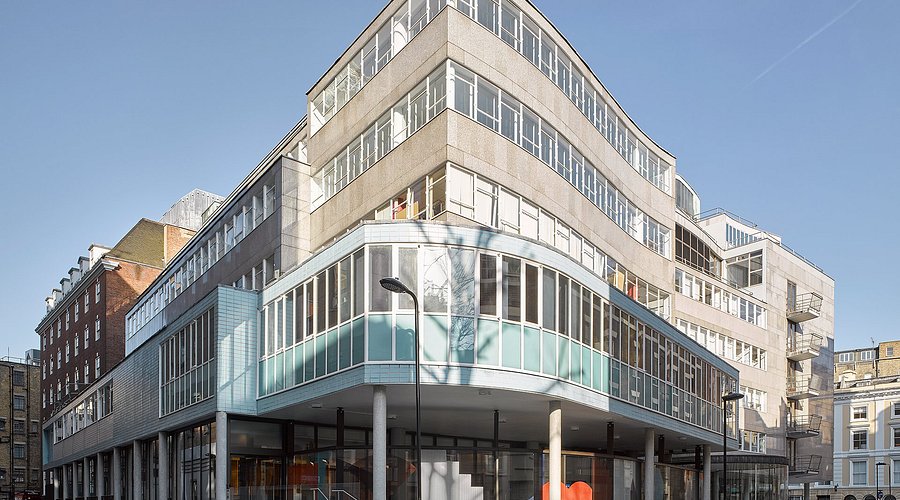
Congress House London is an important example of mid-century modern architecture. Designed by David du Roi Aberdeen, the building reflects the post-war architectural approach of combining practical function with strong visual identity. Instead of following traditional designs commonly associated with institutional buildings, Congress House introduced a more modern appearance that represented the changing ideas of the 1950s.
One of the building’s most recognisable features is its exterior design, including the use of Portland stone that gives the structure a distinctive appearance. The clean lines, carefully planned spaces, and balanced design demonstrate the architectural principles of the period. The building was created to support offices, conference areas, and meeting spaces while maintaining an impressive public presence.
Congress House also contains important artistic elements that add to its cultural value. The bronze sculpture “Spirit of Brotherhood” by Bernard Meadows is one of the notable external features associated with the building. Inside the courtyard, Sir Jacob Epstein’s memorial sculpture “Pietà” provides another significant artistic connection, reflecting themes of remembrance and human experience.
The architectural importance of Congress House London extends beyond its appearance. The building represents a period when modern architecture was used to express ideas about progress, community, and national identity. Its combination of design, artwork, and historical purpose makes it an important example of twentieth-century British architecture.
Congress House London and the Trades Union Congress Connection
The relationship between Congress House London and the Trades Union Congress is central to understanding the building’s importance. The TUC is the organisation that brings together many trade unions across the United Kingdom, representing workers and contributing to discussions about employment, workplace conditions, and social policies.
As the TUC headquarters, Congress House has provided a central meeting place for decades. The building has hosted conferences, discussions, and events involving trade union representatives, policymakers, and other groups interested in employment and social issues. Its rooms and facilities have supported conversations that reflect changing attitudes toward work and society.
The building also represents the historical development of organised labour in Britain. Over many decades, trade unions have played a role in discussions about wages, workplace safety, employment rights, and working conditions. Congress House became a physical symbol connected with these discussions and the organisation responsible for coordinating many aspects of the movement.
While Congress House is closely linked with trade union history, its significance extends beyond that connection. It is also valued as an architectural landmark and an example of how buildings can preserve the stories of institutions that have shaped national history.
Visiting Congress House London: Location, Access, and Nearby Attractions
Congress House London is located in Bloomsbury, one of central London’s most historic and culturally important areas. Its address at 23–28 Great Russell Street places it close to the British Museum, making it part of an area known for museums, historic buildings, literary connections, and cultural attractions.
Visitors interested in seeing Congress House should consider that it remains a working building connected with the activities of the TUC. Access to the interior may depend on events, meetings, or official arrangements. Anyone planning a visit should check current information regarding public access, tours, or available events before travelling.
The surrounding area offers many opportunities for exploration. The nearby British Museum is one of London’s most famous cultural institutions, while Bloomsbury’s streets feature historic architecture, gardens, bookstores, and academic institutions. This makes a visit to Congress House suitable as part of a wider walking tour of central London.
For architecture enthusiasts and history researchers, Congress House offers a different type of London attraction. Instead of being a traditional tourist monument, it provides insight into twentieth-century design, social history, and the relationship between buildings and the organisations that use them.
The Future and Continuing Importance of Congress House London
Like many historic buildings, Congress House London faces the challenge of balancing heritage protection with changing organisational needs. Over time, buildings must adapt to modern requirements while preserving the features that make them historically valuable. Congress House continues to attract attention because of its architectural importance and its connection with the history of the TUC.
Changes in working practices, office requirements, and organisational structures have influenced how many historic headquarters are used today. Congress House is part of this wider conversation about the future of important buildings and how they can continue serving communities while maintaining their heritage identity.
The building’s Grade II* listing ensures that its architectural and historical value receives recognition and protection. Any future developments involving Congress House must consider its importance as a significant example of post-war design and as a landmark connected with British social history.
Regardless of future changes, Congress House London remains an important part of London’s architectural landscape. Its design, history, and connection with the TUC ensure that it continues to be studied and appreciated by historians, architects, and visitors interested in Britain’s heritage.
Conclusion
Congress House London is a remarkable building that combines modern architecture, social history, and cultural significance. Since opening in 1958, it has served as the headquarters of the Trades Union Congress and has become closely connected with important discussions about work, representation, and British society.
Its Grade II* listed status, mid-century modern design, and artistic features make it a valuable heritage landmark in Bloomsbury. From the vision behind its creation to the role it continues to play today, Congress House demonstrates how buildings can preserve the history of organisations and movements.
For anyone interested in London architecture, twentieth-century history, or the development of the trade union movement, Congress House London offers a fascinating example of how a building can become a symbol of a much larger story.
FAQs
What is Congress House London famous for?
Congress House London is famous as the Grade II* listed headquarters of the Trades Union Congress and as an important example of post-war modernist architecture.
Where is Congress House London located?
Congress House is located at 23–28 Great Russell Street in Bloomsbury, London, near the British Museum.
Who designed Congress House London?
Congress House was designed by architect David du Roi Aberdeen after a post-war architectural competition.
When was Congress House London built?
The building was completed and officially opened in 1958 as the headquarters of the Trades Union Congress.
Can visitors enter Congress House London?
Access depends on current arrangements, events, and official availability, so visitors should check before planning a visit.
You May Also Read: Female ITN News Presenters