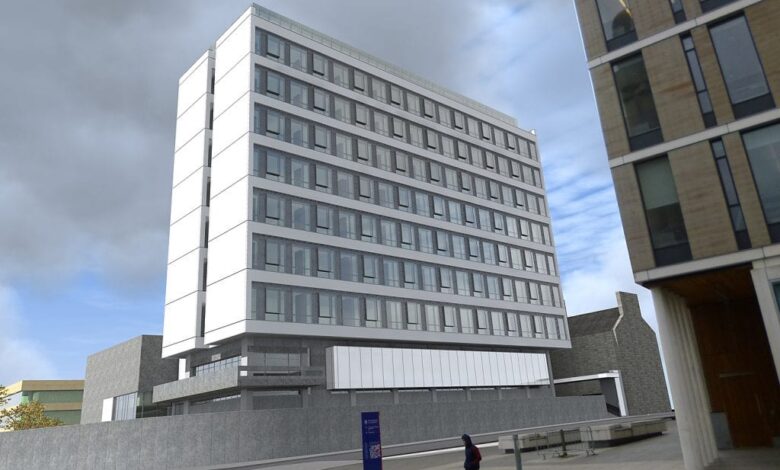
Appleton Tower stands as one of the most recognizable landmarks of the University of Edinburgh. Located at the heart of the university’s central campus, it serves not only as an academic building but also as a hub for student life and cultural activities. Its imposing structure and prominent location have made it a key part of the university landscape, symbolizing both the institution’s rich history and its commitment to modern education.
The tower plays a vital role in the daily life of students and faculty. With lecture theatres, seminar rooms, administrative offices, and communal areas, it is central to both academic and social activities. Over the years, Appleton Tower has been a witness to significant changes in the university, reflecting shifts in architectural trends, educational needs, and student expectations.
This article explores Appleton Tower in depth, covering its historical background, architectural design, academic and student uses, renovations, and cultural significance. By providing a detailed look at the tower, the article aims to offer readers a comprehensive understanding of why this building remains an integral part of the University of Edinburgh and the wider city of Edinburgh.
History and Background
Appleton Tower was originally constructed in the late 1960s and officially opened in 1967. It was designed to address the growing need for academic space in the rapidly expanding University of Edinburgh campus. The building initially accommodated departments such as engineering, computing, and administration, providing state-of-the-art facilities for its time. Its design reflects the modernist architectural style popular during the mid-20th century, emphasizing functional form and verticality.
Over the years, Appleton Tower has undergone several modifications and refurbishments to meet evolving academic and student needs. Its historical significance lies not only in its longevity but also in its role as a pioneer of modern campus buildings in Edinburgh. The tower represented a shift towards large-scale, multi-purpose academic structures, contrasting with the traditional low-rise stone buildings that dominated the city.
In addition to serving educational purposes, Appleton Tower has been a focal point for student engagement and campus activities. It has hosted events, lectures, and exhibitions, contributing to the intellectual and cultural vibrancy of the university. The tower’s history is intertwined with the broader evolution of the University of Edinburgh, reflecting changes in pedagogical approaches, student demographics, and architectural priorities.
Architectural Design and Features
Appleton Tower’s architectural design is a striking example of mid-20th-century modernist construction. Its tall, rectangular silhouette dominates the surrounding area, providing panoramic views of Edinburgh from higher floors. The building’s exterior features clean lines, concrete panels, and large windows, emphasizing functionality and minimalism while allowing natural light to permeate the interior.
Inside, the tower houses lecture theatres, seminar rooms, faculty offices, and communal areas for student use. The interior layout is carefully designed to facilitate both academic and social interactions. Multi-level corridors and staircases connect various departments, while designated common spaces encourage collaboration and informal learning. Technology integration has been a key focus, with audio-visual equipment, Wi-Fi access, and digital displays supporting modern teaching methods.
Accessibility has also been prioritized in recent years. Elevators, ramps, and clearly marked signage ensure that the building is navigable for all students, staff, and visitors. These features reflect the university’s commitment to inclusivity and modern standards of accessibility.
Appleton Tower’s design balances practicality with aesthetic appeal. While its modernist style contrasts with the historic stone buildings of central Edinburgh, the tower has become an architectural icon in its own right. Its presence adds a contemporary dimension to the campus skyline and serves as a visible marker of the university’s commitment to forward-thinking education.
Academic and Student Use

Appleton Tower is primarily an academic building, hosting lectures, seminars, and workshops across multiple disciplines. Departments such as engineering, computing, and informatics have long been housed in the tower, taking advantage of its large lecture halls and specialized laboratory spaces. These facilities enable students to engage in hands-on learning and collaborative projects, supporting the university’s mission to provide high-quality education.
Beyond formal education, Appleton Tower offers a variety of student-focused amenities. Study spaces, group work areas, and common rooms allow students to collaborate, socialize, and focus on independent research. The building also accommodates administrative offices and student support services, making it a central hub for campus life. Students frequently utilize the tower for extracurricular activities, club meetings, and university events, further integrating it into the social fabric of the campus.
The tower’s integration with other campus buildings enhances its functionality. Pathways and pedestrian access connect it to libraries, laboratories, and neighboring academic facilities, fostering a sense of continuity across the university. This seamless connectivity ensures that students can easily transition between different aspects of their academic and social life.
Additionally, Appleton Tower has been a venue for notable events, such as guest lectures, workshops, and public presentations. These events attract both university members and the broader Edinburgh community, reinforcing the building’s role as a center for intellectual engagement and cultural exchange.
Renovations and Modern Developments
In recent years, Appleton Tower has undergone significant renovations to update its facilities and improve sustainability. Refurbishments have included modernizing lecture theatres, upgrading technology infrastructure, and enhancing accessibility for all users. These improvements ensure that the building continues to meet contemporary academic standards while providing a comfortable environment for students and staff.
Sustainability initiatives have been a key focus of modernization efforts. Energy-efficient lighting, heating, and ventilation systems have been installed, reducing the building’s environmental footprint. Plans for further eco-friendly improvements, such as enhanced insulation and renewable energy integration, demonstrate the university’s commitment to sustainability and responsible resource management.
Renovations have also enhanced student experience. Updated common areas, study rooms, and collaborative spaces provide a more welcoming and functional environment for learning and social interaction. These changes reflect the evolving needs of modern students, who require flexible, technology-enabled spaces for academic success.
The impact of renovations extends beyond aesthetics and functionality. By creating a more sustainable and user-friendly building, the university ensures that Appleton Tower remains a vital part of campus life for future generations of students and faculty.
Cultural and Community Significance
Appleton Tower is more than just an academic building; it is a cultural landmark in Edinburgh. Its distinctive design and central location make it a recognizable feature of the city skyline. The tower symbolizes the University of Edinburgh’s commitment to innovation, education, and student engagement, and it serves as a point of pride for both students and faculty.
The tower’s presence extends into the local community. It hosts events, exhibitions, and lectures that attract residents and visitors, fostering a sense of connection between the university and the broader public. Its accessibility and public-facing activities make it an important site for cultural and intellectual exchange in Edinburgh.
For students, Appleton Tower represents both opportunity and tradition. It is a place where academic ambitions are nurtured, collaborations are forged, and memorable experiences are created. Its significance is reflected in campus tours, student publications, and university events, cementing its place as an enduring symbol of Edinburgh’s academic and cultural landscape.
Conclusion
Appleton Tower stands as a testament to the University of Edinburgh’s commitment to education, innovation, and community engagement. From its historical origins in the 1960s to modern renovations, the building has evolved to meet the changing needs of students, faculty, and the local community. Its architectural design, academic facilities, and cultural significance make it an integral part of campus life and a landmark in Edinburgh.
Through careful modernization and sustainable upgrades, Appleton Tower continues to support teaching, learning, and social interaction while remaining accessible and environmentally responsible. Its combination of historical importance, architectural prominence, and practical utility ensures that it will remain a central hub of university life for decades to come.
Frequently Asked Questions (FAQs)
What is Appleton Tower?
Appleton Tower is a prominent academic building at the University of Edinburgh, hosting lectures, offices, and student facilities.
When was Appleton Tower built?
The tower was constructed in the late 1960s and officially opened in 1967.
What departments are housed in Appleton Tower?
Departments such as engineering, computing, and informatics are commonly located in the building.
Is Appleton Tower open to the public?
While primarily for university use, some events, lectures, and exhibitions may be accessible to the public.
What facilities are available for students in Appleton Tower?
Facilities include lecture halls, seminar rooms, study areas, common rooms, and administrative offices.
Has Appleton Tower undergone renovations?
Yes, the building has been refurbished to improve technology, accessibility, and sustainability.
Why is Appleton Tower significant to the University of Edinburgh?
It serves as an academic and social hub, symbolizing innovation and modern campus life.
Are there any cultural or historical events associated with Appleton Tower?
Yes, it hosts lectures, exhibitions, and community-focused events, making it culturally significant.
You May Also Read: Driscoll Model of Reflection