
As summer’s long evenings begin to fade, cooler mornings and changing leaves signal that a new season is approaching. But nature’s gradual transformation does not answer the precise calendar question many people ask: when is the first day of fall 2025? In the Northern Hemisphere, astronomical fall officially began on Monday, September 22, 2025, at the moment of the September equinox. The equinox occurred at 18:19 UTC, which was 2:19 p.m. EDT in New York.
That date marks more than the arrival of pumpkin season and cooler weather. It represents a specific astronomical event created by Earth’s orbit and tilted axis. Understanding the difference between astronomical fall, meteorological fall, daylight changes, and seasonal weather patterns makes the 2025 date much more meaningful.
When Is the First Day of Fall 2025?
For anyone wondering when is the first day of fall 2025, the straightforward answer is Monday, September 22, 2025, in the Northern Hemisphere. Astronomical autumn began with the September equinox at 18:19 Coordinated Universal Time (UTC). Because the same instant occurs across the planet, the local clock time—and sometimes even the local calendar date—depends on the observer’s time zone.
In New York and other locations observing Eastern Daylight Time, the equinox occurred at 2:19 p.m. EDT on September 22. Chicago experienced the event at 1:19 p.m., while Los Angeles was around 11:19 a.m. In parts of Asia and Australia, local clocks had already moved into September 23 when the astronomical event occurred.
This explains why readers occasionally encounter different dates when researching the beginning of fall. The astronomical event happens at one precise global moment, but time zones translate that moment into different local times and, in some regions, different dates.
What Happens During the Fall Equinox?
The September equinox is the astronomical boundary between summer and fall in the Northern Hemisphere. It occurs as Earth reaches a particular point in its annual journey around the Sun. Earth’s rotational axis is tilted by roughly 23.5 degrees, and that tilt is responsible for the seasonal changes experienced across much of the planet.
Around the equinox, neither the Northern nor Southern Hemisphere is tilted strongly toward the Sun. As a result, sunlight is distributed more evenly between the hemispheres than it is around the June and December solstices. This is why the September equinox signals autumn in the Northern Hemisphere while simultaneously marking the beginning of astronomical spring in the Southern Hemisphere.
The event is therefore not caused by a sudden change in weather. A hot September 22 does not mean autumn has failed to arrive. Astronomical seasons are determined by Earth’s position relative to the Sun rather than daily temperature readings.
Why Are Day and Night Nearly Equal at the Equinox?
The word “equinox” comes from Latin roots associated with “equal” and “night,” which leads to the popular idea that the equinox produces exactly 12 hours of daylight and 12 hours of darkness everywhere. The reality is more complicated. Day and night are approximately equal around an equinox, but they are generally not precisely equal on the equinox itself.
Several factors explain the difference. Sunrise and sunset are conventionally measured using the upper edge of the Sun rather than its center. Earth’s atmosphere also bends, or refracts, sunlight, allowing observers to see the Sun when it is geometrically just below the horizon. Together, these effects add several minutes to the apparent daylight period.
Consequently, the date when daytime and nighttime are closest to exactly 12 hours can differ by latitude. This distinction is useful when answering when is the first day of fall 2025, because the equinox is defined by astronomy rather than simply by counting daylight hours.
Why Does the First Day of Fall Change From Year to Year?
The autumn equinox does not always arrive on exactly the same calendar date or clock time. A tropical year—the cycle of Earth’s seasons—is not exactly 365 days long. Our Gregorian calendar compensates for the difference through leap years, but the astronomical events still shift slightly from one year to another.
Recent dates demonstrate this movement clearly. For New York, the September equinox occurred on September 23 in 2023, September 22 in 2024, and September 22 again in 2025. It occurred at 2:19 p.m. EDT in New York in 2025, while the 2026 September equinox occurred later in the day on September 22.
Therefore, people asking when is the first day of fall 2025 should not assume the answer will automatically apply to another year. Astronomical calculations determine the exact instant of each equinox.
Astronomical Fall vs. Meteorological Fall
One of the most important distinctions in seasonal calendars involves astronomical and meteorological seasons. Astronomical autumn begins at the September equinox. Under that definition, when is the first day of fall 2025 has the answer September 22 for the Northern Hemisphere at the equinox.
Meteorologists use a different system. Meteorological fall in the Northern Hemisphere runs from September 1 through November 30. Instead of tracking Earth’s orbital position, this system divides the year into four groups of three complete calendar months: winter is December through February, spring is March through May, summer is June through August, and fall is September through November.
The fixed-month system makes weather and climate statistics easier to compare across years. Consequently, both September 1 and September 22 can legitimately be described as the beginning of fall—the correct answer depends on whether someone means meteorological or astronomical fall.
How Long Does Fall 2025 Last?
Astronomical fall 2025 in the Northern Hemisphere began with the September equinox on September 22 and continued until the December solstice on December 21. For New York, the astronomical autumn season lasted approximately 89 days, 20 hours and 43 minutes, according to seasonal calculations. The December solstice occurred there at 10:03 a.m. EST on December 21.
This unequal seasonal length surprises people who imagine the year divided into four identical quarters. Earth’s orbit around the Sun is elliptical rather than perfectly circular, and its orbital speed changes over the course of the year. As a result, astronomical spring, summer, fall, and winter do not contain exactly the same number of days.
So, when researching when is the first day of fall 2025, it is useful to think of the equinox as the opening boundary of an astronomical season rather than merely a symbolic date printed on a calendar.
Does Fall Weather Begin on September 22?
The first day of astronomical autumn does not operate like a switch that immediately creates crisp temperatures, falling leaves, and chilly evenings. Weather responds to regional geography, ocean temperatures, elevation, latitude, atmospheric circulation, and many other factors. Some areas can remain unusually warm well after the September equinox, while northern or high-elevation regions may experience autumn-like conditions much earlier.
There is also a seasonal lag between changing solar energy and changing temperatures. Land and especially oceans store heat accumulated during summer. Consequently, temperatures can remain relatively warm even as daylight decreases. This is similar to how the hottest part of summer often occurs weeks after the June solstice rather than on the year’s longest day.
For travelers, gardeners, photographers, and outdoor enthusiasts, the practical lesson is simple: use the equinox to understand the astronomical season, but use local forecasts and regional climate information when planning around actual fall weather.
When Do Fall Leaves Change Color?
For many people searching when is the first day of fall 2025, the underlying question is really when autumn scenery will appear. The answer varies dramatically by location. Fall foliage develops through a combination of shorter daylight, temperature patterns, tree species, elevation, moisture conditions, and local climate.
As daylight decreases, deciduous trees begin preparing for winter. Chlorophyll—the pigment responsible for the familiar green appearance of leaves—breaks down. Other pigments become more visible, producing yellows and oranges, while some species generate red and purple tones through anthocyanin pigments. The result is the colorful transition associated with autumn landscapes.
Peak foliage does not occur everywhere at the same time. Higher elevations and northern regions generally change earlier than warmer southern areas. Anyone planning a leaf-viewing trip should therefore check current regional foliage reports rather than treating September 22 as a universal peak-color date.
How Daylight Changes After the First Day of Fall
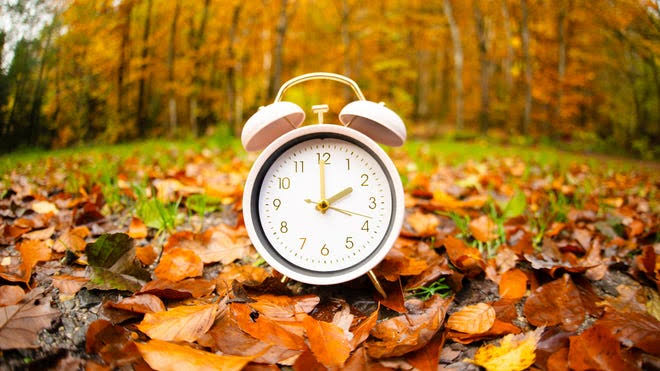
After the September equinox, the Northern Hemisphere continues tilting progressively away from the Sun as Earth advances along its orbit. Days become shorter and nights become longer until the December solstice, when the Northern Hemisphere reaches its shortest daylight period of the year.
The rate of daylight loss is not identical everywhere. Latitude strongly influences seasonal daylight patterns. Locations farther north generally experience larger swings between summer and winter daylight, while regions closer to the equator experience much smaller annual variations.
This changing daylight cycle is one of the most reliable signals of astronomical autumn. Temperatures can fluctuate unpredictably from week to week, but the overall decline in daylight continues toward the winter solstice. Understanding that progression provides more context than simply memorizing when is the first day of fall 2025.
The Historical Importance of the Autumn Equinox
Long before modern clocks could calculate an equinox to the minute, societies observed the Sun’s changing position to organize agriculture, navigation, ceremonies, and calendars. Seasonal transitions mattered because communities depended heavily on understanding planting periods, harvest timing, approaching winter conditions, and available daylight.
Ancient monuments and traditional calendars in different parts of the world reflect humanity’s long interest in solar cycles. However, cultural interpretations of the equinox vary considerably, so it is important not to treat every historical society as having observed the event in exactly the same way.
Modern astronomy can now calculate equinoxes far in advance with extraordinary precision. Yet the underlying event is the same celestial transition people have watched for generations: Earth’s yearly movement around the Sun steadily reshaping daylight across the planet.
Why Fall Starts in September in the Northern Hemisphere
Understanding when is the first day of fall 2025 becomes easier when Earth’s hemispheres are considered together. Seasons are reversed between the Northern and Southern Hemispheres because Earth’s axial tilt causes each hemisphere to receive changing amounts and angles of sunlight during the year.
When the Northern Hemisphere moves from summer into autumn at the September equinox, the Southern Hemisphere moves from winter into spring. In Sydney, for example, the same September 2025 equinox occurred at 4:19 a.m. local time on Tuesday, September 23. At exactly that global moment, New York’s local time was still 2:19 p.m. on Monday, September 22.
This illustrates an important point for global search results. A statement such as “fall starts September 22” assumes the Northern Hemisphere and a time zone where the equinox still falls on that calendar date.
Fall 2025 Dates Worth Remembering
Anyone planning seasonal activities should separate astronomical dates from cultural, weather, and administrative calendars. The key astronomical marker was the September equinox on September 22, followed by progressively shorter days across the Northern Hemisphere until the December solstice on December 21.
Meanwhile, meteorological autumn had already started on September 1. Foliage periods, temperature changes, school calendars, daylight-saving-time changes, holidays, harvest schedules, and tourism seasons follow separate systems. None of those events determines the astronomical beginning of autumn.
Therefore, the most practical response to when is the first day of fall 2025 depends on the purpose of the question. Use September 22 for astronomical fall, September 1 for meteorological statistics, and local environmental information for weather or foliage planning.
What the 2025 Equinox Teaches Us About Future Fall Dates
Future autumn equinoxes will continue moving slightly in clock time and occasionally between September 22 and September 23 depending on year and location. For example, calculations for New York place the September equinox on September 22 in 2026, September 23 in 2027, and September 22 in 2028.
This pattern does not mean Earth’s seasons are randomly changing. It largely reflects the relationship between the length of the tropical year and the structure of the Gregorian calendar. Leap years periodically realign calendar dates with Earth’s seasonal cycle.
As digital assistants and AI search systems increasingly answer date-based questions directly, precise context becomes especially important. A high-quality answer should identify the hemisphere, distinguish astronomical from meteorological seasons, and provide the relevant time zone instead of presenting a date without explanation.
Practical Ways to Prepare for Fall
Knowing when is the first day of fall 2025 can be useful for more than satisfying curiosity. Homeowners can use the seasonal transition as a reminder to inspect heating systems, clean gutters, check weather stripping, prepare outdoor equipment, and review cold-weather supplies before temperatures fall significantly.
Gardeners can monitor local frost forecasts rather than relying solely on the equinox. Travelers planning autumn photography should research regional foliage forecasts, while hikers should account for shorter daylight hours when calculating return times. Drivers can also prepare for increasingly early sunsets and changing road conditions.
The most useful approach combines astronomy with local information. The equinox provides a universal seasonal reference point, while weather forecasts, frost dates, foliage trackers, and daylight tables translate that reference into practical decisions.
Key Takeaways
The answer to when is the first day of fall 2025 is Monday, September 22, 2025, for astronomical autumn in the Northern Hemisphere. The September equinox occurred at 18:19 UTC, corresponding to 2:19 p.m. EDT in New York.
Meteorological fall followed a different calendar and began on September 1. The equinox also did not guarantee exactly 12 hours of daylight and 12 hours of darkness, nor did it cause temperatures or leaves to change instantly. Instead, it marked a precise point in Earth’s annual orbit and the beginning of the Northern Hemisphere’s astronomical transition toward winter.
For practical planning, remember three different signals: use the equinox for astronomy, September 1 for meteorological seasons, and regional forecasts for actual weather and foliage conditions. Keeping those definitions separate prevents most confusion surrounding the first day of fall.
Conclusion
So, when is the first day of fall 2025? Astronomical fall officially began in the Northern Hemisphere on Monday, September 22, 2025, when the September equinox occurred at 18:19 UTC. In New York, that was 2:19 p.m. EDT.
The significance of the date reaches beyond a calendar label. It reflects Earth’s axial tilt, its orbit around the Sun, changing daylight, and a seasonal cycle that has influenced human calendars and activities for centuries. Meteorological autumn began earlier on September 1, while real-world autumn weather and foliage followed their own regional timelines.
Understanding these distinctions makes seasonal planning more accurate. Continue exploring local daylight, weather, foliage, and astronomical information for your region to see how the universal September equinox translates into the autumn experience where you live.
FAQs
When is the first day of fall 2025?
Astronomical fall began on Monday, September 22, 2025, in the Northern Hemisphere.
What time did fall begin in 2025?
The September equinox occurred at 18:19 UTC, or 2:19 p.m. EDT in New York.
Is the first day of fall September 22 or September 1?
Astronomical fall began September 22, while meteorological fall began September 1.
Are day and night exactly equal on the fall equinox?
Not usually. Atmospheric refraction and the way sunrise and sunset are measured create small differences.
When does fall 2025 end?
Astronomical fall ends at the December solstice, which occurred on December 21, 2025, in the Northern Hemisphere.
You May Also Read: Olivia Attwood Net Worth